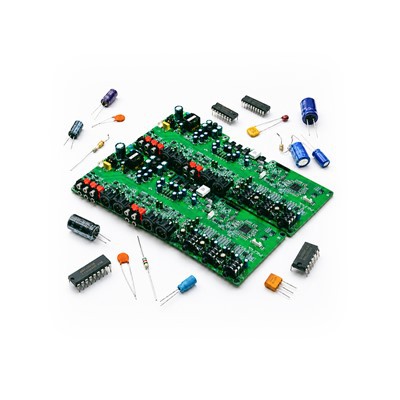
In the dynamic landscape of electronics manufacturing, high volume PCB assembly stands as a cornerstone for industries ranging from consumer electronics to automotive and aerospace. As a high volume PCB assembly supplier, I've witnessed firsthand the challenges that come with producing large quantities of printed circuit boards. These challenges span various aspects of the assembly process, from design and component sourcing to production and quality control. In this blog, I'll delve into the key challenges we face and how we navigate them to deliver high-quality, cost-effective solutions to our clients.
Design Challenges
One of the initial hurdles in high volume PCB assembly is ensuring that the design is optimized for mass production. A well-designed PCB not only enhances the performance and reliability of the final product but also streamlines the assembly process, reducing costs and lead times. However, achieving this requires careful consideration of several factors.
Design for Manufacturability (DFM)
DFM is a critical aspect of PCB design that focuses on making the design easy to manufacture. This involves considerations such as component placement, trace routing, and the use of standard components. For example, placing components too close together can make it difficult to solder them accurately, while using non-standard components can increase the cost and lead time of sourcing. As a high volume PCB assembly supplier, we work closely with our clients during the design phase to ensure that their PCB designs are DFM-compliant. This helps us avoid potential issues during production and ensures that the final product meets the highest quality standards.
Thermal Management
Another important design consideration is thermal management. As electronic devices become more powerful and compact, the heat generated by the components can pose a significant challenge. If not properly managed, excessive heat can lead to component failure, reduced performance, and even safety hazards. To address this, we use advanced thermal management techniques such as heat sinks, thermal vias, and fans. These techniques help to dissipate heat away from the components, ensuring that they operate within their specified temperature range.
Component Sourcing Challenges
Once the PCB design is finalized, the next step is to source the components required for assembly. This can be a complex and challenging process, especially when dealing with high volume orders.
Component Availability
One of the biggest challenges in component sourcing is ensuring that the required components are available in the quantities needed. The global electronics supply chain is subject to various factors such as supply shortages, lead times, and price fluctuations. For example, the recent semiconductor shortage has had a significant impact on the availability of components, leading to longer lead times and higher costs. As a high volume PCB assembly supplier, we have established strong relationships with our component suppliers to ensure a reliable supply of components. We also maintain a buffer stock of critical components to mitigate the impact of supply shortages.
Component Quality
In addition to availability, component quality is also a critical factor in high volume PCB assembly. Using low-quality components can lead to product failures, reduced reliability, and increased costs. To ensure the quality of the components we use, we have a rigorous quality control process in place. This includes inspecting the components upon receipt, testing them for functionality, and verifying their compliance with industry standards. We also work closely with our component suppliers to ensure that they meet our quality requirements.
Production Challenges
Once the components are sourced, the next step is to assemble them onto the PCB. This involves several processes, including surface mount technology (SMT) and through-hole technology (THT). Each of these processes has its own set of challenges.
SMT Assembly
SMT is the most common method of PCB assembly, as it allows for the placement of components on both sides of the PCB. However, SMT assembly can be challenging, especially when dealing with high volume orders. One of the main challenges is achieving high placement accuracy. This requires the use of advanced pick-and-place machines and precision alignment systems. Another challenge is ensuring that the solder joints are of high quality. This involves controlling the temperature, time, and pressure during the soldering process. As a high volume PCB assembly supplier, we have invested in state-of-the-art SMT equipment and trained our staff to ensure that we can achieve high placement accuracy and solder joint quality.
THT Assembly
THT assembly is used for components that require a more robust connection, such as connectors and power components. However, THT assembly can be more time-consuming and labor-intensive than SMT assembly. One of the main challenges is ensuring that the components are inserted correctly and securely. This requires the use of specialized equipment and skilled operators. Another challenge is soldering the components. This involves controlling the temperature and time to ensure that the solder joints are strong and reliable. As a high volume PCB assembly supplier, we have developed efficient THT assembly processes and trained our staff to ensure that we can achieve high-quality THT assemblies.
Quality Control Challenges
Quality control is a critical aspect of high volume PCB assembly. Ensuring that the final product meets the highest quality standards is essential for customer satisfaction and the success of our business. However, achieving this can be challenging, especially when dealing with high volume orders.


In-Process Inspection
One of the key quality control measures we use is in-process inspection. This involves inspecting the PCBs at various stages of the assembly process to identify and correct any issues before they become major problems. For example, we use automated optical inspection (AOI) systems to detect defects such as missing components, misaligned components, and solder bridging. We also use X-ray inspection systems to detect hidden defects such as solder voids and short circuits.
Final Testing
In addition to in-process inspection, we also conduct final testing on the assembled PCBs to ensure that they meet the specified performance requirements. This involves testing the PCBs for functionality, electrical performance, and reliability. We use a variety of testing equipment and techniques, including functional test fixtures, automated test equipment (ATE), and environmental testing chambers.
Cost Challenges
Cost is always a major consideration in high volume PCB assembly. As a high volume PCB assembly supplier, we are constantly looking for ways to reduce costs without compromising on quality.
Economies of Scale
One of the main ways we reduce costs is by taking advantage of economies of scale. By producing large quantities of PCBs, we can negotiate better prices with our component suppliers and reduce the cost of production. We also use efficient production processes and automation to reduce labor costs and increase productivity.
Value Engineering
Another way we reduce costs is by using value engineering techniques. This involves analyzing the PCB design and component selection to identify opportunities for cost savings. For example, we may recommend using alternative components that are less expensive but still meet the performance requirements. We also work with our clients to optimize the PCB design to reduce the number of components and simplify the assembly process.
Navigating the Challenges
Despite the challenges, high volume PCB assembly is a rewarding and essential part of the electronics manufacturing industry. As a high volume PCB assembly supplier, we have developed a comprehensive approach to address these challenges and deliver high-quality, cost-effective solutions to our clients.
Collaboration
One of the key factors in our success is collaboration. We work closely with our clients during the design phase to ensure that their PCB designs are optimized for mass production. We also collaborate with our component suppliers to ensure a reliable supply of components and to negotiate better prices. By working together, we can overcome the challenges and deliver the best possible results.
Continuous Improvement
Another important factor is continuous improvement. We are constantly looking for ways to improve our processes, reduce costs, and enhance the quality of our products. We invest in the latest technology and equipment, and we train our staff to ensure that they have the skills and knowledge to perform their jobs effectively. By continuously improving, we can stay ahead of the competition and meet the evolving needs of our clients.
Conclusion
High volume PCB assembly is a complex and challenging process that requires careful planning, attention to detail, and a commitment to quality. As a high volume PCB assembly supplier, we understand the challenges and have the expertise and resources to overcome them. By working closely with our clients, collaborating with our suppliers, and continuously improving our processes, we can deliver high-quality, cost-effective solutions that meet the needs of the electronics industry.
If you are looking for a reliable high volume PCB assembly supplier, we would be happy to discuss your requirements and provide you with a quote. Please visit our website at High Volume PCB Assembly to learn more about our services. You can also explore our Mixed Technology PCB Assembly and SMT PCB Assembly offerings. Contact us today to start the conversation and take the first step towards a successful partnership.
References
- "Printed Circuit Board Design: A Practical Guide" by Henry W. Ott
- "Surface Mount Technology: Principles and Practice" by R. J. Tummala
- "Electronics Manufacturing Technology" by Paul A. Totta