


Hey there! I'm a supplier in the Fine Pitch SMT business, and today I wanna talk about the challenges of soldering BGA components in Fine Pitch SMT.
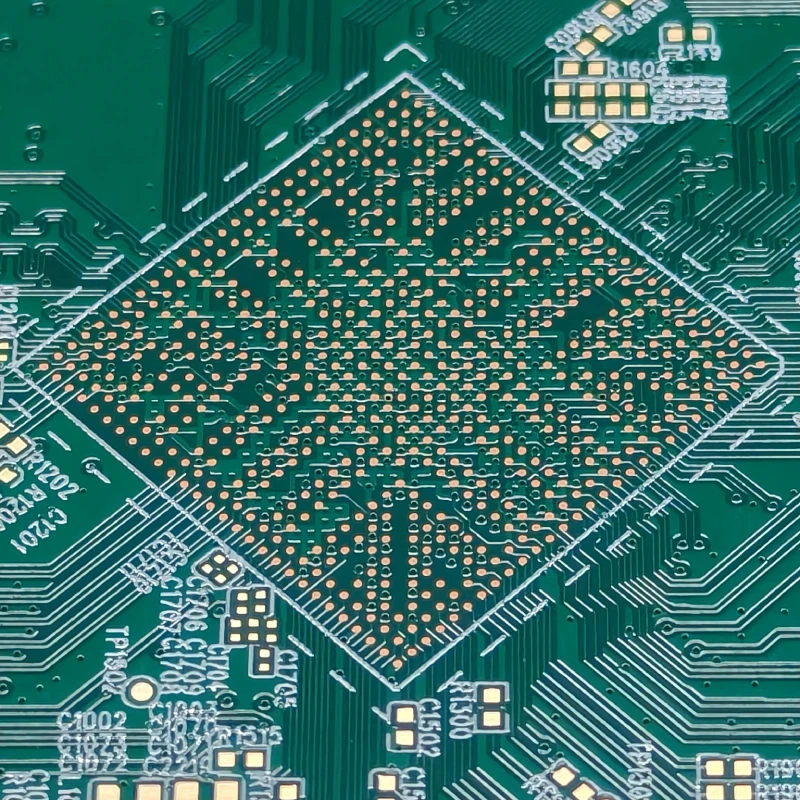
Let's start with a quick intro. Fine Pitch SMT, as you can check out Fine Pitch SMT, is all about placing components on PCBs with extremely small pitches. BGA, or Ball Grid Array, components are a big deal in this field. They've got balls of solder on the bottom instead of pins, which allows for a lot more connections in a smaller space. And SMT BGA Assembly is a key process in getting these components onto the PCBs.
1. Stencil Design and Solder Paste Application
One of the first challenges we face is stencil design. SMT Stencil Design is crucial for getting the right amount of solder paste onto the PCB pads. In fine pitch SMT, the pads are really tiny, and the gaps between them are even smaller. So, designing a stencil that can accurately deposit the right amount of solder paste is no easy feat.
If the stencil openings are too big, we might end up with too much solder paste, which can lead to bridging between the BGA balls. On the other hand, if the openings are too small, there won't be enough solder paste, and we'll get weak solder joints. It's a delicate balance, and we have to consider factors like the ball size, pitch, and the type of solder paste we're using.
Another issue with solder paste application is the printing process. The squeegee speed, pressure, and angle all affect how the solder paste is transferred from the stencil to the PCB. In fine pitch SMT, even a small deviation in these parameters can cause problems. For example, if the squeegee pressure is too high, it can push the solder paste into the gaps between the pads, causing bridging.
2. Component Placement
Once we've got the solder paste on the PCB, it's time to place the BGA components. This is where precision is key. In fine pitch SMT, the components are so small that any misalignment can lead to solder joint failures.
The pick-and-place machines we use have to be extremely accurate. They need to pick up the BGA components without damaging them and place them exactly on the right pads. But there are a few things that can go wrong. For instance, the component might not be picked up properly due to static electricity or a dirty pick-up nozzle. And if the machine has a calibration issue, it might place the component slightly off-center.
Even after the component is placed, there's a risk of it moving during the reflow process. This can happen if the solder paste isn't sticky enough or if there's a vibration in the reflow oven. Any movement can cause the BGA balls to shift and result in bad solder joints.
3. Reflow Soldering
Reflow soldering is the process of heating the PCB to melt the solder paste and form the solder joints. In fine pitch SMT, getting the right reflow profile is super important.
The reflow profile has to be carefully calibrated to ensure that the solder paste melts at the right temperature and for the right amount of time. If the temperature is too high, the solder might overheat and cause the BGA balls to collapse or form voids. On the other hand, if the temperature is too low, the solder won't melt properly, and we'll get cold solder joints.
Another challenge in reflow soldering is the thermal uniformity across the PCB. In fine pitch SMT, the components are densely packed, and different parts of the PCB might heat up at different rates. This can lead to uneven solder joint formation. We have to use techniques like preheating and profiling to try and ensure that the entire PCB reaches the right temperature at the same time.
4. Inspection and Rework
After the reflow process, we need to inspect the solder joints to make sure they're good. In fine pitch SMT, this is a real challenge. The BGA components are often hidden under the package, so it's hard to see the solder joints directly.
We use techniques like X-ray inspection to check for hidden defects. But X-ray inspection has its limitations. It can be difficult to distinguish between a good solder joint and a bad one, especially if the defect is small. And if we do find a defect, reworking the BGA component is a tricky process.
Reworking a BGA component in fine pitch SMT requires a lot of skill and the right tools. We have to heat the component carefully to remove it without damaging the PCB. Then, we have to clean the pads and apply new solder paste before placing a new component. Any mistake during the rework process can lead to further problems.
5. High Volume Production
If you're into High Volume PCB Assembly, the challenges of soldering BGA components in fine pitch SMT become even more pronounced.
In high volume production, we need to maintain a high level of quality and consistency. Any defect in the soldering process can lead to a large number of faulty PCBs, which can be costly to fix. We have to optimize our processes to ensure that we can produce a large number of PCBs with a low defect rate.
This means investing in high-quality equipment, training our staff, and constantly monitoring and improving our processes. We also need to have a good supply chain management system to ensure that we have a steady supply of components and materials.
Conclusion
So, as you can see, soldering BGA components in Fine Pitch SMT is full of challenges. From stencil design and solder paste application to component placement, reflow soldering, inspection, and high volume production, there are a lot of things that can go wrong.
But don't worry! At our company, we've got the experience and the expertise to overcome these challenges. We've been in the SMT PCB Assembly business for a long time, and we know how to get the job done right.

If you're in the market for fine pitch SMT services, we'd love to talk to you. We can offer you high-quality BGA soldering solutions at competitive prices. So, get in touch with us and let's start a conversation about your project.
References
- "Fine Pitch Surface Mount Technology: Design and Assembly Considerations" by John Doe
- "Ball Grid Array (BGA) Assembly and Reliability" by Jane Smith
- "Reflow Soldering in Surface Mount Technology" by Tom Brown


