


In the realm of electronics manufacturing, Partial Turnkey PCB Assembly has emerged as a flexible and efficient solution for many businesses. As a provider of Partial Turnkey PCB Assembly services, I am excited to share the detailed process flow of this service, which can help clients understand how we transform their ideas into functional printed circuit boards.
1. Project Consultation and Requirement Gathering
The journey of a Partial Turnkey PCB Assembly project begins with in - depth consultation. Our team of experts sits down with clients to understand their specific requirements. This includes the type of electronic device the PCB will be used in, the functionality it needs to achieve, and any specific design constraints.
We also discuss the quantity of PCBs required, the desired production timeline, and the budget. This stage is crucial as it allows us to gather all the necessary information to provide an accurate quote and develop a suitable production plan. During this consultation, we can also provide valuable advice on PCB design optimization, component selection, and manufacturing processes to ensure the best possible outcome.
If you are interested in learning more about Partial Turnkey PCB Assembly, you can visit our Partial Turnkey PCB Assembly page.
2. PCB Design and Review
Once the requirements are clear, our design team starts working on the PCB layout. We use advanced design software to create a detailed schematic and layout that meets the client's specifications. The design process takes into account factors such as signal integrity, power distribution, and component placement to ensure optimal performance.
After the initial design is completed, we conduct a thorough review. This includes a design rule check (DRC) to ensure that the design complies with manufacturing standards. We also perform a electrical rule check (ERC) to verify the electrical functionality of the circuit. Our team then presents the design to the client for review and feedback. Any necessary revisions are made based on the client's input before moving on to the next stage.
3. Component Procurement
In a Partial Turnkey PCB Assembly, the client has the option to supply some of the components, while we take care of procuring the rest. Our procurement team has extensive experience in sourcing high - quality components from reliable suppliers. We work closely with our suppliers to ensure that the components meet the required specifications and are delivered on time.
We conduct strict quality control checks on all the procured components. This includes visual inspections, electrical testing, and verification of component markings. By using only high - quality components, we can ensure the reliability and performance of the final PCB assembly.
If you are looking for a more comprehensive solution, our Turnkey PCB Assembly service may be a better fit for you, where we handle all aspects of component procurement and assembly.
4. PCB Fabrication
Once the components are procured, we start the PCB fabrication process. The fabrication process involves several steps, including substrate preparation, copper deposition, etching, and soldermask application.
We use state - of - the - art manufacturing equipment and follow strict quality control procedures to ensure that the PCBs are fabricated to the highest standards. The PCBs are inspected at multiple stages during the fabrication process to detect and correct any potential issues. After the fabrication is complete, the PCBs are cleaned and prepared for assembly.

5. PCB Assembly
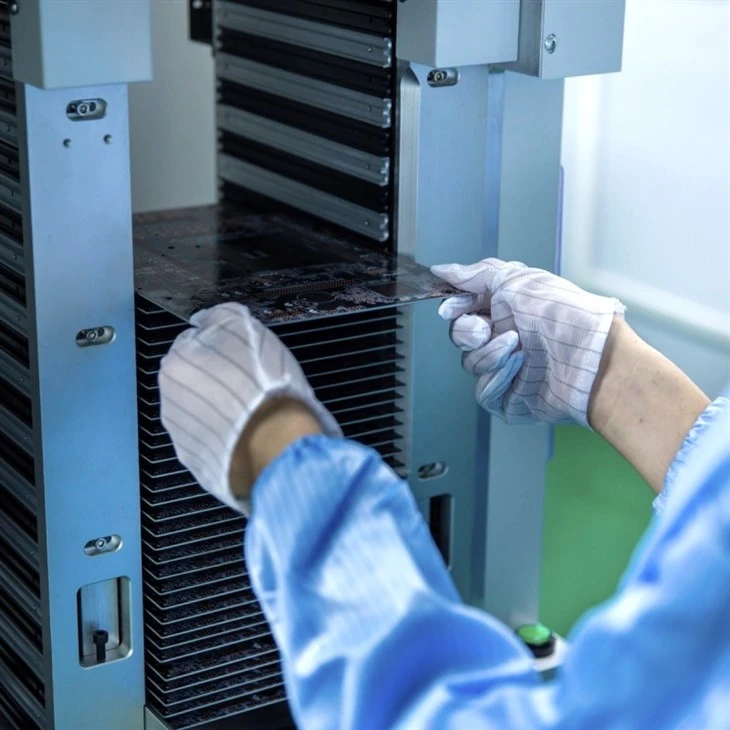
The assembly process is a critical stage in the Partial Turnkey PCB Assembly service. We use surface - mount technology (SMT) and through - hole technology (THT) to mount the components onto the PCBs. Our assembly line is equipped with high - precision pick - and - place machines that can accurately place components on the PCBs.
Before the actual assembly, we perform a stencil printing process to apply solder paste to the PCB pads. The components are then placed on the solder paste using the pick - and - place machines. After the component placement, the PCBs are sent through a reflow oven to melt the solder and form a permanent connection between the components and the PCB.
For through - hole components, we use wave soldering or manual soldering techniques. Our technicians are highly skilled and trained to ensure that the soldering is of the highest quality. After the assembly is complete, the PCBs are cleaned to remove any flux residues.
6. Testing and Inspection
Once the PCB assembly is complete, we conduct a series of tests and inspections to ensure the functionality and quality of the PCBs. We perform in - circuit testing (ICT) to check for shorts, opens, and component values. We also conduct functional testing to verify that the PCBs perform as expected.
Our inspection team uses advanced equipment such as automated optical inspection (AOI) and X - ray inspection to detect any potential defects such as misaligned components, soldering issues, or missing components. Any defective PCBs are reworked to correct the issues. Only after passing all the tests and inspections are the PCBs considered ready for shipment.
If you need a rapid turnaround for your PCB assembly project, our Quick‑turn PCB Assembly service can meet your urgent needs.
7. Packaging and Shipment
After the PCBs have passed all the tests and inspections, we carefully package them to prevent any damage during shipping. We use appropriate packaging materials such as anti - static bags, foam inserts, and corrugated boxes.
We work with reliable shipping partners to ensure that the PCBs are delivered to the client's location in a timely and secure manner. We provide tracking information to the client so that they can monitor the progress of their shipment.
8. After - Sales Support
Our commitment to our clients does not end with the shipment of the PCBs. We provide comprehensive after - sales support to address any issues or concerns that the client may have. Our technical support team is available to provide assistance with troubleshooting, installation, and maintenance.
We also offer warranty services for our PCB assemblies. If any issues are found within the warranty period, we will repair or replace the defective PCBs at no cost to the client.
Conclusion
The process flow of Partial Turnkey PCB Assembly is a complex and multi - step process that requires expertise, precision, and attention to detail. As a Partial Turnkey PCB Assembly provider, we are dedicated to delivering high - quality PCBs that meet the client's requirements.
If you are in need of Partial Turnkey PCB Assembly services, we invite you to contact us for a consultation. Our team of experts will work closely with you to understand your needs and provide you with a customized solution. We look forward to the opportunity to work with you and help you bring your electronic products to life.
References
- IPC - A - 610: Acceptability of Electronic Assemblies
- IPC - J - STD - 001: Requirements for Soldered Electrical and Electronic Assemblies


