Why Component Kitting Matters Before PCB Assembly
Component kitting is one of those steps buyers often notice only when it goes wrong.
The PCB is ready. The stencil is ready. The SMT line is scheduled. Then somebody finds that one reel is short, one tube has no clear label, or one customer-supplied IC does not match the BOM line. At that point, the issue is no longer "material preparation." It becomes a production delay.
In a PCBA project, component kitting is the handoff between material control and production. At STHL, it sits inside the Components Sourcing workflow and helps prepare sourced electronic components, customer-supplied parts, consigned materials, components sourced for turnkey projects, and production-related materials before assembly begins.
The goal is simple: the line should receive usable materials, not a box of unresolved questions.
What Does Component Kitting Mean in a PCBA or EMS Project?
Component kitting means organizing all parts required for a PCB assembly or EMS build into a verified, job-specific material set before production starts.
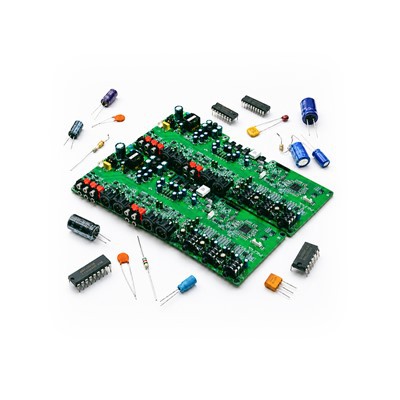
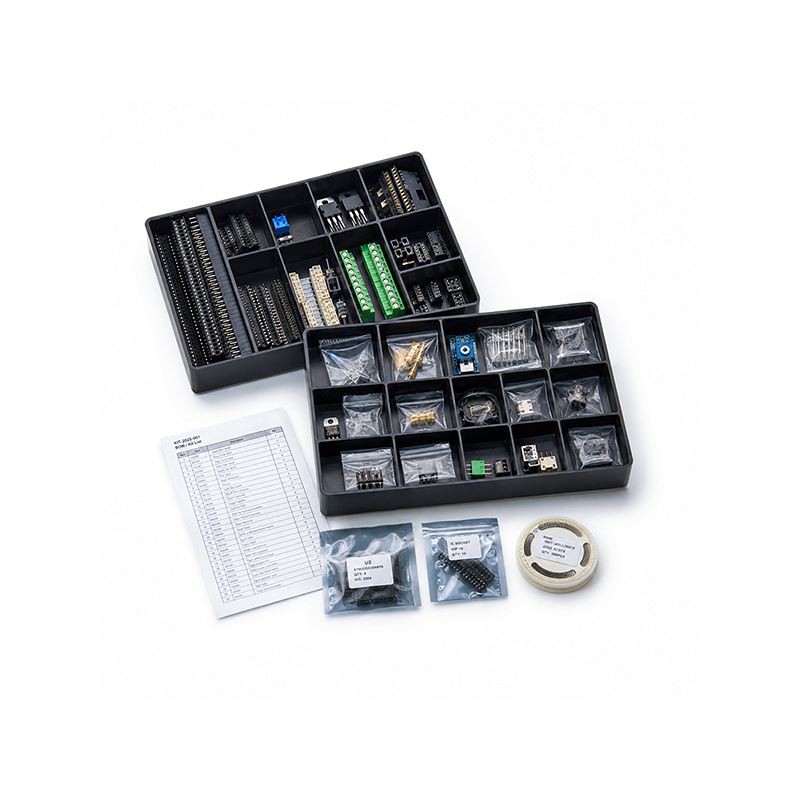
A kit may include SMT components, through-hole parts, connectors, ICs, sensors, cables, labels, fasteners, programmed parts, customer-supplied parts, consigned materials, and production support items. In a prototype project, the kit may be small. In a mixed-technology PCBA project, it can include hundreds of line items across SMT assembly, THT / DIP assembly, testing, and final integration.
A practical way to see the difference:
Picking finds parts.
Kitting makes those parts usable for a specific production job.
That difference matters. A warehouse team may pick a reel, tray, tube, or bag from stock. But production still needs to know whether the part matches the BOM, whether the quantity is enough, whether the package works for placement, and whether the material can be released to the line.
One field judgment: if a kit cannot be matched clearly to the BOM, CPL, and assembly drawing, it is not production-ready. The parts may be physically present, but the production team still cannot use them with confidence.
What Should Be Checked During Component Kitting?
A good kitting check is not complicated in theory. In practice, it saves a lot of production-floor trouble.
Before materials are released, the team should confirm:
- Are all BOM items physically available?
- Are customer-supplied parts separated from STHL-sourced parts?
- Are manufacturer part numbers and package types correct?
- Are quantities enough for the build quantity and normal setup loss?
- Are SMT parts supplied in usable reels, trays, tubes, or cut tape?
- Are sensitive parts protected against ESD or moisture exposure?
- Are labels clear enough for IQC, warehouse control, and production release?
Material readiness does not mean "the cartons have arrived." It means each part is identified, counted, approved, labeled, stored correctly, and usable for the actual assembly process.
Another field judgment: if a part arrives in a mixed bag with no MPN, no quantity record, and no reference designator link, it should not go straight to production. Even if the part looks correct, the risk has not been cleared.
How Does Electronic Component Kitting Work?
Electronic component kitting usually starts with the BOM, but it also depends on project files and production requirements.
For PCBA projects, STHL may review the kit against the BOM, Gerber files, pick-and-place file / CPL, assembly drawing, approved vendor information, customer-supplied material list, and special handling notes.
A typical electronic component kitting process may include:
- BOM line item review
- Manufacturer part number checking
- Package and footprint confirmation
- Quantity checking against build demand
- Customer-supplied parts registration
- Consigned material separation
- Component labeling
- ESD and moisture-sensitive material handling checks
- Kit preparation before production release
This step becomes especially important when a project includes both Electronic Components Sourcing and customer-supplied materials. Sourced parts and consigned parts need to come together as one usable production kit, not as two separate piles of components.
This is where many small mistakes are caught. A similar-looking connector, a capacitor in the wrong package, or a reel with unclear direction can all become expensive later if nobody stops to check them before assembly.

What Is SMT Kitting?
SMT kitting means preparing surface-mount components in a format suitable for SMT placement.
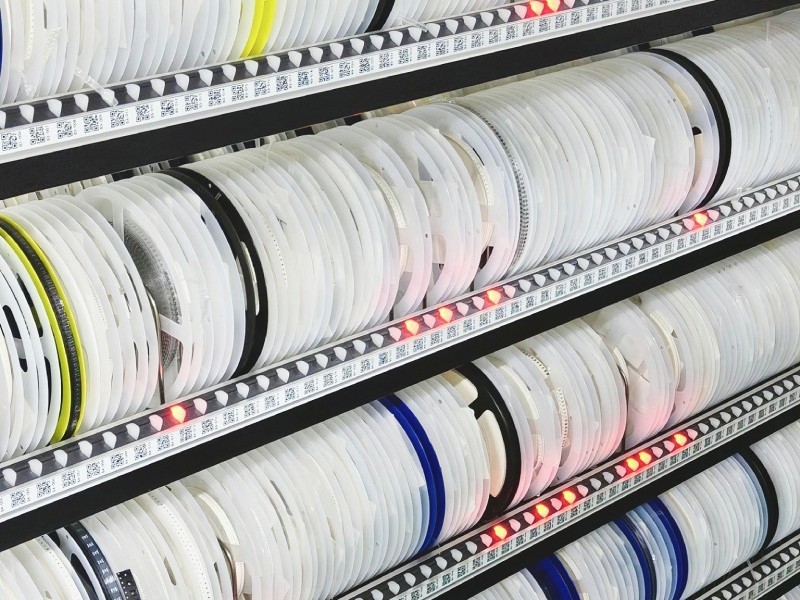
This may include reels, cut tape, trays, tubes, moisture barrier bags, labels, and feeder-ready packaging where applicable. For small components such as resistors, capacitors, diodes, ICs, LEDs, and sensors, the packaging format can affect how smoothly the placement process runs.
SMT kitting usually needs attention to:
- Part number and value
- Package size
- Polarity and orientation
- Reel or cut tape direction
- Quantity and spare quantity
- Moisture sensitivity and storage condition
- Label clarity
- Lot or batch traceability where required
The issue is not only whether the part has been purchased. It is whether the material can actually be released to the SMT line without extra clarification.
For kitting services for PCB assembly, this is where production experience matters. A part that looks fine on a purchasing spreadsheet may still create problems if the package format, quantity, or label does not fit the assembly process.
How Should Customer-Supplied Parts Be Prepared?
Customer-supplied parts are common in PCBA and EMS projects.
Some buyers prefer to provide expensive ICs, programmed devices, long-lead-time components, proprietary parts, or components already controlled by their internal supply chain. That is normal. But these parts still need to be prepared clearly before assembly.
For smoother handling, buyers should provide:
|
Information |
Why It Matters |
|
Manufacturer part number |
Confirms the exact component |
|
Quantity supplied |
Helps compare received quantity with required build quantity |
|
BOM line item / RefDes |
Connects the part to the correct placement location |
|
Package format |
Confirms whether the part is suitable for SMT or THT assembly |
|
Label information |
Helps warehouse and production teams identify the part |
|
Special handling notes |
Supports moisture-sensitive, ESD-sensitive, or programmed parts |
|
Approval status |
Confirms whether the part can be used without further review |
Customer-supplied parts should not be mixed without clear identification. If two similar ICs, connectors, or capacitor values arrive with unclear labels, the risk is not just warehouse confusion. It can become a wrong-part assembly issue.
A useful boundary case: if a customer supplies only the exact BOM quantity, the project may still be at risk. Small SMT parts, cut tape, and prototype builds usually need reasonable allowance for setup, placement loss, engineering confirmation, or replacement during assembly.
What Are Consigned Materials in PCB Assembly?
Consigned materials are customer-owned parts sent to the EMS supplier for use in a specific PCBA or EMS project.
In some projects, all components are consigned. In others, only selected parts are supplied by the customer while the EMS supplier sources the rest. This is often called partial turnkey, hybrid sourcing, or consigned assembly.
A consigned assembly model may be useful when:
- The customer already owns the inventory
- Certain components are controlled by the customer
- Long lead time parts were purchased in advance
- Programmed ICs or customer-specific parts must be supplied directly
- The customer wants the EMS supplier to source only standard components
Still, consigned materials are not automatically production-ready. They need to be checked, labeled, counted, stored, and matched with the BOM before release.
In a turnkey project, kitting is mainly the handoff from procurement to production. In a consigned project, it is the handoff from the customer's material control to the EMS factory. In a partial turnkey project, both sides share the risk, so the kitting process must clearly separate customer-supplied parts from STHL-sourced components.
This is also why component kitting should not be treated as standalone component warehousing. At STHL, it is mainly used to support PCBA and EMS project delivery.
How Does Material Preparation Reduce Assembly Risk?
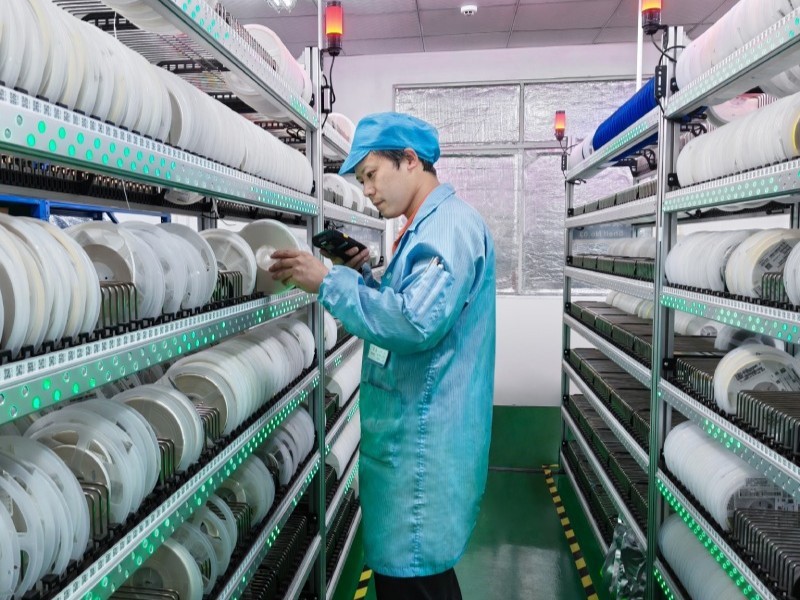
Material preparation is the bridge between sourcing and production.
Before assembly begins, every part in the kit should have a clear status: received, checked, short quantity, pending approval, customer-supplied, STHL-sourced, replacement under review, or ready for release.
This helps reduce common production problems:
- Missing parts discovered during line setup
- Wrong package found after purchasing
- Unclear polarity or orientation
- Customer-supplied parts mixed with sourced parts
- Insufficient spare quantity for SMT placement
- Long lead time components not separated early
- Parts waiting for approval when production is already scheduled
Material readiness is not the same as inventory arrival. It means the parts are identifiable, counted, approved, labeled, stored correctly, and usable for the actual manufacturing process.
Moisture-sensitive devices, programmed ICs, high-value chips, and customer-supplied reels may require extra handling before release. Depending on the material condition and project requirements, this may include packaging checks, controlled storage, or additional confirmation before SMT placement.
These details may look small from a purchasing spreadsheet. On the production floor, they are not small.
How Does Component Labeling Support Traceability?
Component labeling is one of the simplest parts of kitting, but it has a big effect on production reliability.
A good label helps the production team quickly understand what the part is, where it belongs, and how it should be handled.
Useful label information may include:
- Customer project name or order number
- BOM line item
- Reference designator range
- Manufacturer part number
- Quantity
- Package type
- Customer-supplied or STHL-sourced status
- Lot or batch information where required
- Special handling notes
Labels do not need to be complicated. They need to be consistent.
For kitting and assembly, consistency is often more useful than a label full of information nobody can read quickly. A clear label helps IQC, warehouse storage, SMT setup, THT assembly, and final material reconciliation.
Poor labeling creates hidden cost. It slows down checking, increases communication loops, and raises the chance of wrong-part handling. Good labeling makes the kit easier to trust.
What Is the Difference Between Full Turnkey, Partial Turnkey, and Kitted Assembly?
Different PCBA projects need different material models. The best choice depends on project stage, component availability, buyer control requirements, and production risk.
Full Turnkey Assembly
STHL sources approved components and prepares the complete material kit for the PCBA project.
This model is usually easier for buyers who want one supplier to manage sourcing, preparation, and production coordination.
01
Partial Turnkey Assembly
The customer supplies selected key parts, while STHL sources the remaining components and prepares the combined kit.
This model is common when the customer controls proprietary, expensive, programmed, or long lead time components.
02
Kitted or Consigned Assembly
The customer supplies all or most components, and STHL checks and prepares the supplied materials for assembly.
This model can work well when the buyer already has stock, but it depends heavily on clear labeling, correct quantities, usable packaging, and good communication before shipment.
03
Hybrid Material Model
Some parts are customer-supplied, some are sourced by STHL, and some may require approval or alternative review before release.
These models are not about which one is always better. They are about which one fits the project.
A startup prototype, an industrial control board, a medical electronics project, and a production PCBA order may all need different material control logic.
04
How Does Component Kitting Support PCB Assembly and Box Build?
Component kitting supports the full production workflow, not just SMT placement.
For a board-level project, the kit must support PCB Assembly. For projects with inspection and verification requirements, the material kit also needs to align with Testing and Inspection. For products that require cables, enclosures, labels, packaging, and final integration, material preparation may extend into Box Build Assembly.
This is where component kitting becomes part of a larger EMS process.
A well-prepared kit helps production teams move from incoming inspection to SMT, THT, testing, and final assembly with fewer interruptions. It also helps buyers understand which materials are ready, which are waiting, and which need approval before the build can proceed.
For box build projects, the same logic applies beyond the PCB. Cables, enclosures, fasteners, labels, packaging materials, and other assembly-related items also need to be available and matched to the production scope. Otherwise, the board may be finished, but the final product still cannot be shipped.
How Does Component Kitting Fit Into Components Sourcing?
Component kitting belongs inside the broader components sourcing workflow.
BOM Sourcing helps define what needs to be sourced, checked, or prepared. Electronic Components Sourcing helps obtain approved parts. Component kitting organizes those parts into a usable production kit. Production Support Materials may also be included when the project requires labels, fasteners, cables, packaging, or other assembly-related materials.
In practice, component kitting is not an isolated service. It is part of material control before PCBA manufacturing.
For buyers, this matters because a project does not move forward just because parts are purchased. It moves forward when parts are ready for production.
Conclusion
Component kitting is not the loudest part of a PCBA project, but it often decides whether production starts cleanly or starts with questions.
A good kit helps reduce wrong-part risk, missing material delays, labeling confusion, packaging mismatch, and last-minute production clarification. It gives engineering, sourcing, warehouse, and assembly teams a clearer path from BOM review to material release and production.
For component kitting, SMT kitting, customer-supplied parts, or turnkey PCBA support, you can send your project details or contact STHL at info@pcba-china.com.
Hot Tags: component kitting, China component kitting manufacturers, suppliers, factory, components sourcing, Manufacturing Consumables, pcb component sourcing, PCB Substrate Materials, power supply pcb components, Production Support Materials