


Some products begin with a complete specification package. Others begin with a customer saying, in effect, "We think there is a better way to solve this everyday problem."
This project started with the second type of brief.
The original idea was to create a smart cushion for long sitting sessions - a product designed around a more active sitting experience, with air-chamber pressure support, targeted vibration, and gentle heating working together in one consumer product. The client brought the idea. Turning that idea into a launch-ready product was handled by Shenzhen STHL Technology Co., Ltd. (STHL).
That is the core of this case: STHL supported the project as an end-to-end ODM development program, covering concept translation, product realization, electronics design, prototyping, structural execution, and final product integration.
For OEM and ODM buyers, that is what makes this project worth studying. It shows what happens when a supplier is not only asked to assemble a finished design, but to help turn an early concept into a product that can actually be prototyped, refined, built, and prepared for public launch.
The Starting Point Was a Real Everyday Use Problem
The product concept was built around a familiar situation: people now spend long hours sitting while working, commuting, gaming, or relaxing. Traditional sitting is static. Pressure stays concentrated in the same areas, movement is limited, and sitting comfort often declines over time.
The product direction was to respond to that pattern with a cushion that could introduce subtle changes in pressure, warmth, and movement during everyday sitting. The goal was not to create a complicated wellness device or ask the user to adopt a new routine. It was to develop a product that could fit naturally into sitting habits people already had.
That sounds simple in product language. In development terms, it is not.
A product like this sits at the intersection of consumer electronics, body-adjacent product design, control logic, materials behavior, and manufacturability. That combination is what made the project a true ODM case rather than a standard PCB Assembly job.

What STHL Covered in This Project
In this project, STHL handled the product as a connected development and manufacturing workflow.
Our scope included:
- concept translation and early product-definition work
- external product design
- material coordination and surface-layer selection
- foam selection and internal support-layer design
- electronics architecture planning
- PCB main board design
- PCBA development
- power-circuit planning
- control logic design
- prototype development and iteration
- mold and injection execution support
- wire harness integration
- final product integration and assembly readiness
- validation and launch-ready manufacturing preparation
This is an important distinction. The client did not hand over a fully frozen design package and ask only for manufacturing. The product moved from idea to execution through a set of connected design, engineering, and realization steps that STHL helped drive.
What This Project Required from STHL
At a practical level, the project required STHL to connect several stages that are often split across different suppliers:
product concept translation
external product and comfort-layer development
PCB main board and control design
prototype refinement
mold, harness, and final product integration
launch-ready manufacturing preparation
That connected scope is what gave the project continuity from early idea to public launch.
Why This Project Was More Complex Than a Typical PCBA Program
A standard PCBA project can often be assessed mainly through board design, sourcing, assembly, and test requirements. This project involved those elements, but the challenge was broader.
The product had to work as a complete experience, not just as an electronic assembly. The board, the support structure, the foam, the outer form, the heating function, the vibration behavior, the air-chamber function, the wiring, and the final assembly path all had to support one another.
A multi-function comfort product can look like one consumer item to the user while behaving like several coupled subsystems during development.
That is why this kind of product typically demands stronger cross-disciplinary coordination than a normal PCBA build.
Key Project Challenges - and How STHL Addressed Them

Multiple functions had to behave like one product
Heating, vibration, and air-chamber pressure support may appear as separate features in product copy, but they cannot be developed as isolated decisions.
Once these functions share one control platform, they affect overall system behavior, mode switching logic, power stability, user-response consistency, and integration risk during prototyping. If each function is handled separately, the product may still work at a basic level, but the experience often becomes fragmented. Modes may not feel coherent. Output behavior may vary too much. Integration complexity tends to increase later.
STHL action:
STHL approached the electronics side as one coordinated system. The PCB main board, power behavior, and control logic were planned around integrated operation rather than separated feature blocks.
Result:
This gave the project a more unified electronics foundation. Instead of patching together unrelated functions, the prototype could move forward with a cleaner control architecture.
Heating, vibration, and air-chamber functions could not be separated in control logic
In projects like this, the real design work begins when product intent has to be translated into control behavior.
Heating, vibration, and air-chamber actuation do not just need to exist; they need to behave in a way that feels balanced and predictable in actual use. That means function timing, switching, coordination, and power behavior matter much earlier than many first-time buyers expect.
STHL action:
STHL focused on the PCB main board and control logic as a shared platform. The goal was not only to enable different functions, but to make sure they could be selected, combined, and managed in a way that still supported the intended product experience.
Result:
The project was able to move toward prototype validation with a stronger control baseline, reducing the risk of a technically functional but user-incoherent product.
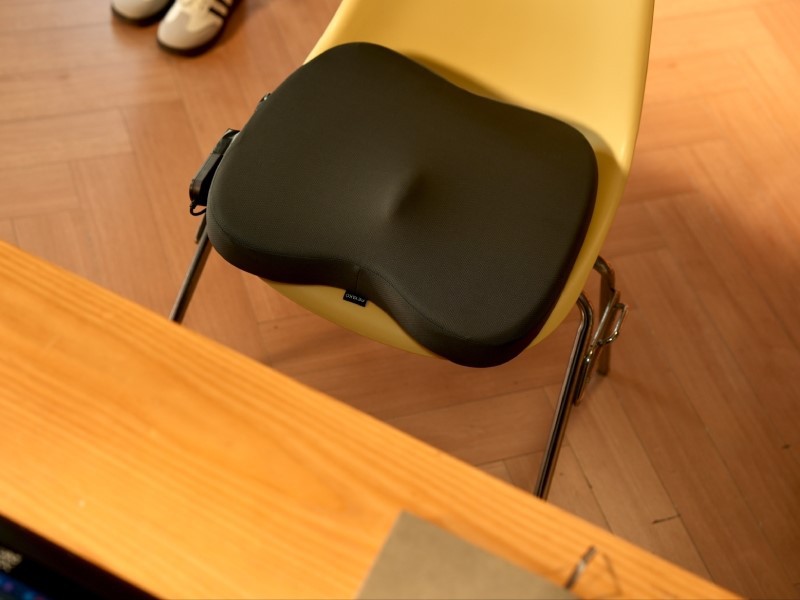
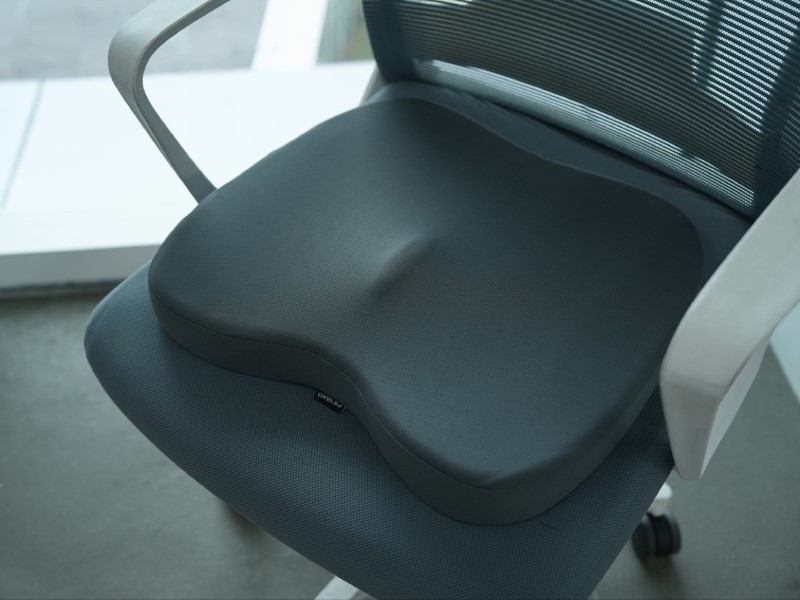
Early prototypes had to expose alignment problems, not just prove that power turned on
For this product, the first prototype was never just about basic electrical function.
The more important questions were:
- Do the functions work together in a way that still matches the original idea?
- Does the control response feel consistent enough?
- Does the product still make sense once the structure, electronics, and comfort layers are combined?
- Which decisions need refinement before the design can mature?
In projects like this, early prototypes are useful less for proving that power turns on and more for exposing where product intent and system behavior still do not line up.
STHL action:
STHL used prototype development as a refinement stage rather than a simple proof-of-function checkpoint. Board-level behavior, structural integration, and product-level response were reviewed together so directional adjustments could happen before the design was pushed forward too early.
Result:
Prototype work became a development tool, not a formality. The project kept room for meaningful refinement before entering a more launch-ready phase.
This product required more cross-disciplinary coordination than a standard board project
A normal PCB or PCBA project may be managed mainly through electronics design, sourcing, assembly, and testing. Here, that would not have been enough.
The external form, surface materials, foam layers, electronics control, air-pressure path, heat behavior, wire routing, mold realization, and final product assembly all influenced one another. A change in one area could affect another.
STHL action:
STHL handled the work as a connected ODM process rather than as disconnected departmental tasks. Product design, PCB and PCBA development, prototype work, mold execution, wire harness integration, and assembly readiness were advanced as linked stages.
Communication was part of the engineering work. Product intent had to be translated into engineering requirements, and engineering constraints had to be translated back into design decisions.
Result:
This reduced the gap between concept and execution. Instead of allowing the project to split into separate design and manufacturing tracks, the product could move forward on one coordinated path.

Why End-to-End ODM Capability Mattered in This Case
This case is useful because it shows what end-to-end ODM support actually looks like in practice.
It is not just the ability to design a board. It is the ability to connect the stages around that board:
- concept clarification
- external product realization
- support-layer and material decisions
- PCB and PCBA development
- power and control planning
- prototype iteration
- mold execution
- harness integration
- final product integration
- launch-ready preparation
That also maps naturally to the service structure STHL already presents publicly, including PCB Design and Layout, PCB Prototyping, PCB Assembly, Testing and Inspection, and Box Build Assembly, along with related sourcing and integration work needed to support real project execution.
For buyers, the lesson is simple: many product ideas do not fail because the idea is weak. They fail because no one is clearly responsible for connecting the idea, the board, the structure, the wiring, the mold, the prototype, and the final product build into one coherent process.
From Development to Public Launch
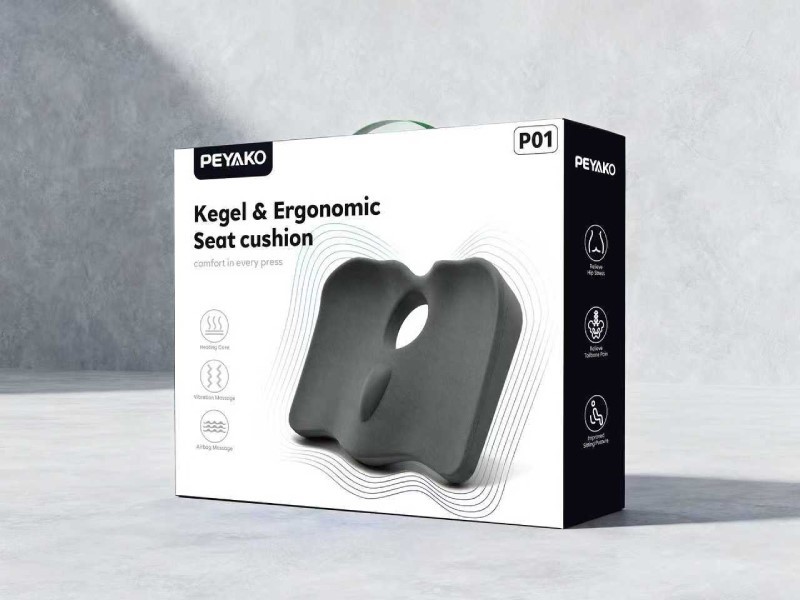
The product later moved into a public Kickstarter launch under the name PEYAKO Smart Cushion.
That matters less as a promotional event than as a development milestone. It shows the project progressed beyond internal concept work and prototype discussion into a product state ready for public release.
For STHL, the more important part of the story is what had to happen before that stage: the product had to be defined, designed, prototyped, integrated, refined, and physically realized well enough to move toward launch.
That is the part of the case that best demonstrates real ODM capability.
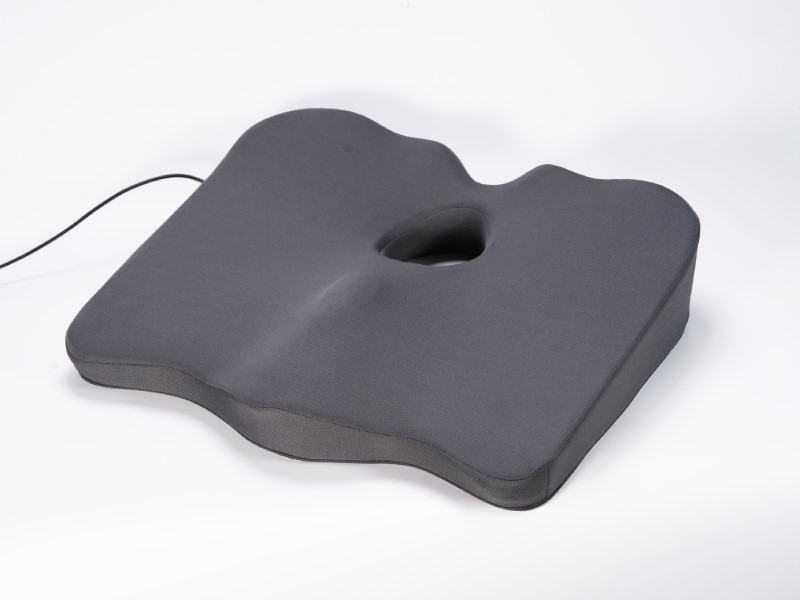
What Other OEM and ODM Buyers Can Take from This Case
This project highlights a few practical points.
First, products that appear simple on the surface can create highly integrated development demands underneath.
Second, once heating, vibration, and air-chamber functions have to work together in one product, PCB design, power logic, structure, and manufacturing readiness quickly become interconnected.
Third, this is where a capable ODM partner adds value. Not by making broad claims, but by helping the client move from concept to execution without losing control of the design path.
For buyers working on consumer electronics products that combine user experience with electronics behavior, that kind of coordination often matters more than they initially expect.
Conclusion
This project was not simply about placing electronics inside a cushion.
It was about turning a sitting-related product idea into a launch-ready consumer electronics product through coordinated ODM development.
In this case, STHL's role covered the stages that made that possible: concept translation, external product design, material and support-layer development, PCB and PCBA design, power and control logic planning, prototype refinement, mold and injection support, wire harness integration, and final product assembly readiness.
That is what makes this case useful as proof of STHL's design and problem-solving capability.
It shows that our value is not limited to building a finished board. It includes helping move an unfinished product idea toward something technically coherent, physically executable, and ready for the next stage.
FAQ
What did STHL mainly contribute to this project?
STHL supported the project as an end-to-end ODM workflow, including concept translation, external product design, material and support-layer development, PCB main board design, power and control logic development, prototyping, mold and injection support, wire harness integration, and final product integration readiness.
Why was this project more complex than a normal PCBA case?
Because heating, vibration, and air-chamber functions had to work together as one coordinated product system. The project also required alignment across structure, materials, electronics, control logic, prototyping, mold execution, wiring, and final assembly.
Why is this case relevant to other OEM or ODM buyers?
Because it shows what happens when one partner helps move a product from idea to execution. It is a practical example of how coordinated ODM development reduces gaps between concept, PCB design, product integration, and manufacturable realization.
For Readers Interested in Similar Development Work
This case is a useful example of how a consumer electronics concept can move from idea to public launch through connected design, engineering, and manufacturing stages.
For teams exploring similar products, it also shows why early coordination across product form, PCB design, control logic, prototype refinement, and integration work matters more than many first-time buyers expect.
For related capability context, you can also review STHL's Consumer Electronics solution coverage and PCB Assembly capability. If you would like to discuss a similar development path, you can use Request a Quote or contact the team at info@pcba-china.com.


