


There is a point in many industrial electronics projects when the team realizes a tested PCBA is not the same thing as a shippable product.
The board works.
The firmware boots.
The first test report looks clean.
Then the next questions arrive.
Where does the board sit inside the enclosure?
Who confirms the cable route?
Is the power supply included in the build scope?
Which firmware version should be loaded?
How will the finished unit be tested?
Who applies the serial number label?
What should be packed with each unit?
This is where many projects slow down. Not because the SMT line failed, and not because the board was impossible to assemble. The trouble usually appears at the handoff points between PCBA, sourcing, wiring, enclosure fit, firmware, functional testing, labeling, packaging, and shipment readiness.
That is where an EMS partner can add real value.
Not by simply claiming to "do everything," but by helping the OEM buyer control the steps between a working board and a repeatable, tested, system-level deliverable.
For industrial electronics, the useful question is not only:
"Can this supplier build the PCBA?"
The better question is:
"Can this supplier help move the project from a working board to a finished product that can be assembled, tested, packed, traced, and shipped without needing engineers to step in at every handoff?"
That is the difference between board-level delivery and system-level delivery.
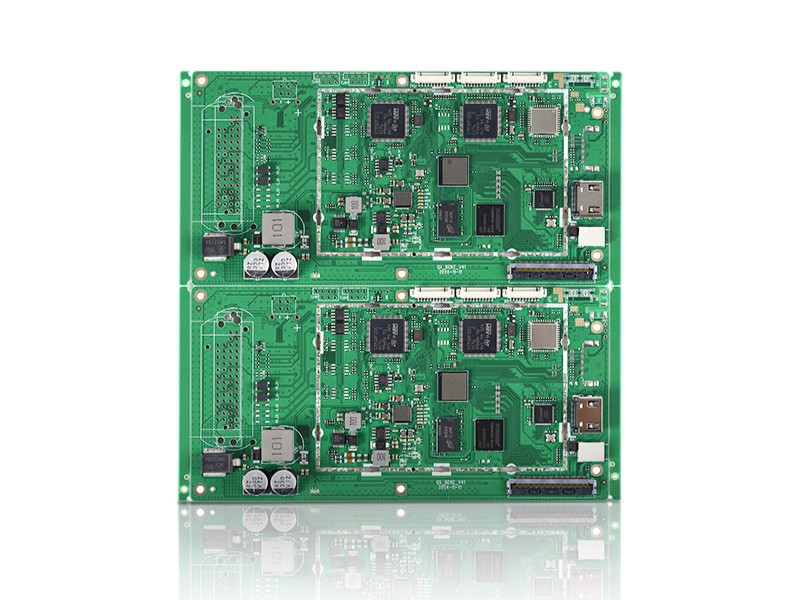
The Gap Between Board-Level and System-Level Delivery Is Larger Than It Looks
A PCBA is a core part of the product.
It is not the whole product.
System-level delivery may involve enclosure assembly, wire harnesses, displays, power modules, thermal materials, buttons, indicators, labels, accessories, packaging, firmware loading, functional testing, and final records.
For a simple project, the gap may be small: install the board, connect a cable, run a basic check, and pack the unit.
For an industrial electronics project, the gap can be much wider.
A gateway may require Ethernet, COM, Wi-Fi, storage, power input, enclosure grounding, firmware loading, MAC address recording, and interface testing. An industrial controller may require relay checks, terminal block wiring, labeling, insulation spacing, enclosure fit, and functional test records. An embedded system may require BIOS settings, OS image loading, storage detection, thermal contact, display output, and final configuration labeling.
This is why system-level delivery should not be treated as a casual "final assembly" step.
Once the PCBA enters the system, electrical decisions meet mechanical constraints. A connector that looked fine on the board can miss the enclosure opening. A cable that worked on the bench can be pinched by the lid. A thermal pad can be specified but fail to make consistent contact. A label can be approved too late and delay packing.
These are not soldering defects.
They are system integration risks.
The earlier those risks are visible, the less likely they are to become line issues.
Handoff 1: From Design Files to a Buildable PCBA
The first handoff is from engineering data to a buildable PCBA.
Gerber files and a BOM are necessary, but they are not the whole manufacturing story. The EMS partner still needs to understand whether the board can be assembled, inspected, programmed, tested, reworked, and repeated.
A practical review usually looks at:
- PCB revision and BOM revision alignment
- clear manufacturer part numbers
- approved alternates for sensitive parts
- SMT and through-hole process requirements
- connector orientation
- board-edge parts and mechanical clearance
- tall components and thermal parts
- programming needs
- test access
- rework and retest expectations
This is where DFM and DFT review should connect to the real delivery path.
A board may be electrically correct but hard to test after a heatsink is installed. A connector may be correctly placed but difficult to mate once the enclosure is closed. A test point may be available on the bare board but blocked after a bracket or cable is added.
An EMS partner should not only ask whether the PCB can be assembled.
The better question is whether the PCBA can move into the next stage without creating hidden problems.
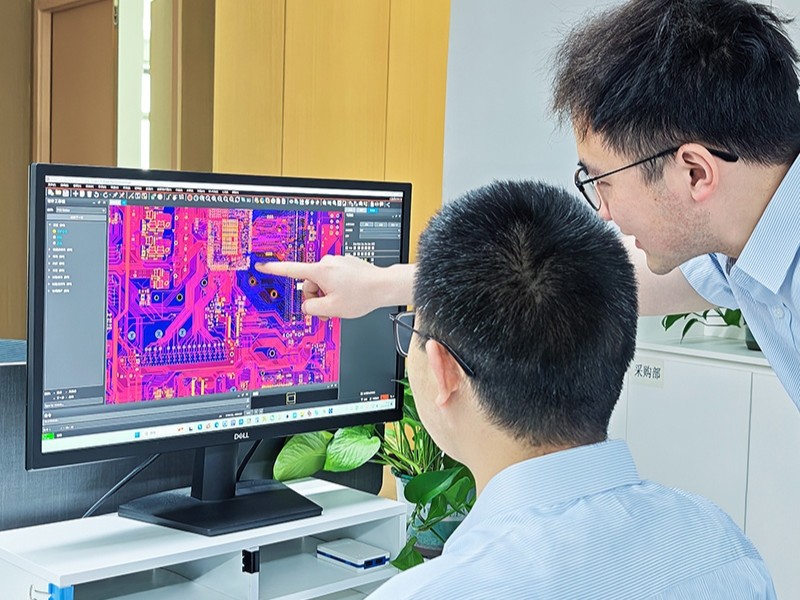
Handoff 2: From Sourcing to Repeatable Production
Component sourcing is often discussed as a cost issue.
In industrial electronics, it is also a repeatability issue.
A prototype can sometimes be built with parts that were available once. A production project needs a sourcing plan that supports future builds, controlled substitutions, and stable records.
This includes electronic components, but it also extends to mechanical and electromechanical items:
- connectors
- cable assemblies
- terminal blocks
- power supplies
- displays
- buttons and LEDs
- fasteners and standoffs
- thermal pads or heatsinks
- labels and overlays
- packing materials
A missing fastener can stop a line just as effectively as a missing IC. A cable that arrives with the wrong length can delay a finished unit even when every PCBA is ready. A replacement connector can fit the footprint but fail to align with the panel cutout.
This is why an EMS partner should help the OEM separate routine parts from risk-sensitive parts.
Not every item needs heavy control. But parts that affect fit, firmware, power, field service, or customer installation should not be substituted casually.
The goal is not to freeze every item forever. That is rarely realistic.
The goal is to make substitutions visible, approved, and documented before they change the next batch.
Handoff 3: From PCB Assembly to Testing and Inspection
Testing should not be bolted on after assembly.
It should be designed into the production flow.
Board-level testing may include visual inspection, AOI Inspection, X-Ray Inspection where appropriate, ICT, flying probe, FCT, programming, or customer-specific checks. The right combination depends on the board design, application risk, batch stage, and buyer requirements.
The point is not to make every project heavy.
The point is to make the test scope match the real risk.
An AOI-only build and a build that needs fixture-based FCT are not on the same production path. A board that requires firmware loading is not the same as a board that ships unprogrammed. A PCBA that will later sit inside an enclosure may need test access reviewed before mechanical parts block the important areas.
This is also where feedback matters.
If several units fail at the same connector, the issue may not be "bad luck." It may point to soldering, connector mating, cable stress, fixture design, handling, or layout tolerance. If programming failures appear inconsistently, the issue may sit in firmware version control, operator instructions, cable connection, or the test software itself.
A capable EMS partner connects assembly results, inspection data, functional test results, rework, and retest into one controlled process.
That is what makes testing useful for delivery stability, not just final screening.

Handoff 4: From PCBA to Mechanical and Wiring Integration
Mechanical integration is where many assumptions meet physical reality.
A chassis can look correct in CAD and still create trouble on the assembly bench. Minor tolerance differences in the PCB, enclosure, connector, standoff, cable, or bracket can add up. The result may be a port that sits slightly off-center, a cover that does not close cleanly, or a cable route that is too tight for repeatable assembly.
This is not unusual.
It is exactly why the transition from PCBA to system-level delivery needs manufacturing review.
The EMS partner should help check:
- enclosure fit
- mounting points
- I/O alignment
- connector access
- cable routing
- strain relief
- thermal pad or heatsink contact
- grounding points
- assembly sequence
- tool access
- label visibility
Cable harnesses deserve special attention.
A harness is not just a group of wires. It affects assembly time, serviceability, airflow, connector stress, noise risk, and long-term reliability. A route that works once on an engineer's desk may not be stable enough for repeat production.
Good cable routing usually looks simple.
That is the point.
If every operator has to decide where to place the same cable, the process is not ready.
Handoff 5: From Firmware and Configuration to Production Records
Hardware can be physically complete but still not ready to ship.
Industrial electronics often depend on firmware, BIOS settings, OS images, driver packages, customer applications, COM port modes, network configuration, serial numbers, MAC addresses, or calibration data.
A working engineering sample is not a production process.
If only one engineer knows which file to load, the build is fragile. If the firmware version changes during production without a record, test results become harder to trust. If MAC addresses or serial numbers are handled manually without clear rules, traceability can become messy quickly.
The EMS partner should help turn configuration into a controlled production input.
That may include:
- firmware file and version
- programming method
- BIOS or system settings
- OS or storage image
- driver package
- customer test software
- MAC address recording
- serial number linkage
- retest rule after rework
- configuration record
For some products, this is simple.
For others, especially connected industrial devices, embedded computers, gateways, and control units, configuration is part of the product identity.
If that identity is not controlled, the finished unit may be difficult to support later.
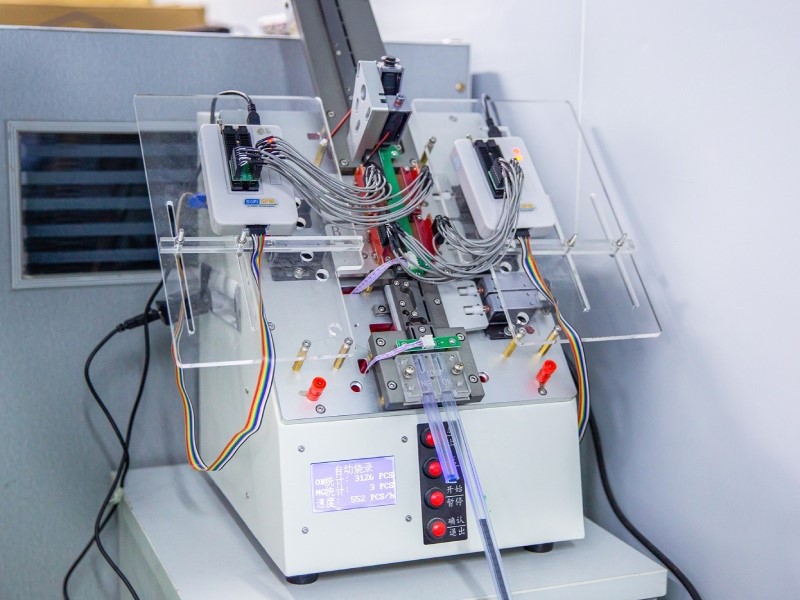
Handoff 6: From Finished Unit to Traceable Delivery
The final handoff is from a completed unit to a product the buyer can receive, identify, install, and support.
This stage is more than placing the product in a carton.
It may involve:
- final functional test
- visual inspection
- product label
- serial number label
- MAC address label
- configuration label
- accessory checklist
- packing material
- carton label
- test record
- batch record
- shipment readiness review
For simple products, the record may be lightweight. For industrial electronics with longer field use, the buyer may need to know which PCBA revision, BOM revision, firmware version, test result, or packing batch belongs to each unit.
The worst time to define traceability is after a field problem appears.
This does not mean every project needs a heavy documentation package. It means the record level should match the product risk and customer requirement.
Packaging follows the same logic.
A product can pass final test and still create problems if cables are missing, accessories are mixed, labels cannot be scanned, ports are damaged in transit, or the receiving team cannot match the unit to the records.
System-level delivery is complete only when the finished product can be received and used without another round of guessing.
What the EMS Partner Actually Owns
When an OEM moves from PCBA delivery to system-level delivery, the EMS partner's responsibility changes.
The partner is no longer only placing components on the board.
It may now own parts of the manufacturing flow that include sourcing coordination, build sequence, test execution, integration control, work instructions, records, labels, packaging, and final shipment readiness.
That does not mean the EMS partner replaces the OEM's engineering team.
The OEM still owns the product design, application requirements, and final acceptance criteria.
The EMS partner owns build discipline.
That distinction matters.
A mature project works best when the OEM defines what the product must be, and the EMS partner defines how to build, test, document, and repeat it consistently within the agreed scope.
Problems appear when those boundaries blur. If the OEM sends incomplete requirements, the EMS partner may be forced to guess. If the EMS partner changes materials, process, or configuration without approval, the OEM loses control.
Good system-level delivery depends on clear ownership, not vague promises.
A Practical Handoff Map for Industrial Electronics Projects
Instead of asking whether an EMS partner can "do everything," OEM buyers can map the project by handoff point.
|
Handoff Point |
What Should Be Controlled |
|
Design files to PCBA |
Gerber or ODB++, BOM, assembly drawing, DFM / DFT notes, test access |
|
Sourcing to production |
MPNs, approved alternates, buyer-supplied materials, long-lead parts, substitution approval |
|
Assembly to inspection |
SMT, through-hole process, AOI, X-Ray where appropriate, visual inspection, rework checks |
|
PCBA to test |
ICT, flying probe, FCT, programming, test cables, fixtures, pass/fail criteria |
|
Board to system |
Enclosure fit, wire harness, I/O alignment, thermal path, mounting, cable routing |
|
Configuration to shipment |
Firmware, BIOS, OS image, serial number, MAC address, test software, version control |
|
Finished unit to delivery |
Labels, accessories, packaging, final inspection, batch records, shipment readiness |
This map is not a universal template.
Some projects need only part of it. Others need nearly all of it.
The point is to find the weak handoff before it becomes the reason a shipment waits.
Where STHL Fits in This Discussion
For OEM buyers working on industrial electronics projects, Shenzhen STHL Technology Co., Ltd. can review the build from a practical EMS and PCBA manufacturing perspective.
Depending on the project, this may include PCB Assembly process review, component sourcing support, Testing and Inspection planning, programming or functional test discussion, wiring and enclosure-related assembly notes, traceability expectations, and Box Build Assembly support.
The goal is not to make every project unnecessarily complex.
A simple board-level build should stay simple. But an industrial electronics project should not be treated as "just PCBA" if the final delivery depends on sourcing stability, testing coverage, mechanical integration, firmware configuration, labels, packaging, and shipment readiness.
Conclusion
Moving industrial electronics from PCBA to system-level delivery is not a single step.
It is a chain of handoffs.
Design files must become a buildable PCBA. Component sourcing must support repeat production. Assembly must connect to inspection and testing. The PCBA must fit the enclosure and wiring plan. Firmware and configuration must be production-ready. Finished units must be labeled, packed, traced, and shipped under clear rules.
An EMS partner adds value by helping control those handoff points before they turn into delays, rework, or field confusion.
For OEM buyers, the practical lesson is simple: do not judge an EMS partner only by whether they can assemble the board. Judge whether they can help move the project from a working PCBA to a repeatable, tested, and shipment-ready industrial electronics product.
Need support moving an industrial electronics project from PCBA to system-level delivery? Submit your files through Request a Quote or contact STHL directly at info@pcba-china.com.


