


Introduction
A prototype build and a pilot build can start from the same schematic, the same PCB data, and even the same BOM. That is exactly why many teams underestimate what changes between them.
The part numbers may still look familiar. The sourcing standard does not.
In prototype PCB assembly, sourcing is there to help the team move quickly. The job is to get enough of the right material in fast enough to validate the design, power the board, support debugging, and keep the next revision moving. In a pilot build, sourcing has a different role. It has to support a real lot with fewer approval gaps, fewer material surprises, and a cleaner handoff to production.
That sounds obvious. In practice, it is where a lot of teams get caught.
If your project is already moving beyond early engineering samples, it makes sense to review that transition against Components Sourcing and PCB Assembly before the next build is released.
The Same BOM Does Not Mean the Same Sourcing Standard
One of the most common buyer assumptions is that pilot-build sourcing is just prototype sourcing at a larger quantity.
It usually is not.
A prototype can move on a narrower material assumption. A part may be acceptable because stock exists today, because the engineer is willing to approve a short-term substitute, or because the immediate goal is simply to get working boards into the lab. A pilot build is less forgiving. The question is no longer whether a part exists somewhere in stock. The question is whether enough supply exists for the full build, whether the source is still workable when the order is placed, and whether that material choice still makes sense once inspection, testing, and shipment are taken into account.
A sample-ready BOM is not automatically a pilot-ready BOM.
That is the first thing buyers should separate.
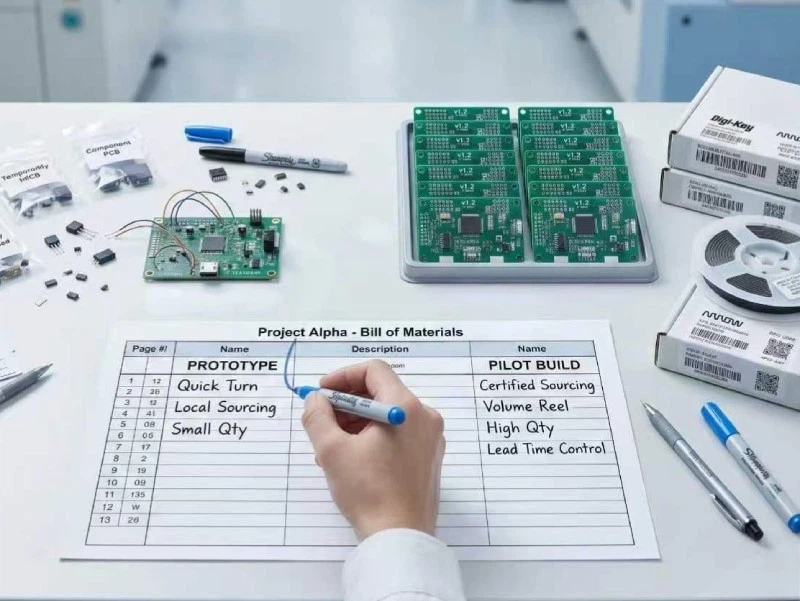
What Buyers Can Usually Live With in a Prototype Build
Prototype sourcing is usually driven by speed, availability, and engineering flexibility.
That often means stock-first purchasing, smaller buys from high-service distributors, and more tactical decisions on lower-risk parts. If the project is still in design validation, that is not poor discipline. It is often the right discipline.
A prototype BOM is also more fluid than many teams like to admit. Parts may still change between revisions. Packaging format may not matter much yet. A higher small-quantity price may still be the right trade if it saves engineering time and gets the build moving.
That is normal.
What matters at this stage is not whether the sourcing plan looks polished. What matters is whether it helps the team answer the design question quickly enough to move forward.
Where prototype flexibility still has limits
Critical parts should not be treated casually. A main MCU, PMIC, connector, RF module, or interface-sensitive part should not be handled as if every fast-available substitute is automatically acceptable.
A prototype can absorb more sourcing flexibility than a pilot build, but it should not absorb ambiguity on the parts that define function, compliance, or future repeatability.
What Pilot-Build Sourcing Has to Support That Prototype Sourcing Does Not
The sourcing shift into pilot build is not just commercial. It is operational.
Once the project enters pilot-build planning, component sourcing stops being only a speed problem. It becomes a control problem.
Full-build availability matters more than sample availability
A part that works for a few boards may still be the wrong sourcing choice for the next stage.
In prototype work, the material question is often simple: can we get enough to build the samples? In a pilot build, the question changes: can we support the full build under the same assumptions?
That is why one constrained MCU, power device, connector, or module can become the real schedule driver even when the design itself looks stable.
In small-batch PCB assembly work, the schedule often moves with the slowest unresolved sourcing item, not the fastest machine.
Alternate-part control becomes more formal
In prototype work, alternates may still be handled tactically, especially on lower-risk items.
In a pilot build, informal alternate logic becomes expensive. A substitute may affect documentation, incoming inspection, programming assumptions, test coverage, or customer approval status. That is why approved alternates should be defined before the build is committed, not after a shortage appears.
MOQ exposure becomes visible
MOQ pressure is easy to ignore in prototype work because the distributor has already absorbed it upstream.
Pilot builds make MOQ visible again. Sometimes that is manageable. Sometimes it changes the cost logic of the whole lot. A team that ignores MOQ too long can end up overbuying the wrong item, or freezing the BOM before it understands which parts are commercially awkward at pilot quantity.
That does not mean every pilot build should be over-purchased. It means MOQ should stop being invisible.
Material control starts to affect execution
Prototype work can absorb more inconsistency in packaging, sourcing channels, and lot structure.
Pilot builds are different. That is usually the point where traceability, incoming control, reel or tray packaging, and lot consistency stop being background details and start affecting execution directly. At that point, sourcing has to support the factory, not just the bench.
Where Teams Usually Get Caught
The most common mistake is not poor purchasing. It is poor timing.
Teams wait until the prototype is functionally validated, then assume pilot sourcing can start under the same logic. That is often too late.
A more stable transition usually requires the sourcing review to start while the design is still converging. That does not mean ordering everything early. It means checking the BOM through a manufacturing and supply-chain lens before the build is committed.
The second mistake is treating every line item with the same sourcing standard. Pilot discipline should focus most heavily on the parts that actually drive project risk:
- long-lead active devices
- single-source or narrow-channel parts
- customer-restricted brands
- interface-sensitive connectors and modules
- components likely to trigger re-validation if they change
Not every resistor needs the same level of control as the main MCU.
The third mistake is assuming the cheapest sourcing path is the best pilot-build path. In low-volume PCB assembly, the better sourcing decision is usually the one that balances price, build-quantity availability, source reliability, alternate readiness, and schedule stability together.
A useful boundary case
A 20-piece build can still require pilot-level sourcing discipline if the design is frozen, customer delivery is involved, and the BOM includes narrow-channel parts.
What Should Be Reviewed Before the Build Is Released
Before a build moves out of pure prototype logic, four sourcing questions should be answered clearly.
1. Is the BOM really sourcing-ready?
A pilot BOM should do more than identify the intended component. It should support real procurement review. That usually means clear MPNs, manufacturer clarity, package consistency, customer restrictions where relevant, and usable alternate logic where alternates are allowed.
2. Which parts are real schedule drivers?
A pilot build usually has a few parts that matter far more than the rest. Those bottleneck items should be identified early rather than discovered while the lot is already being prepared.
3. Are the alternate-part rules already defined?
If alternates are allowed, the rule should be clear. Which items can use approved equivalents? Which parts require written approval? Which substitutions are acceptable only during prototype and not during pilot? Undefined alternate policy slows both purchasing and engineering.
4. Does the sourcing plan still match the build plan?
A pilot build is not just a purchasing event. Material timing has to line up with assembly release, incoming inspection, programming, testing, and shipment. A sourcing plan that ignores the downstream build sequence usually looks cheaper on paper than it performs in execution.
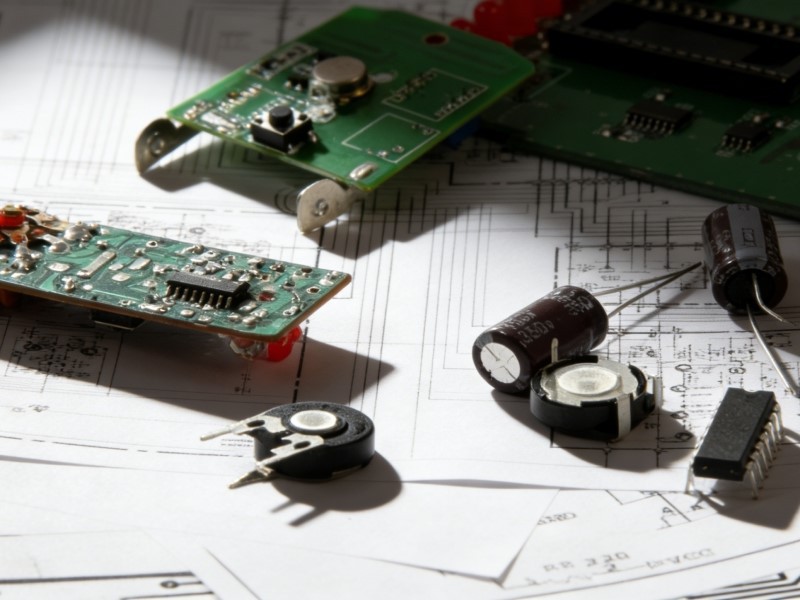
The Handoff Is Cross-Functional, Not Just Procurement
This transition works better when engineering, sourcing, manufacturing, and quality are reviewing the same build at the same time, instead of handing problems to each other one stage later.
Engineering needs to know which parts are still fragile from a sourcing standpoint.
Procurement needs to know which alternatives are actually acceptable.
Manufacturing needs to know whether packaging, quantity structure, and release timing are realistic.
Quality needs to know which incoming materials or substitutions require tighter attention.
When those reviews happen in isolation, pilot builds start looking more stable on paper than they are in practice.
That is also why a stronger handoff between Components Sourcing, PCB Assembly, and Testing and Inspection usually matters more than buyers expect once the project stops behaving like a pure engineering sample.
Why Buyers Feel This Gap More Now
The gap between prototype sourcing and pilot-build sourcing feels wider today because temporary material workarounds are harder to carry forward cleanly.
A part that is easy to secure for a few boards may be harder to support at build quantity. An alternate that seems harmless in the lab may create more work once incoming control, test coverage, or customer approval enters the picture. And a sourcing shortcut that helps one revision move quickly can become the reason the next build slips.
That is why buyers should treat pilot-build sourcing as a stricter planning exercise than prototype sourcing, even when the design itself looks almost unchanged.
Conclusion
Component sourcing changes between prototype and pilot build because the project itself changes.
In a prototype, sourcing is mainly there to help the team move fast.
In a pilot build, sourcing has to support a more disciplined version of the same project: clearer BOM control, better alternate logic, stronger full-build availability, and a build plan that can repeat more cleanly.
That is why prototype sourcing and pilot-build sourcing should not be treated as the same workflow with different quantities.
The most useful test is not whether the BOM still looks familiar. It is whether the sourcing assumptions behind that BOM are still strong enough once the build stops behaving like an engineering sample.
If the build is no longer just proving the design, the sourcing plan should no longer behave like a prototype plan.
If your next project is moving from prototype PCB assembly toward pilot build or low-volume PCB assembly, that is the point to tighten sourcing discipline before the build is released. A practical next step is to review your requirements against Components Sourcing, then submit the project through Request a Quote or contact the team directly at info@pcba-china.com.
FAQ
What is the biggest sourcing difference between a prototype and a pilot build?
Prototype sourcing is usually built around speed and immediate validation. Pilot-build sourcing has to support full-build availability, clearer alternate rules, and stronger control over how the material will behave in execution.
Can the same part numbers be used in both stages?
Sometimes, yes. But the same part number does not automatically mean the same sourcing standard, source reliability, or risk level is still acceptable.
When should alternate parts be reviewed?
Before the pilot build is committed. If alternate rules are still being improvised after release, the project is already carrying avoidable risk.
Does pilot-build sourcing always mean the lowest-cost path?
No. In pilot builds, the better sourcing path is usually the one that balances price, availability, traceability, and schedule stability together.


