


Reflow soldering stands as a crucial process in PCB (Printed Circuit Board) assembly, and at our company, as a trusted PCB assembly supplier, we rely on its precision and efficiency to create high - quality PCBs for our clients. In this blog, we'll delve into the details of how reflow soldering works in PCB assembly.
The Basics of Reflow Soldering
Reflow soldering is a method used to attach surface - mount components (SMD) to printed circuit boards. Unlike through - hole soldering techniques such as Wave Soldering and Manual Through Hole Assembly, which involve inserting component leads into holes on the PCB and soldering them, reflow soldering places components directly on the surface of the PCB.
The process primarily uses solder paste, which is a mixture of tiny solder particles suspended in a flux medium. The flux serves multiple purposes. It cleans the metal surfaces of the PCB pads and component leads, removing oxides that could prevent proper soldering. Additionally, it helps the molten solder to flow easily and adhere to the surfaces during the reflow process.
Step - by - Step Process of Reflow Soldering
1. Solder Paste Application
The first step in reflow soldering is applying the solder paste onto the PCB pads. This is typically done using a stencil. The stencil is a thin sheet, usually made of stainless steel, with holes precisely aligned with the PCB pads. A solder paste printer spreads the solder paste evenly over the stencil, and as the squeegee moves across the stencil, the paste is forced through the holes and onto the pads.
The thickness and volume of the solder paste applied are critical. Too little solder paste may result in weak solder joints, while too much can lead to bridging between adjacent pads, causing short - circuits. Our experienced technicians at the PCB assembly facility carefully control these parameters to ensure the right amount of solder paste is applied for each component.
2. Component Placement
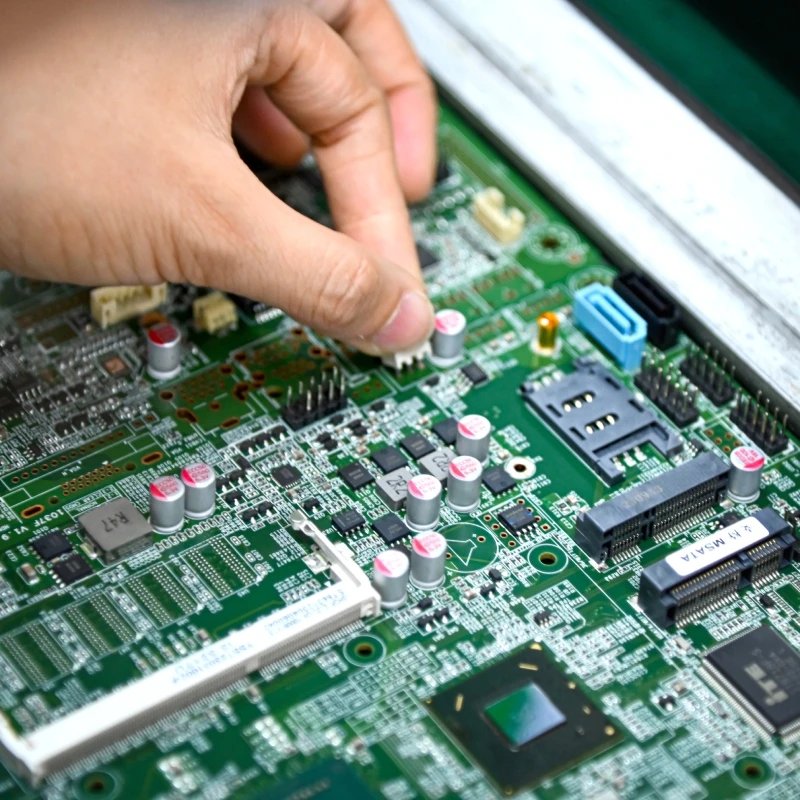
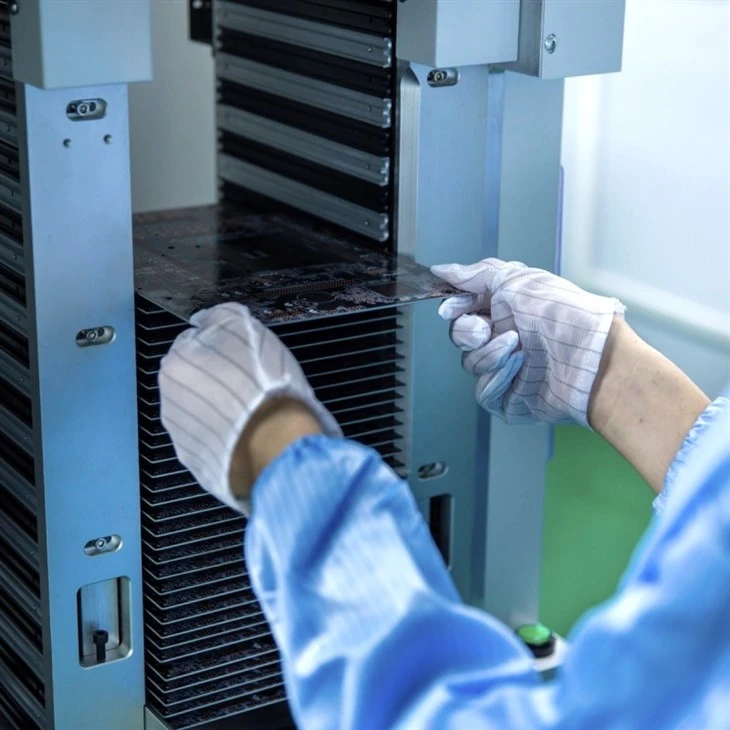
After the solder paste is applied, the surface - mount components are placed on the PCB. This is accomplished using a pick - and - place machine. The machine has a robotic arm equipped with a vacuum nozzle that picks up components from a feeder and places them accurately on the solder paste - coated pads.
The pick - and - place machine can handle a wide variety of component sizes and shapes, from tiny resistors and capacitors to larger integrated circuits. High - speed pick - and - place machines can place hundreds of components per minute with high precision, which is essential for the mass production of PCBs.
3. Reflow Oven Process
Once the components are placed on the PCB, the board is sent through a reflow oven. The reflow oven has multiple temperature zones, and the PCB passes through these zones at a controlled speed. The temperature profile in the reflow oven is carefully calibrated to ensure proper soldering.
The reflow process typically consists of four main stages:
- Pre - heating Stage: In this stage, the temperature of the PCB is gradually increased. The purpose of pre - heating is to drive off the solvents in the solder paste and start activating the flux. This helps to prevent thermal shock to the components and the PCB when they reach the higher temperatures later in the process. The temperature in this stage usually rises at a rate of about 1 - 3°C per second.
- Soak Stage: The soak stage is a period where the temperature is held relatively stable. During this time, the flux continues to clean the metal surfaces, and the solder particles in the paste start to coalesce. The temperature is typically maintained in the range of 150 - 180°C for 60 - 120 seconds.
- Reflow Stage: This is the critical stage where the temperature is raised above the melting point of the solder. For most common solders, such as Sn - Pb (tin - lead) and lead - free solders like Sn - Ag - Cu (tin - silver - copper), the melting point is around 183°C and 217°C respectively. The high temperature causes the solder to melt and form a metallurgical bond between the component leads and the PCB pads. The peak temperature in this stage is carefully controlled to avoid over - heating the components, which could damage them.
- Cooling Stage: After the reflow stage, the PCB is cooled down gradually. As the solder solidifies, it forms a strong and reliable joint. A slow cooling rate helps to ensure the formation of a fine - grained solder structure, which is more mechanically and electrically stable.
Quality Control in Reflow Soldering
As a PCB assembly supplier, we understand the importance of quality control in the reflow soldering process. We use several inspection methods to ensure the quality of the solder joints.
- Automated Optical Inspection (AOI): AOI systems use cameras and advanced image - processing algorithms to inspect the solder joints for defects such as missing components, misaligned components, and solder bridges. The system can quickly scan the entire PCB and detect any potential issues.
- X - ray Inspection: For components with hidden solder joints, such as ball grid array (BGA) packages, X - ray inspection is used. X - ray machines can penetrate the components and the PCB to reveal the internal structure of the solder joints. This allows us to detect defects such as voids, which can weaken the solder joints.
Advantages of Reflow Soldering
Reflow soldering offers several advantages over other soldering methods.
- High Precision: It allows for the placement of very small components with high accuracy, which is essential for modern, high - density PCBs.
- Efficiency: The pick - and - place machines and reflow ovens can operate at high speeds, making it suitable for mass production.
- Reliability: The reflow process creates strong and consistent solder joints, which are less likely to fail over time.
Our Turnkey PCB Assembly Service
At our company, we offer a comprehensive Turnkey PCB Assembly service. This means we take care of every aspect of the PCB assembly process, from sourcing the components to the final testing and inspection. Our experienced team of engineers and technicians ensures that each PCB is assembled to the highest quality standards.
We understand that different clients have different requirements, and we are committed to providing customized solutions. Whether you need a small batch of prototypes or large - scale production, we have the expertise and resources to meet your needs.
If you are in the market for high - quality PCB assembly, we invite you to contact us to discuss your project. Our team is ready to answer your questions and provide you with a detailed quote. We look forward to working with you to create the best possible PCBs for your applications.
References
- "Printed Circuit Board Assembly: A Comprehensive Guide" by John Doe
- "Reflow Soldering Technology" by Jane Smith
- Industry standards and guidelines from relevant PCB assembly associations.


