


As a provider of SMT assembly services, I've witnessed firsthand the numerous challenges that come with this intricate and highly specialized field. Surface Mount Technology (SMT) assembly has revolutionized the electronics industry, enabling the production of smaller, more powerful, and more reliable electronic devices. However, it's not without its hurdles. In this blog post, I'll explore some of the most significant challenges faced by SMT assembly services and how we at our company strive to overcome them.
Component Miniaturization
One of the most prominent challenges in SMT assembly is the continuous trend towards component miniaturization. As electronic devices become smaller and more powerful, the components used in these devices are also shrinking in size. This trend poses several difficulties for SMT assembly services.
Firstly, handling and placing these tiny components require extremely precise and sophisticated equipment. The smaller the components, the more challenging it is to pick them up accurately from the feeder and place them on the printed circuit board (PCB) with the required precision. Even the slightest misalignment can lead to issues such as short circuits or open connections, which can significantly affect the functionality of the final product.

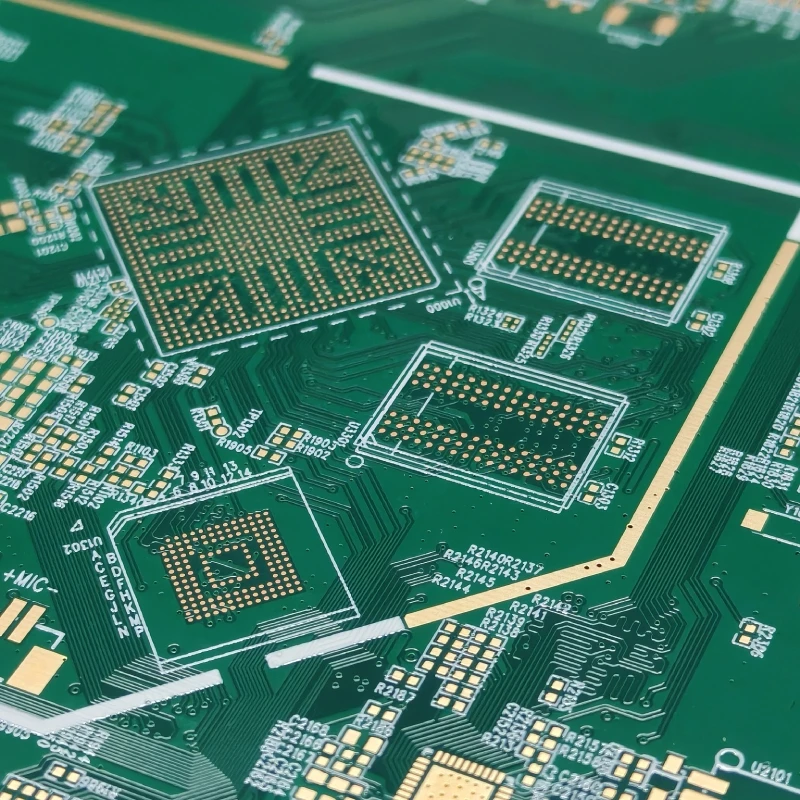
Secondly, miniaturization also affects the soldering process. The smaller the components, the more difficult it is to ensure proper solder joint formation. Solder joints need to be strong enough to provide a reliable electrical connection but also small enough to fit within the limited space available on the PCB. Achieving this balance requires careful control of the soldering parameters, such as temperature, time, and solder paste volume.
To address these challenges, we invest in state - of - the - art pick - and - place machines and soldering equipment. Our machines are capable of handling components as small as 01005s (0.4mm x 0.2mm) with high accuracy. We also have a team of experienced technicians who are trained to optimize the soldering process for different component sizes and types.
Solder Joint Reliability
Solder joint reliability is another critical challenge in SMT assembly. Solder joints are the electrical and mechanical connections between the components and the PCB, and their integrity is essential for the long - term performance of the electronic device.
There are several factors that can affect solder joint reliability. One of the main factors is thermal cycling. Electronic devices often experience changes in temperature during normal operation, and these temperature changes can cause the components and the PCB to expand and contract at different rates. This differential expansion and contraction can put stress on the solder joints, leading to cracks and eventual failure.
Another factor is vibration and shock. Many electronic devices, such as those used in automotive or aerospace applications, are subjected to significant vibration and shock during their lifetime. These mechanical stresses can also cause solder joints to fail.
To ensure solder joint reliability, we conduct rigorous testing, including thermal cycling tests, vibration tests, and shock tests. We also use high - quality solder paste and fluxes, and we follow strict soldering process controls to ensure that the solder joints are formed correctly. Additionally, we offer SMT Stencil Design services to optimize the solder paste deposition process, which can improve the quality of the solder joints.
Mixed Technology PCB Assembly
In today's electronics industry, many PCBs require a combination of surface - mount components and through - hole components. This is known as mixed technology PCB assembly. Mixed Technology PCB Assembly presents several challenges for SMT assembly services.
One of the challenges is the different assembly processes required for surface - mount and through - hole components. Surface - mount components are typically placed on the PCB using pick - and - place machines and then soldered using reflow ovens. Through - hole components, on the other hand, need to be inserted into the holes on the PCB and then soldered using wave soldering or hand - soldering techniques. Coordinating these two different assembly processes can be complex and requires careful planning and scheduling.
Another challenge is the potential for thermal damage to the surface - mount components during the wave soldering process for the through - hole components. The high temperatures used in wave soldering can cause the solder joints of the surface - mount components to reflow or even damage the components themselves. To prevent this, we use techniques such as masking or selective soldering to protect the surface - mount components during the wave soldering process.
Fine Pitch SMT
Fine pitch SMT refers to the use of components with a small pitch, typically less than 0.5mm between adjacent pins. Fine Pitch SMT is becoming increasingly common in high - density PCBs, but it also presents several challenges.
One of the main challenges is the difficulty of solder paste deposition. With fine pitch components, the solder paste needs to be deposited accurately and uniformly between the pins. Any excess solder paste can cause short circuits, while insufficient solder paste can lead to open connections. To address this, we use advanced stencil design techniques and high - precision solder paste printers.
Another challenge is the inspection of fine pitch components. Visual inspection of these components can be very difficult due to their small size. We use automated optical inspection (AOI) and X - ray inspection systems to detect any potential defects in the solder joints and component placement.
High Volume PCB Assembly
For companies that require high - volume production of PCBs, High Volume PCB Assembly poses its own set of challenges.
One of the main challenges is maintaining consistent quality throughout the production process. In high - volume production, even a small defect rate can result in a large number of defective products. To ensure consistent quality, we have implemented a comprehensive quality control system that includes in - process inspections, final inspections, and statistical process control (SPC).
Another challenge is meeting the production deadlines. High - volume orders often have tight schedules, and any delays in the assembly process can have a significant impact on the customer's business. To meet these deadlines, we have a well - organized production line and a dedicated team of workers who are trained to work efficiently and effectively.
SMT BGA Assembly
Ball Grid Array (BGA) components are widely used in high - performance electronic devices due to their high pin count and excellent electrical performance. However, SMT BGA Assembly is one of the most challenging aspects of SMT assembly.
One of the challenges is the difficulty of inspecting the solder joints under the BGA component. Since the solder balls are hidden beneath the component, traditional visual inspection methods are not effective. We use X - ray inspection systems to detect any potential defects in the BGA solder joints, such as voids or non - wetting.
Another challenge is the rework process for BGA components. Reworking a BGA component requires specialized equipment and skills. Improper rework can cause damage to the PCB and the component itself. We have a team of experienced technicians who are trained to perform BGA rework using the latest techniques and equipment.
Conclusion
In conclusion, SMT assembly services face a variety of challenges, from component miniaturization and solder joint reliability to mixed technology assembly, fine pitch SMT, high - volume production, and BGA assembly. At our company, we are committed to overcoming these challenges by investing in the latest equipment, training our technicians, and implementing strict quality control measures.
If you are looking for a reliable SMT assembly service provider that can handle these challenges effectively, we would love to hear from you. Contact us to discuss your specific requirements and start a procurement negotiation. Our team is ready to work with you to ensure the success of your electronic product projects.
References
- “Surface Mount Technology: Principles and Practice” by Bryan C. Arnold
- “Electronic Packaging and Interconnection Handbook” by C. P. Wong
- Industry whitepapers on SMT assembly best practices.


