When diving into an Internet of Things (IoT) project, you might often come across the term "module." So, what exactly is a module in an IoT project? Well, I'm here to break it down for you, and as a module supplier, I've got a ton of real - world insights to share.
The Basics of Modules in IoT
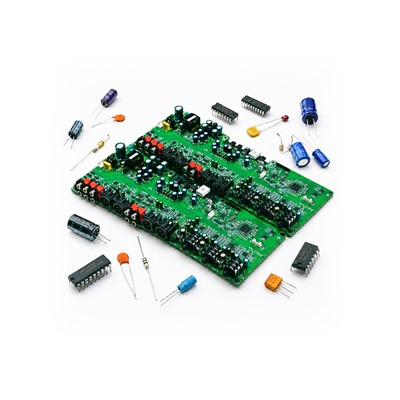
In simple terms, an IoT module is a self - contained component that integrates multiple functions and can be easily incorporated into an IoT system. Think of it as a building block. You know how when you're building a Lego set, you use different pieces to create the whole thing? Modules in an IoT project work in a very similar way. They're pre - engineered units that simplify the development process. Instead of developing every single function from scratch, you can pick a module that already has the features you need and slot it into your project.


Key Features of IoT Modules
Connectivity
One of the most crucial aspects of an IoT module is its connectivity. In the IoT world, devices need to communicate with each other, the cloud, or users. There are several types of connectivity options available in modules.
For example, Wi - Fi modules like the HM - WF8720 - ST are great for applications where there's a stable Wi - Fi network available. They can quickly transfer large amounts of data, which makes them suitable for smart home devices that stream video, such as smart cameras.
Bluetooth Low Energy (BLE) modules, like the HM - BT4502 - ST, are energy - efficient and are commonly used for short - range communication. You'll find them in wearable devices like fitness trackers. These devices only need to send small amounts of data, like heart rate or steps taken, over a short distance to a smartphone.
2.4GHz RF transceiver modules, such as the RFM75P - ST, offer a cost - effective way to establish wireless communication. They're often used in industrial IoT applications where you need to connect sensors and actuators over a relatively short distance, but don't want to rely on Wi - Fi or other high - cost options.
LoRa modules, like the HM - TRLR - S - ST, are designed for long - range, low - power wide - area networks (LPWAN). They're ideal for applications in agriculture, where sensors can be placed far apart in a large field to monitor soil moisture, temperature, etc., and still send data back to a central base station.
Processing Power
Some IoT modules come with built - in processors. This allows them to perform local processing before sending data to the cloud. For instance, in a smart security system, a module with processing power can analyze video footage on the device itself. It can detect if there's any suspicious activity, such as a person entering a restricted area, and then only send the relevant data to the cloud. This reduces the amount of data that needs to be transmitted, saves bandwidth, and lowers costs.
Sensors and Actuators
Many IoT modules also integrate sensors or actuators. Sensors can collect data like temperature, humidity, light levels, etc. Actuators, on the other hand, can perform actions based on the data received. For example, a module with a temperature sensor and a fan actuator can turn on the fan when the temperature gets too high. A smart lighting module might have a light sensor and an LED actuator, adjusting the brightness of the lights according to the ambient light level.
Why Use Modules in IoT Projects
Speed up Development
As I mentioned earlier, modules are like pre - made building blocks. If you're a developer working on an IoT project, you don't have to spend time designing a circuit for connectivity or sensor integration from the ground up. You can just pick a suitable module and start building your application around it. This significantly reduces the development time and allows you to get your product to market faster.
Cost - Effective
Developing all the components of an IoT system in - house can be expensive. You need to invest in research and development, testing equipment, and skilled personnel. By using modules, you can avoid a lot of these upfront costs. You only pay for the functionality you need, and since modules are mass - produced, they often come at a lower cost per unit.
Reliability
Module manufacturers, like us, have years of experience in designing and testing these components. We've already gone through the trial - and - error process to ensure that the modules are reliable. When you use a well - tested module in your project, you can have more confidence in the overall performance and stability of your IoT system.
Examples of IoT Modules in Real - World Projects
Smart Home
In a smart home project, you might use a combination of modules. The HM - WF8720 - ST Wi - Fi module can be used in smart thermostats. The thermostat can connect to your home Wi - Fi network and communicate with your smartphone app. You can adjust the temperature of your home from anywhere in the world.
The HM - BT4502 - ST BLE module can be integrated into smart locks. You can use your smartphone to unlock the door, and the BLE connection ensures that the communication is secure and energy - efficient.
Industrial IoT
In an industrial setting, the RFM75P - ST 2.4GHz RF transceiver module can be used to connect sensors that monitor the status of machinery. These sensors can detect vibrations, temperature, and other parameters. If there's any abnormal reading, the data can be sent to a central control system for immediate action.
The HM - TRLR - S - ST LoRa module can be used for long - range monitoring in a large industrial complex. For example, in a factory spread over a large area, sensors can be placed in different corners to monitor air quality, and the LoRa module can send the data back to a central monitoring station.
Smart Cities
In a smart city project, the HM - MT7201 - ST Matter wireless module can play a crucial role. It can be used in smart parking systems. The module can communicate with the parking sensors to detect if a parking spot is occupied or not. The data can then be sent to a mobile app, which helps drivers find available parking spaces easily.
How Our Modules Stand Out
As a module supplier, we take pride in offering high - quality modules. Our modules are rigorously tested to ensure they meet the highest standards. We also provide excellent technical support. If you run into any issues during the development process, our team of experts is always ready to help.
We understand that every IoT project is unique, so we offer a wide range of modules with different features and capabilities. Whether you need a low - power module for a battery - operated device or a high - speed module for data - intensive applications, we've got you covered.
Let's Connect
If you're working on an IoT project and are in need of reliable modules, I'd love to have a chat with you. We can discuss your specific requirements and find the perfect modules for your project. Don't hesitate to reach out for a procurement discussion. We're here to make your IoT project a success.
References
- "Internet of Things: A Vision, Architectural Elements, and Future Directions" by Jayavardhana Gubbi et al.
- "Fundamentals of Internet of Things" by Antonio Liotta.