



Hey there! As a supplier in the SMT assembly business, I've seen firsthand the importance of getting PCB design right for a smooth SMT assembly process. In this blog, I'll share some key considerations for PCB design when it comes to SMT assembly.
Component Placement
One of the first things to think about is how you place your components on the PCB. You want to make sure that there's enough space between components to allow for proper soldering. If components are too close together, it can lead to solder bridging, which is when the solder connects two adjacent pads that aren't supposed to be connected. This can cause short circuits and other issues.
Another aspect of component placement is the orientation of the components. Some components, like resistors and capacitors, can be placed in any orientation, but others, like integrated circuits (ICs), have a specific orientation. Make sure you follow the datasheet for each component to ensure proper placement.
Pad Design
The design of the pads on the PCB is crucial for SMT assembly. The size and shape of the pads need to match the size and shape of the component leads. If the pads are too small, the component may not solder properly. If they're too large, it can lead to solder bridging.
There are different types of pads, such as rectangular, circular, and oval. The choice of pad shape depends on the component and the manufacturing process. For example, rectangular pads are commonly used for surface mount resistors and capacitors, while circular pads are often used for through-hole components.
Solder Mask Design
The solder mask is a layer of material that is applied to the PCB to prevent solder from flowing onto areas where it's not needed. It's important to design the solder mask correctly to ensure proper soldering. The solder mask should cover all areas of the PCB except for the pads where the components will be soldered.
The thickness of the solder mask can also affect the soldering process. If the solder mask is too thick, it can prevent the solder from wetting the pads properly. If it's too thin, it may not provide enough protection.
Trace Routing
The routing of the traces on the PCB is another important consideration. Traces are the conductive paths that connect the components on the PCB. You want to make sure that the traces are routed in a way that minimizes interference and signal loss.
One way to do this is to keep the traces as short as possible. Longer traces can introduce more resistance and capacitance, which can affect the performance of the circuit. You also want to avoid crossing traces whenever possible, as this can cause interference.
Thermal Considerations
Heat can be a major issue in SMT assembly. Components can generate a lot of heat, and if it's not dissipated properly, it can lead to component failure. To address this, you need to consider the thermal properties of the PCB and the components.
One way to improve heat dissipation is to use a thermal via. A thermal via is a small hole in the PCB that allows heat to transfer from one layer to another. You can also use a heat sink to help dissipate heat from the components.
Fine Pitch SMT
Fine pitch SMT refers to the assembly of components with very small lead pitches. This can be a challenging process, as it requires precise placement and soldering. When designing a PCB for fine pitch SMT, you need to pay special attention to the pad design and the component placement.
You can learn more about Fine Pitch SMT on our website Fine Pitch SMT.
High Volume PCB Assembly
If you're planning to do high volume PCB assembly, there are some additional considerations. You need to make sure that the PCB design is optimized for mass production. This includes things like using standard component sizes and minimizing the number of different components.

You can find more information about High Volume PCB Assembly on our website High Volume PCB Assembly.
SMT BGA Assembly
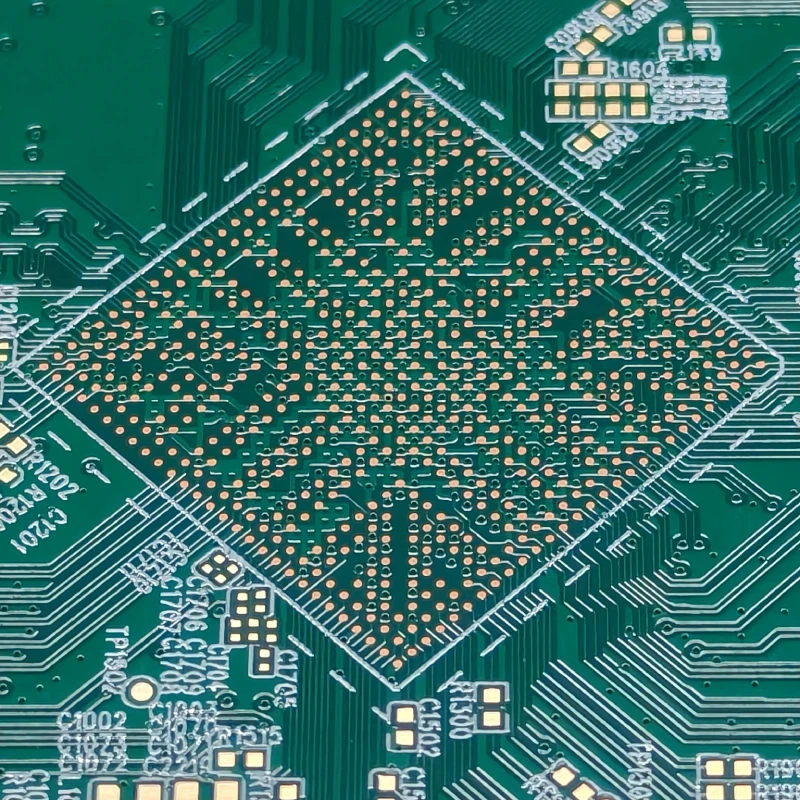
Ball Grid Array (BGA) components are becoming more and more common in modern electronics. These components have a large number of small balls on the bottom that are used for electrical connections. SMT BGA assembly requires special techniques and equipment.
When designing a PCB for SMT BGA assembly, you need to make sure that the pads are designed correctly and that there's enough space for the balls. You also need to consider the thermal properties of the BGA component.
You can get more details about SMT BGA Assembly on our website SMT BGA Assembly.
Design for Manufacturability (DFM)
Design for Manufacturability (DFM) is an important concept in PCB design. It involves designing the PCB in a way that makes it easy to manufacture. This includes things like using standard component sizes, minimizing the number of different components, and following the manufacturing guidelines of the assembly supplier.
By following DFM principles, you can reduce the cost and time of the manufacturing process, as well as improve the quality of the final product.
Testing and Inspection
Once the PCB is assembled, it's important to test and inspect it to ensure that it meets the required specifications. There are different types of tests and inspections that can be done, such as visual inspection, electrical testing, and functional testing.
Visual inspection can be used to check for things like solder bridges, missing components, and misaligned components. Electrical testing can be used to check the electrical continuity of the circuit. Functional testing can be used to test the performance of the circuit.
Conclusion
In conclusion, PCB design is a critical step in the SMT assembly process. By considering the factors mentioned above, you can ensure that your PCB is designed for optimal SMT assembly. Whether you're working on a small project or a high volume production run, getting the PCB design right is essential for a successful outcome.
If you're interested in learning more about SMT assembly or have a project that you need help with, feel free to reach out to us. We're here to assist you with all your SMT assembly needs.
References
- Printed Circuit Board Design Handbook, Third Edition by Raymond R. Tummala
- Surface Mount Technology: Principles and Practice by C.P. Wong


