


In the world of electronics manufacturing, Surface Mount Technology (SMT) PCB Assembly stands as a cornerstone, enabling the production of high - density, reliable printed circuit boards. A critical yet often overlooked element in this process is the test point. As an SMT PCB Assembly supplier, I've witnessed firsthand the profound impact that test points have on the overall quality and efficiency of the assembly process.
Understanding Test Points in SMT PCB Assembly
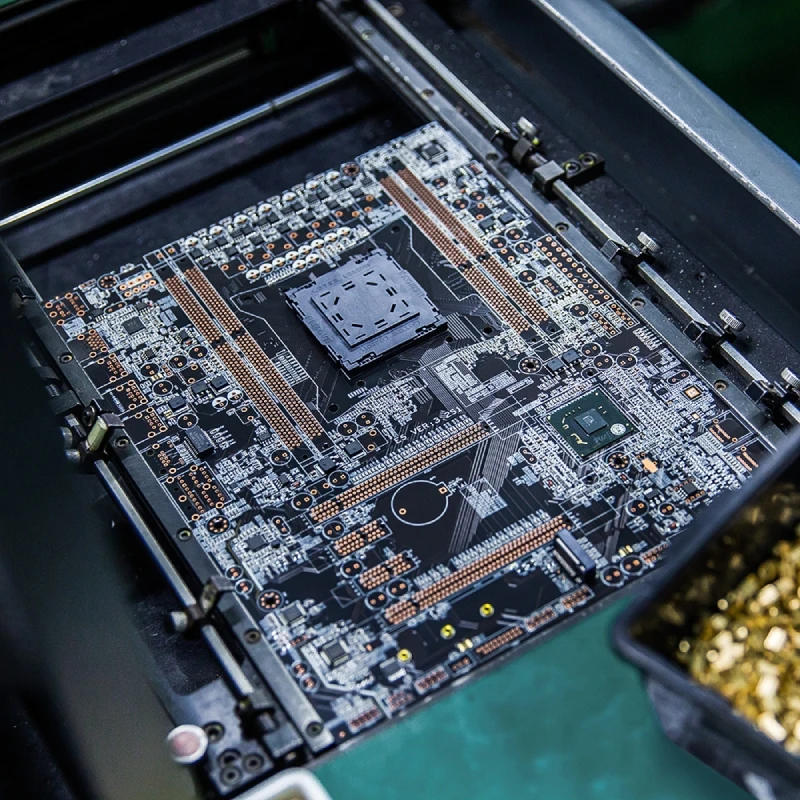
Test points are small, exposed metal pads on a PCB that are specifically designed for electrical testing. They serve as access points for test equipment, allowing engineers to measure electrical signals, check for continuity, and diagnose potential issues during the manufacturing process. In SMT PCB Assembly, these test points are strategically placed on the board to provide easy access for testing while minimizing interference with the normal operation of the circuit.
The primary role of test points is to ensure the quality and functionality of the assembled PCB. By providing a means to test individual components and the overall circuit, test points help to identify and correct any defects early in the manufacturing process. This not only reduces the cost of rework but also improves the reliability of the final product.

Quality Assurance and Defect Detection
One of the most important roles of test points is in quality assurance. During the SMT PCB Assembly process, there are numerous opportunities for errors to occur, such as incorrect component placement, soldering defects, or short circuits. Test points allow for quick and accurate testing of the board at various stages of production, helping to catch these issues before they become more serious.
For example, after the components are placed on the PCB, test points can be used to check for proper electrical connections. By measuring the resistance, voltage, and current at specific test points, engineers can determine if the components are functioning correctly and if there are any short circuits or open connections. This early detection of defects can save time and money by preventing the need for extensive rework or the production of faulty boards.
In addition to detecting manufacturing defects, test points can also be used to verify the performance of the PCB under different operating conditions. By applying test signals to the test points, engineers can simulate real - world scenarios and ensure that the board meets the required specifications. This is particularly important for applications where reliability is critical, such as in automotive, aerospace, and medical devices.
Process Optimization
Test points also play a crucial role in process optimization. By analyzing the test results obtained from the test points, manufacturers can identify areas of the assembly process that need improvement. For example, if a particular test point consistently shows a high failure rate, it may indicate a problem with the component placement or soldering process at that location.
Manufacturers can use this information to make adjustments to the assembly process, such as changing the placement parameters or soldering profile. This continuous improvement approach helps to increase the yield and efficiency of the SMT PCB Assembly process, ultimately leading to higher - quality products and lower production costs.
Design Considerations for Test Points
When designing a PCB for SMT Assembly, careful consideration must be given to the placement and design of test points. The test points should be easily accessible for test equipment, and they should not interfere with the normal operation of the circuit. Additionally, the size and shape of the test points should be optimized to ensure reliable contact with the test probes.
It's also important to ensure that the test points are placed in a way that allows for comprehensive testing of the circuit. This may involve placing test points at key nodes in the circuit, such as the input and output of critical components or at points where electrical signals are likely to change. By strategically placing test points, manufacturers can ensure that all aspects of the circuit are thoroughly tested.
The Role of Test Points in Different Assembly Technologies
In SMT PCB Assembly, test points are essential for ensuring the quality and reliability of the final product. However, their role can vary depending on the specific assembly technology being used.
For example, in SMT Stencil Design, test points can be used to verify the accuracy of the stencil printing process. By measuring the amount of solder paste deposited at the test points, engineers can ensure that the correct amount of solder is being applied to the PCB. This helps to prevent issues such as solder bridges and insufficient solder joints.
In Mixed Technology PCB Assembly, which combines SMT and through - hole components, test points are even more important. The presence of through - hole components adds an additional layer of complexity to the assembly process, and test points can be used to ensure that both the SMT and through - hole components are properly connected and functioning.
The Future of Test Points in SMT PCB Assembly
As the electronics industry continues to evolve, the role of test points in SMT PCB Assembly is likely to become even more important. With the increasing complexity of electronic devices and the demand for higher - quality products, manufacturers will need to rely on test points to ensure the reliability and performance of their PCBs.
Advancements in test equipment and technology are also likely to have an impact on the use of test points. For example, the development of non - contact testing methods, such as optical and thermal testing, may reduce the need for physical test points in some applications. However, physical test points will still be essential for many types of electrical testing, and their design and placement will continue to be a critical aspect of PCB design.
Contact for Procurement
If you're in the market for high - quality SMT PCB Assembly, we invite you to reach out to us. Our team of experienced engineers and technicians is dedicated to providing the best possible solutions for your PCB assembly needs. We have the expertise and resources to handle projects of all sizes, from small - scale prototypes to large - volume production runs. Whether you're looking for SMT Stencil Design, Mixed Technology PCB Assembly, or any other aspect of PCB assembly, we're here to help. Don't hesitate to contact us to discuss your requirements and start a partnership that will drive your electronics projects to success.
References
- "Surface Mount Technology: Principles and Practice" by Stephen H. Lau
- "PCB Design for Manufacturability" by IPC - Association Connecting Electronics Industries


