


Hey there! As a supplier in the SMT BGA Assembly field, I'm super excited to share with you all about the wave soldering process in SMT BGA Assembly.
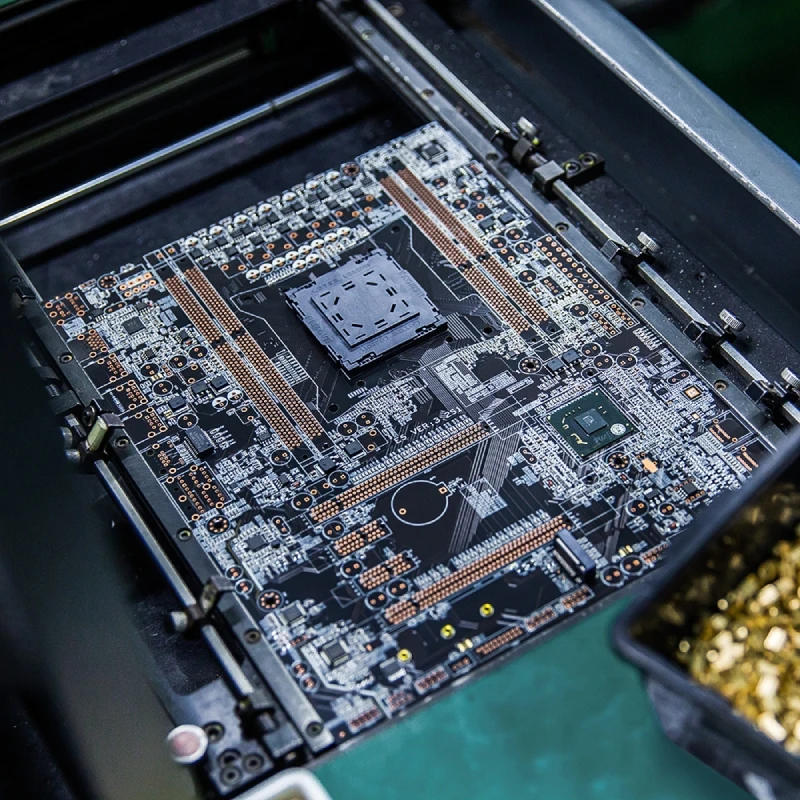
Let's start with the basics. Wave soldering is a mass soldering process used in the manufacturing of printed circuit boards (PCBs). It's a key step in SMT BGA Assembly, which is all about putting those tiny components onto the PCB.
How Wave Soldering Works
The wave soldering process begins with the preparation of the PCB. First, the PCB is loaded onto a conveyor belt that moves it through the wave soldering machine. Before it reaches the actual soldering part, the PCB goes through a pre - heating stage. This pre - heating is crucial as it helps to remove any moisture from the PCB and warms up the components, reducing the thermal shock when they hit the molten solder.
Once pre - heated, the PCB arrives at the wave of molten solder. The wave is created by a pump that forces the molten solder up through a nozzle, forming a standing wave. As the PCB passes over this wave, the solder adheres to the exposed metal pads on the PCB and the leads of the components. This creates a strong electrical and mechanical connection between the components and the PCB.
After passing over the wave, the PCB moves through a cooling section. This allows the solder to solidify quickly, ensuring a stable joint.
Advantages of Wave Soldering in SMT BGA Assembly
One of the biggest advantages of wave soldering is its efficiency. It can solder a large number of components on a PCB in a relatively short time. This makes it ideal for high - volume production.
Another advantage is its reliability. Wave soldering creates consistent and strong solder joints. The process is well - established and has been used in the industry for a long time, so we have a good understanding of how to optimize it for different types of PCBs and components.
Challenges in Wave Soldering for SMT BGA Assembly
However, wave soldering also comes with some challenges. One of the main issues is the potential for solder bridges. A solder bridge occurs when the solder connects two adjacent pads or leads that are not supposed to be connected. This can cause short - circuits in the PCB, which can be a real headache.
Another challenge is dealing with the heat. Some components are sensitive to high temperatures, and the wave soldering process can expose them to a lot of heat. This can damage the components if not properly managed.
Role in SMT BGA Assembly
In SMT BGA Assembly, wave soldering plays a vital role. For components that are not suitable for reflow soldering, wave soldering provides an alternative way to attach them to the PCB. For example, through - hole components are often soldered using wave soldering.
It also complements other processes in SMT BGA Assembly. For instance, SMT Stencil Design is used to apply solder paste to the PCB before the components are placed. Wave soldering then comes in to create the final solder joints.
Quality Control in Wave Soldering
Quality control is a must in wave soldering. We use various techniques to ensure that the solder joints are of high quality. Visual inspection is the most basic method. Operators look at the PCBs under a microscope to check for any obvious defects like solder bridges or insufficient solder.
We also use automated optical inspection (AOI) systems. These systems use cameras and image - processing algorithms to detect defects on the PCBs. They can quickly and accurately identify issues that might be missed by the human eye.
Applications of Wave Soldering in SMT BGA Assembly
Wave soldering is used in a wide range of applications. In the automotive industry, PCBs used in cars often go through wave soldering. These PCBs need to be reliable and able to withstand harsh environments.
In the consumer electronics industry, wave soldering is used to assemble PCBs for devices like smartphones, tablets, and laptops. It helps to mass - produce these devices at a lower cost.
Comparison with Other Soldering Methods
When compared to reflow soldering, wave soldering has its own pros and cons. Reflow soldering is great for surface - mount components as it can precisely control the temperature and the amount of solder. However, it's not as efficient for through - hole components. Wave soldering, on the other hand, is better for through - hole components but may not be as precise as reflow soldering for surface - mount components.
Future of Wave Soldering in SMT BGA Assembly
The future of wave soldering in SMT BGA Assembly looks promising. As technology advances, we're seeing improvements in wave soldering machines. These new machines are more energy - efficient, have better temperature control, and can handle a wider range of PCBs and components.
We're also seeing the development of new soldering materials that are more environmentally friendly and have better performance. This will further enhance the quality and reliability of wave soldering in SMT BGA Assembly.
Mixed Technology PCB Assembly
In many cases, Mixed Technology PCB Assembly is used, which combines both surface - mount and through - hole components. Wave soldering is an important part of this process. It allows us to solder the through - hole components while also working in harmony with the reflow soldering process for the surface - mount components.
SMT PCB Assembly
SMT PCB Assembly as a whole benefits from wave soldering. It's an integral part of the process that helps to create high - quality PCBs. Whether it's for small - scale or large - scale production, wave soldering has a place in SMT PCB Assembly.

If you're in the market for SMT BGA Assembly services, we're here to help. Our team of experts has years of experience in wave soldering and other aspects of SMT BGA Assembly. We can ensure that your PCBs are assembled to the highest standards. So, if you're interested in discussing your project, don't hesitate to reach out and start a conversation. We're looking forward to working with you!
References
- "Soldering in Electronics Manufacturing" by E. J. R. Sudnik
- "Printed Circuit Board Design and Manufacturing" by R. F. Coughlin and F. J. Driscoll


