


A functional prototype is a real milestone.
But it is not production approval.
That difference is easy to underestimate in industrial control board projects. A prototype may power on, communicate with a controller, switch a relay, or pass a bench test when the design engineer is sitting beside it. Batch production is a different question: can the same board be built, tested, documented, and repeated under controlled conditions without relying on that engineer's memory?
For industrial control boards, moving from prototype to batch production is not just about ordering more units.
It is the point where engineering learning has to become production discipline.
The board has to move from "this sample works" to "this build can be repeated." That is where many prototype-to-production projects either become predictable or start to drift.
This matters because industrial control boards often work inside control cabinets, automation equipment, industrial computers, I/O modules, gateways, power controllers, machine panels, and other equipment where field reliability and repeatability matter. A prototype can tolerate temporary fixes, hand-written notes, and engineering judgment. Batch production should not depend on them.
Prototype Proves Function. Batch Production Proves Repeatability.
Prototype PCB assembly is usually about learning.
The buyer wants to know whether the schematic works, whether the PCB layout supports the intended function, whether the firmware can bring up the board, and whether the first hardware can support engineering validation.
At that stage, changes are normal.
A jumper may be added. A connector may be replaced. A resistor value may be tuned. A firmware file may be updated. A test method may still live inside one engineer's laptop.
That can be acceptable for a prototype.
Batch production has a different goal.
It needs a stable process that can be followed by production, quality, purchasing, and test teams. If every batch still depends on informal notes, verbal corrections, marked-up photos, or last-minute engineering decisions, the project has not really moved into production readiness.
The practical line is simple:
A prototype proves that the design can work.
Batch production proves that the build can be repeated without relying on informal fixes, one engineer's memory, or last-minute decisions.
Freeze the Design Package Before It Becomes a Moving Target
Design freeze is not just a file-saving step.
It is the point where engineering information becomes production instruction.
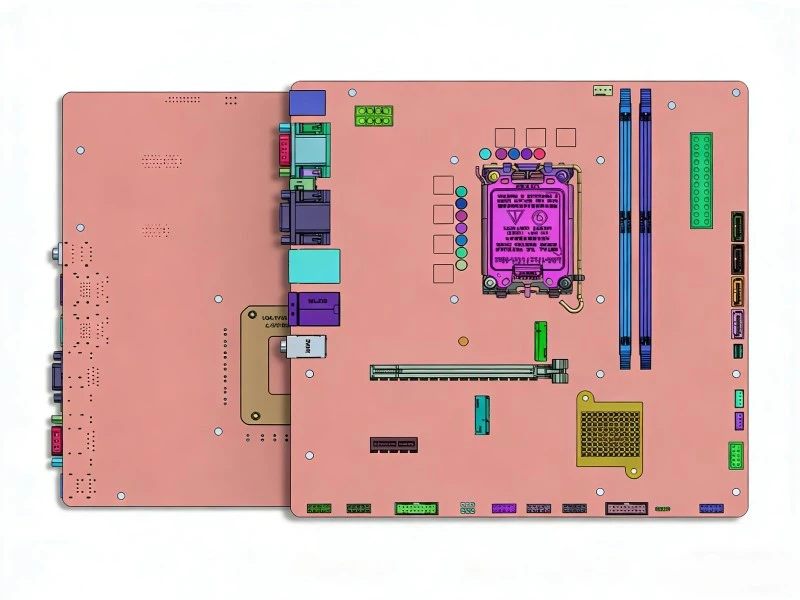
Before batch production starts, the EMS partner should not have to guess which file package is current. The released build package should define the latest PCB revision, BOM revision, firmware version, assembly drawing, pick-and-place file, polarity notes, test instructions, labeling rules, and any special handling requirements.
For industrial control boards, this matters more than many teams expect.
A prototype-stage correction may be obvious to the design engineer but invisible to production. A component value changed during debugging may not be reflected in the BOM. A connector orientation note may exist only in an email. A firmware file may be renamed casually without version control.
These are not small clerical issues.
They can become batch production risks.
Before release, buyers should confirm:
- the latest Gerber or ODB++ package is approved
- the PCB revision is clear
- the BOM revision matches the intended build
- prototype fixes are reflected in production files
- polarity and orientation notes are documented
- firmware version and programming method are defined
- labels, serial numbers, and traceability rules are agreed
- special handling, coating, or packaging requirements are visible
A production team should not build from memory.
It should build from released information.
Validate the BOM Against Production Reality
A prototype can often be built with parts that are available at the moment.
Batch production needs a sourcing plan that can support the first order and the next one.
For industrial control boards, component sourcing affects delivery stability, validation consistency, and future service support. Terminal blocks, relays, optocouplers, power devices, isolated interface ICs, communication chips, industrial connectors, and customer-specified components should not be substituted casually.
A substitute part may fit the footprint but still affect field wiring, thermal behavior, firmware compatibility, load performance, or test results.
This is why BOM validation should happen before the batch is released, not after procurement has already started.
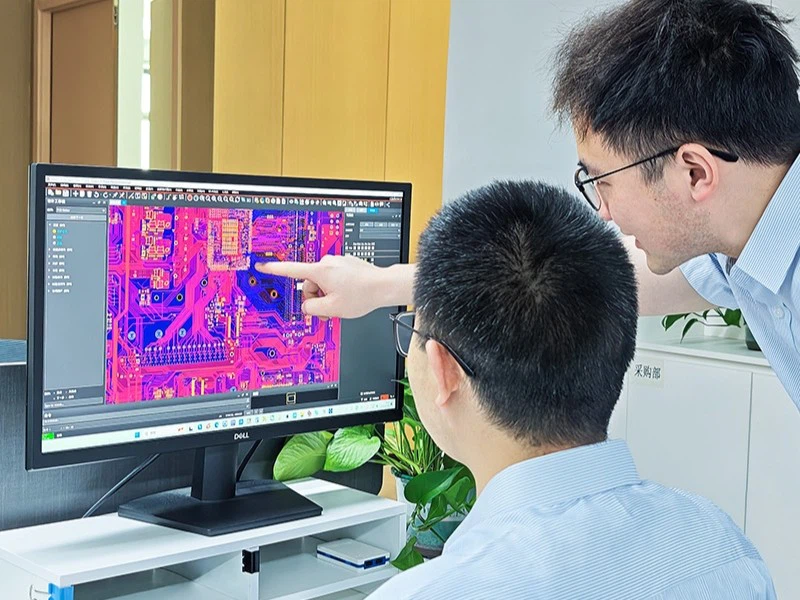
A production-ready BOM should clarify:
- manufacturer part numbers
- approved alternates
- critical components
- single-source or long-lead items
- customer-supplied components
- substitution approval rules
- lifecycle or availability concerns
- firmware or calibration dependency where relevant
The goal is not to make sourcing complicated.
The goal is to avoid a situation where the first batch uses one material condition, the second batch uses another, and no one can explain why the performance changed.
In the current sourcing environment, buyers are paying more attention to component availability, approved alternates, and lifecycle risk. The practical approach is to validate what can actually be purchased for the intended production quantity before the design is treated as frozen.
Use the Pilot Build to Expose Production Assumptions
A pilot build is the bridge between prototype learning and batch production discipline.
It does not need to be large. It does need to be structured.
For industrial control boards, a pilot build can confirm whether the BOM is stable, whether the assembly process is repeatable, whether connector alignment is acceptable, whether the test method is practical, and whether the documentation is strong enough for future production.
Skipping this step can look faster at first. In reality, it may push unresolved issues into the first batch.
A terminal block that was hand-adjusted in the prototype may become a repeat soldering or alignment issue. A firmware step that only the buyer's engineer understands may delay final test. A substitute component that was "close enough" in a sample may change performance later. A test point that was accessible on the bench may become difficult to reach once the board is installed in a fixture or enclosure.
A good pilot build does not simply ask, "Did the boards pass?"
It asks, "What did this build reveal before we scale the order?"
That question is the real value of the pilot stage.
Use FAI to Check the Production-Intent Process
First Article Inspection should not be treated as paperwork after the first boards are assembled.
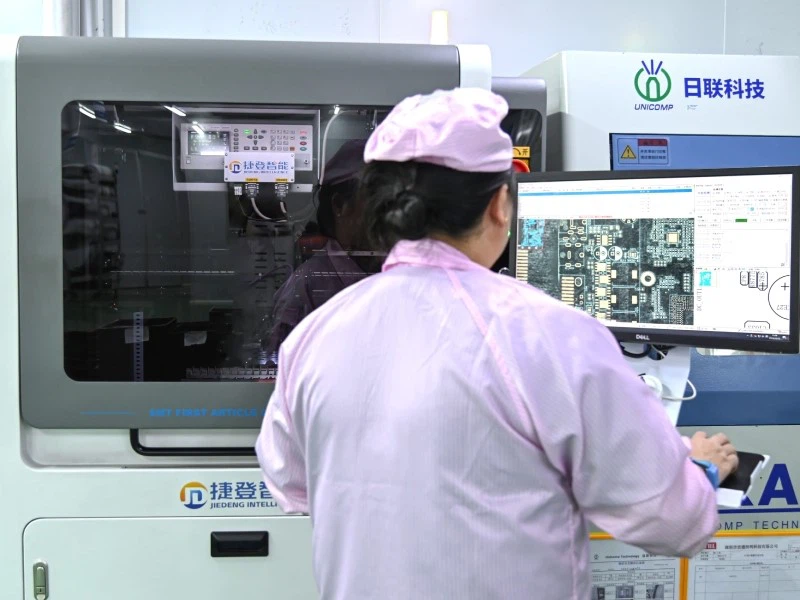
For industrial control board production, FAI helps verify whether the production-intent process can build the board according to the released requirements. It is not just checking whether one board looks acceptable. It is checking whether the same process can continue.
A useful first-article review may include:
component placement verification
polarity and orientation check
solder joint inspection against the specified acceptance class
connector alignment review
through-hole soldering quality
X-ray images where hidden solder joints are involved
firmware programming confirmation
functional test result
label and traceability format check
mechanical or fixture-related observations
The point is not to create a thick report for its own sake.
The point is to answer a practical question:
Can the rest of the batch continue under the same assumptions?
If production continues while first-article questions are still open, the value of FAI is weakened.
Recheck DFM and DFT After Prototype Learning
Design for manufacturing and design for testability should not stop at the first prototype.
In many projects, the prototype reveals what the CAD files did not fully show. A connector is too close to a housing. A test point is difficult to probe. A component orientation note is unclear. A through-hole connector needs better alignment control. A programming header is blocked by a fixture. A relay area needs closer inspection.
These findings should feed back into the production plan.
A DFM review before batch production may look at:
- component spacing
- solder joint accessibility
- panelization
- connector placement
- through-hole component process
- coating keep-out areas
- high-current or thermal areas
- mechanical clearance
- rework access
A DFT review may look at:
- test point access
- programming header access
- fixture clearance
- functional test cable connections
- pass/fail criteria
- retest rules after rework
The point is not to over-engineer every board.
A simple control interface board may need only light cleanup before production. A board with relays, firmware, communication ports, field wiring, or enclosure constraints usually deserves a more structured review.
The boundary matters.
Align the Assembly Route Before Scaling the Order
Industrial control boards are often mixed-technology assemblies.
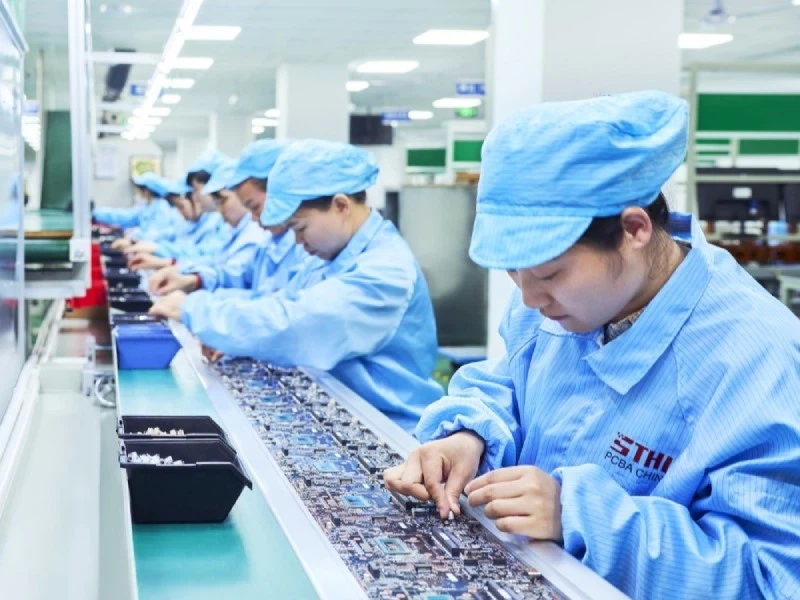
They may combine SMT components with terminal blocks, relays, transformers, large capacitors, power connectors, switches, fuses, headers, and communication ports. That means batch production may involve SMT placement, reflow soldering, through-hole insertion, selective soldering, wave soldering, manual assembly, connector alignment checks, and post-solder inspection.
A prototype can sometimes be hand-built successfully even when the production route is not yet stable.
Batch production is different.
The EMS team needs to know:
- whether the board is SMT-only or mixed technology
- whether DIP or through-hole assembly is required
- whether selective soldering or wave soldering is appropriate
- which connectors or relays need alignment attention
- whether coating, cleaning, or special handling is required
- whether the board will be assembled as a loose PCBA or integrated into a module or enclosure
This is why a batch production quote should not be compared only by unit price.
A quote that covers SMT assembly only is not the same as a quote that includes through-hole work, selective soldering, fixture assumptions, and functional testing.
Define the Test Plan Before the First Production Batch
Testing becomes more important when an industrial control board moves toward batch production.
A prototype test may be flexible. A production test needs to be repeatable.
For industrial control boards, the test plan may need to confirm more than power-on behavior. It may need to verify relay switching, I/O response, current draw, communication, firmware loading, sensor response, or output behavior under a defined condition.
Before batch production, the buyer and EMS partner should clarify:
- what function must be tested
- whether AOI, ICT, X-ray inspection, or functional testing is required
- whether a fixture, cable, or load is needed
- whether firmware programming is part of the EMS scope
- what result counts as pass or fail
- whether test data should be recorded
- what happens after rework
- whether retesting is required
A test that only one engineer can run is not yet a production test.
The goal is not to use the heaviest possible test package. The goal is to use a test method that matches the board's function and risk.
Treat Change Control as a Production Requirement
Change control is where many prototype-to-production projects become fragile.
During prototype development, change is expected. During batch production, change must be visible.
For industrial control boards, the buyer and EMS partner should agree on how to handle changes to:
- PCB revision
- BOM revision
- approved alternates
- firmware version
- test procedure
- connector or cable configuration
- coating or cleaning process
- packaging method
- inspection criteria
A small change may be harmless. It should still be recorded.
Without change control, it becomes difficult to answer basic questions later: Which boards used the old connector? Which batch used the updated firmware? Which lot passed the revised functional test? Which substitution was approved?
Batch production is not only about making more boards.
It is about making controlled boards.
Consider Integration Readiness Before the PCBA Leaves the Factory
Industrial control boards rarely work alone forever.
Many will be installed into an enclosure, DIN-rail module, control cabinet, gateway, industrial computer, machine panel, or complete system. Even if the first production order is for board-level PCBA only, integration requirements should be checked before production release.
Buyers should consider:
- connector direction
- cable exit path
- harness routing
- mounting hole position
- enclosure clearance
- label visibility
- test point access after installation
- grounding or chassis contact
- heat-generating components
- packaging protection
A board can pass functional testing and still create integration issues.
For example, a connector may be blocked by the housing. A cable may pull against a soldered terminal. A label may become unreadable after installation. A test point may become inaccessible once the PCBA is mounted.
Board-level success does not always mean system-level readiness.
What Should Be Reviewed Before Batch Production?
Before moving from prototype to batch production for industrial control boards, OEM buyers should review the following items:
|
Review Area |
What to Confirm |
|
PCB revision |
Latest Gerber or ODB++ package, approved layout changes |
|
BOM revision |
MPNs, alternates, critical parts, sourcing rules |
|
Prototype fixes |
Whether manual changes are reflected in production files |
|
Assembly route |
SMT, through-hole, selective soldering, wave soldering, special handling |
|
DFM / DFT |
Manufacturing access, test access, fixture clearance, rework access |
|
Firmware |
Released version, programming method, version traceability |
|
Testing |
AOI, ICT, X-ray, FCT, fixture, pass/fail criteria |
|
FAI |
First article review, process validation, documented disposition |
|
Change control |
How design, BOM, firmware, and test updates are recorded |
|
Traceability |
Serial number, batch record, test result, firmware record |
|
Integration readiness |
Enclosure, harness, label, grounding, packaging |
This review does not make every project heavier.
It helps prevent prototype assumptions from leaking into production.
Industry Signal: Industrial Hardware Programs Are Becoming More Variant-Driven
Industrial hardware programs are becoming more configurable, software-defined, and variant-driven.
That does not mean every industrial control board needs a complex production system. It does mean the prototype-to-batch-production transition needs more discipline around revision control, sourcing stability, firmware records, and repeatable testing.
Flexibility is useful only when it does not break repeatability.
Where STHL Fits in This Discussion
For OEM buyers preparing to move industrial control boards from prototype to batch production, Shenzhen STHL Technology Co., Ltd. can review the project from a PCB Prototyping and PCB Assembly perspective.
That may include checking prototype-stage changes, BOM readiness, assembly route, component sourcing, test planning, firmware programming inputs, traceability records, and integration readiness before batch production begins.
The goal is not to overcomplicate every build.
A simple board should not be buried under unnecessary process steps. A control board with relays, firmware, field wiring, communication ports, or future repeat orders should not be released into batch production with prototype-level assumptions.
Conclusion
Moving from prototype to batch production for industrial control boards is not just a matter of increasing quantity.
It is the point where engineering learning has to become production discipline.
The key requirements are clear design release, validated BOM, documented prototype fixes, defined assembly route, pilot build learning, first article review, practical DFM and DFT review, repeatable testing, visible change control, traceability, and integration readiness.
For OEM buyers, the practical lesson is simple: do not treat a working prototype as automatic production approval. Before batch production starts, make sure the board can be built, tested, documented, and repeated under controlled conditions.
Need support moving an industrial control board from prototype to batch production? Review STHL's PCB Prototyping and PCB Assembly support, submit your files through Request a Quote, or contact us directly at info@pcba-china.com.


