


Testing and inspection do not make a PCB assembly reliable on their own.
They reveal whether reliability is being controlled.
That difference matters. In many PCBA projects, "testing" is treated like a final step near the end of production. Build the boards, run a check, ship the order.
Real manufacturing is not that tidy.
A board may pass one test and still carry risk somewhere else: under a hidden solder joint, around a connector, inside a firmware step, in a reworked area, or in a function that was never actually tested.
For OEM buyers, the useful question is not only, "Does the supplier test the boards?"
The better question is: "Does the Testing and Inspection scope match the reliability risks of this PCB assembly?"
A simple LED board, a consumer IoT module, an industrial control PCBA, and a power electronics board should not be forced into the same test plan.
Reliability Is Not Tested Into the Board at the End
A PCB assembly can pass inspection and still fail later.
That does not always mean the inspection was useless. It may mean the wrong risk was being checked.
A board can power on while a connector solder joint is weak.
A board can pass AOI while a hidden BGA joint still needs X-ray review.
A board can pass visual inspection while the firmware loading process is not controlled.
A board can pass one functional check while a field input, relay output, communication port, or load condition remains untested.
This is why testing and inspection should not be treated as one final checkpoint at the end of production.
Reliability comes from the full build chain: controlled sourcing, stable assembly, soldering process control, suitable inspection, repeatable testing, documented rework, and traceability.
Testing and inspection do not replace process control.
They verify whether process control is working.

Inspection and Testing Do Different Jobs
One common mistake is using "inspection" and "testing" as if they mean the same thing.
They do not.
Inspection checks whether the board was assembled correctly. It looks for visible or measurable manufacturing conditions: missing components, polarity errors, solder defects, lifted leads, connector alignment, label issues, or hidden solder joint concerns.
Testing checks whether the board performs a required function. It may confirm power behavior, firmware loading, communication, relay switching, input/output response, current draw, sensor behavior, or a customer-specific operating condition.
Both matter, but they catch different problems.
AOI may detect a missing resistor. It will not prove that firmware communicates correctly with the host system.
Functional testing may confirm that a board responds correctly. It may not reveal a hidden solder issue under a bottom-terminated package.
That is why a stronger reliability plan uses inspection and testing together, instead of expecting one method to do everything.
Start with the Failure Mode You Are Trying to Prevent
A practical test plan starts with a simple question:
What kind of failure are we trying to prevent?
Different problems appear at different stages of PCB assembly. Some start with solder paste printing. Some come from component placement. Some appear during reflow. Some are caused by handling, rework, programming, connector stress, or insufficient test access.
That is why one inspection method cannot cover everything.
Solder paste inspection can help catch paste volume, alignment, or bridging issues before components are placed.
01
AOI can catch visible assembly defects after placement and reflow.
02
X-ray inspection can reveal hidden solder conditions under BGA, QFN, LGA, or other bottom-terminated packages.
03
ICT or flying probe testing can help identify shorts, opens, wrong component values, or circuit-level issues.
04
Functional testing checks whether the board performs its intended job under defined conditions.
05
Each method has a job.
Problems start when a project expects one method to do the work of all the others.
The Right Scope Depends on Board Risk
Not every PCB assembly needs the same level of testing and inspection.
This is where buyer expectations and supplier assumptions need to be aligned early.
A simple board with visible solder joints, mature design files, stable components, and low application risk may need standard SMT inspection and a basic electrical check.
A board with BGAs, QFNs, fine-pitch parts, relays, terminal blocks, firmware, high-current areas, communication interfaces, or field wiring may need a more structured inspection and test plan.
The scope should follow the board.
Useful questions include:
- Are there hidden solder joints?
- Are there polarity-sensitive components?
- Are there relays, connectors, terminal blocks, or field-wiring interfaces?
- Does the board require firmware programming?
- Does the product need ICT or fixture-based FCT?
- Are test points accessible?
- Is the board part of an industrial control, power, medical support, automotive support, or communication system?
- Does the buyer require test records or traceability?
- What happens after rework?
The risk is not always tied to quantity.
A 20-piece pilot build with an undefined functional test may carry more practical risk than a larger repeat order with a mature test fixture and controlled process.
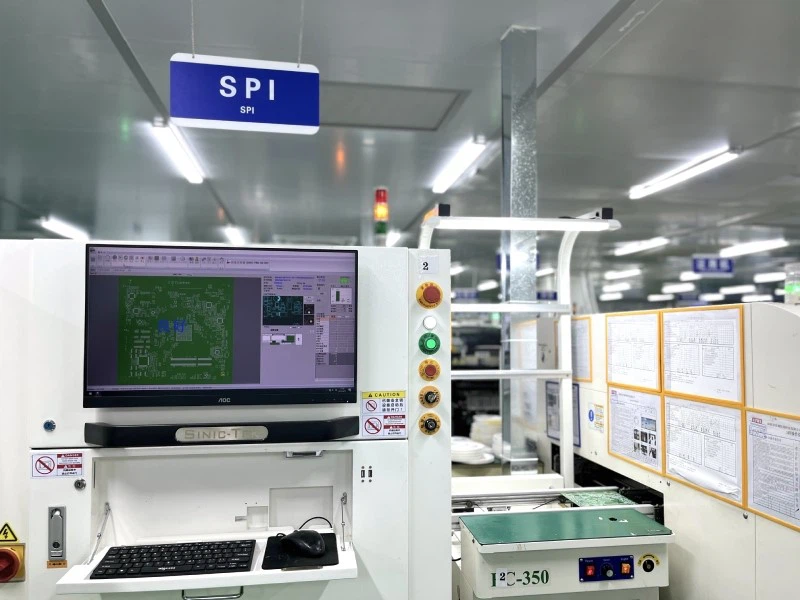
SPI Can Catch Process Drift Before Components Are Placed
Solder paste inspection is not always discussed in RFQs, but it can matter in SMT process control.
Before components are placed, solder paste volume, height, alignment, and bridging risk can already influence future solder joint quality. If paste printing is unstable, defects may move downstream into placement, reflow, AOI, electrical test, or even field performance.
The value of SPI is timing.
It checks the process early, before a paste issue becomes a solder joint issue.
That does not mean every project needs a detailed SPI discussion in the quotation. But for fine-pitch SMT, dense layouts, BGA-related assemblies, or boards where solder consistency is critical, paste inspection and process monitoring can support more stable assembly quality.
The buyer does not need to manage every process parameter.
But the buyer should understand that PCB assembly reliability starts before the board reaches final testing.
AOI Helps Stabilize Visible Assembly Quality
Automated optical inspection is useful because many PCBA defects are visual or geometry-related.
AOI can help detect missing components, wrong orientation, polarity issues, placement offsets, insufficient solder, solder bridges, tombstoning, and other visible conditions after SMT assembly.
For SMT PCB Assembly, AOI is often part of the standard quality-control flow because it gives the production team a faster and more consistent way to screen visible assembly issues.
But AOI has limits.
It cannot fully verify electrical function. It cannot prove firmware behavior. It may not see hidden solder joints under BGA, QFN, LGA, or certain bottom-terminated packages.
AOI also does not replace good solder paste printing, a correct reflow profile, or disciplined process control.
It improves reliability when used for what it is good at: catching visible assembly defects early enough to prevent them from moving downstream.
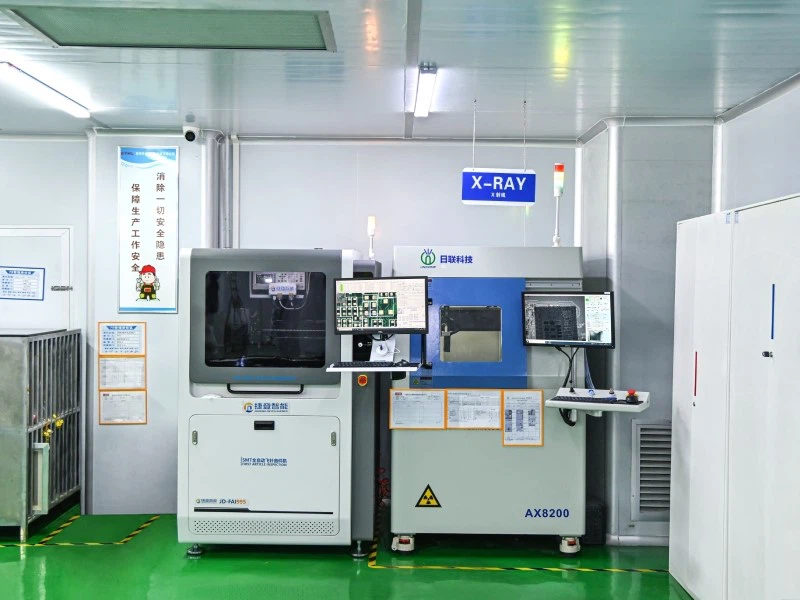
X-Ray Inspection Helps When Solder Joints Are Hidden
Some reliability risks cannot be judged from the surface.
If a board uses BGA, QFN, LGA, bottom-terminated components, or other packages with hidden solder joints, X-Ray Inspection may be useful. It can help review solder joint formation, bridging, voiding patterns, alignment, and other hidden conditions that visual inspection or AOI may not fully reveal.
This does not mean every PCB assembly needs X-ray.
It means X-ray should be considered when the board design includes hidden-joint packages or when the application risk justifies deeper inspection.
For example, a consumer accessory board with all visible joints may not need X-ray. A compact control board with BGA, QFN, or hidden power-device joints may deserve a different inspection plan.
The decision should come from package type and failure impact, not from habit.
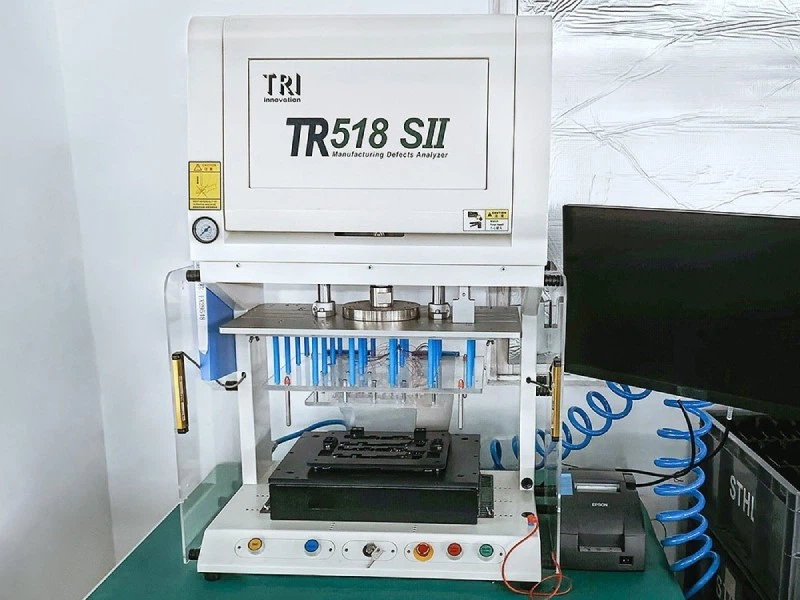
ICT and Flying Probe Need Test Access to Be Useful
Inspection can confirm whether parts appear to be placed correctly.
Circuit-level testing checks whether the assembled circuit behaves electrically in the expected way.
In-circuit testing, flying probe testing, and related electrical checks can help identify shorts, opens, wrong component values, missing components, and certain assembly or component-level problems.
These methods can be useful when the board design supports access and when the project volume or risk justifies the setup.
The important word is access.
A buyer cannot decide late in the project that full ICT is required if the PCB layout does not provide the necessary test points or fixture access. In many projects, test planning has to start before fabrication, not after assembly.
This is where DFT matters.
Design for testability is not just an engineering preference. It directly affects whether the final PCB assembly can be inspected and tested efficiently.
FCT Should Prove the Board's Real Job
Functional testing is often where reliability becomes application-specific.
For some PCB assemblies, a basic power-on check may be enough. For others, the board needs to prove real behavior: relay switching, I/O response, firmware loading, LED behavior, sensor response, communication, motor-control signaling, current draw, or customer-defined operating conditions.
This is especially important in industrial control PCBA, automation equipment, communication devices, power electronics, and other projects where the board does more than sit passively inside a product.
A useful FCT plan should define:
- what function must be proven
- what firmware or software is needed
- what fixture, cable, load, or simulator is required
- what pass/fail result looks like
- whether test data should be recorded
- whether failed boards are retested after rework
- whether serial number or batch traceability is required
A test that only one engineer can run is not yet a production test.
If the EMS team cannot repeat the functional test under clear instructions, the test plan is not ready for production.
Burn-In or Stress Screening Should Be Risk-Based
Burn-in and environmental stress screening can help reveal early-life weaknesses in some assemblies, but they should not be treated as automatic requirements for every PCBA project.
For certain industrial, power, automotive-support, medical-support, or hard-to-service applications, the buyer may require powered operation, thermal exposure, load conditions, or other stress screening before shipment.
For simpler or cost-sensitive boards, that level of testing may not be necessary.
The correct question is not, "Should every board be burned in?"
The better question is: "Does this product's risk level justify stress screening, and what condition should the test actually simulate?"
If burn-in or stress screening is required, the buyer and EMS partner should define the condition, duration, sample size or coverage, pass/fail criteria, and retest rules before production planning.
Otherwise, "burn-in required" becomes a vague instruction rather than a controlled test requirement.
Test Requirements Should Be Defined Before RFQ
Testing and inspection affect quotation, lead time, fixture planning, engineering preparation, reporting, and delivery assumptions.
If a buyer asks for a basic assembly quote first and adds ICT, FCT, programming, X-ray inspection, test reports, or burn-in later, the original quote may no longer describe the real project.
This does not mean every buyer must know every test detail on day one.
But the expected test scope should be discussed early enough for the supplier to plan correctly.
Before requesting a PCB Assembly quotation, buyers should clarify:
- Is AOI expected?
- Is X-ray needed for hidden solder joints?
- Is ICT or flying probe required?
- Is functional testing required?
- Is firmware programming included?
- Is a test fixture available or does one need to be built?
- Are test reports required?
- Are failed boards reworked and retested?
- Are labels, serial numbers, or batch records required?
A quote without test scope can look lower while leaving the reliability question open.
That may be acceptable for an early prototype. It is risky for production planning.
Rework Should Have Its Own Inspection and Retest Rules
Testing and inspection are not only about first-pass quality.
They also matter after rework.
A reworked board may need extra inspection because heat exposure, component removal, manual soldering, or connector adjustment can introduce new risk. Depending on the board, rework may require visual inspection, AOI review, X-ray inspection, electrical retest, or functional retest.
The key point is simple:
A failed board should not return to the finished-goods flow just because the visible defect was repaired.
The repair method, inspection result, and retest result should match the board's risk level.
For low-volume, pilot, industrial, or reliability-sensitive PCBA projects, this rework-and-retest discipline can matter as much as the original inspection plan.
Test Data Should Feed Back into the Next Build
Testing and inspection should not only decide pass or fail.
They can also show whether the process is drifting.
If AOI repeatedly flags the same component shift, that may point to placement setup, feeder behavior, component packaging, or pad design. If X-ray repeatedly shows similar hidden-joint concerns, the reflow profile or package design may need review. If FCT failures cluster around one interface, the problem may sit in firmware, connector handling, test setup, or design margin.
This kind of feedback is useful because it turns test results into process learning.
For repeat orders, pilot builds, industrial control boards, and production programs with revision changes, test data can help the EMS partner and buyer improve the next build instead of simply sorting good boards from bad boards.
Reliability improves when testing feeds back into manufacturing control.
Test Data and Traceability Help Future Troubleshooting
Testing and inspection are more useful when the results are traceable.
For simple projects, a pass/fail confirmation may be enough. For more demanding builds, the buyer may want records tied to batch number, serial number, firmware version, inspection result, test result, or rework history.
Traceability helps answer questions later:
- Which batch used this BOM revision?
- Which firmware version was loaded?
- Which boards passed FCT?
- Was this board reworked?
- Was the failed unit part of a specific lot?
- Without records, troubleshooting becomes guesswork.
That does not mean every project needs a heavy reporting package.
The reporting level should match the application, production stage, and customer requirement. But if the buyer expects traceability, it should be defined before production starts.
A Practical Testing and Inspection Scope for Buyers
A stronger test plan starts with matching inspection methods to risk.
|
Risk Area |
Useful Review Method |
|
Solder paste risk |
SPI or solder paste process monitoring where appropriate |
|
Missing or misplaced SMT parts |
AOI, visual inspection |
|
Polarity-sensitive components |
AOI, visual inspection, first article review |
|
Hidden solder joints |
X-Ray Inspection where appropriate |
|
Shorts, opens, wrong values |
ICT, flying probe, electrical checks |
|
Firmware or programming risk |
Programming verification, version control |
|
Functional behavior |
FCT or customer-specific functional test |
|
Connectors and through-hole parts |
Visual inspection, alignment checks, solder inspection |
|
Burn-in or stress risk |
Risk-based stress screening where required |
|
Rework risk |
Re-inspection and retest after repair |
|
Repeat-build reliability |
Test records, traceability, controlled procedures |
This table is not a universal checklist.
It is a planning tool.
The right scope depends on the board design, application risk, production stage, buyer requirements, and whether the test method can be repeated under production conditions.
Industry Signal: Reliability Expectations Are Moving Upstream
More OEM buyers are defining quality expectations earlier in the project, especially for industrial electronics, automation equipment, communication devices, power electronics, and other reliability-sensitive assemblies.
That does not mean every board needs a heavy test package.
It means testing and inspection should be treated as part of build planning, not an afterthought after assembly is complete.
The earlier the test scope is defined, the easier it is to plan test access, fixture needs, inspection flow, reporting, and delivery assumptions.
Where STHL Fits in This Discussion
For OEM buyers preparing PCB Assembly projects, Shenzhen STHL Technology Co., Ltd. can review testing and inspection requirements alongside the assembly scope.
Depending on the project, this may include AOI Inspection, X-Ray Inspection, in-circuit or functional test discussion, programming requirements, fixture planning, rework-and-retest expectations, and traceability needs.
The goal is not to add unnecessary tests.
The goal is to match the Testing and Inspection scope to the board's actual risk, so the build can be assembled, checked, tested, and repeated under clear conditions.
Conclusion
Testing and inspection affect PCB assembly reliability by revealing different types of risk at different stages of the build.
SPI can help control solder paste risk before placement. AOI helps catch visible assembly issues. X-ray may help with hidden solder joints. ICT and flying probe can support circuit-level checks. FCT confirms whether the board performs its intended function. Rework inspection, test data, and traceability help support repeat production and future troubleshooting.
For OEM buyers, the practical lesson is simple: define the test and inspection scope early. Do not wait until the boards are assembled to decide what "reliable" should mean.
Need help defining the right testing and inspection scope for your PCB Assembly project? Submit your files through Request a Quote or contact STHL directly at info@pcba-china.com


