


Stable PCBA delivery is not only about how fast an SMT line can place components.
It depends on something less visible: how early problems are caught, how quickly the team can tell what failed, and how smoothly boards move through inspection, rework, retest, final approval, and shipment.
That is where AOI, ICT, and FCT matter.
For OEM buyers, these three checks are often discussed as quality-control methods. That is true, but incomplete. In real PCB Assembly projects, they also affect delivery stability. They help prevent visible defects from moving downstream, reduce circuit-level surprises before final testing, and confirm whether the assembled board performs its intended job before shipment.
The important point is not that every PCB assembly needs AOI, ICT, and FCT in the same way.
The better question is: which inspection and test steps are needed to keep this specific PCBA build moving predictably?
Stable Delivery Is Not Just a Calendar Date
A PCBA delivery date can look clear on a quotation.
Then the build starts, and the real questions appear.
- A placement issue needs review.
- A solder bridge has to be reworked.
- A board powers on, but one interface does not respond.
- A customer asks for test data that was not defined in the RFQ.
- A fixture is needed, but no one planned it before production.
- A failed unit is repaired, but the retest rule is unclear.
None of these problems may be dramatic by themselves. But each one can slow down the delivery flow.
Stable delivery means more than "the SMT line has capacity."
It means the project has a realistic path through material preparation, PCB Assembly, inspection, electrical verification, functional testing, rework, final approval, and shipment.
AOI, ICT, and FCT support that path in different ways.
AOI Keeps Visible Defects from Moving Downstream
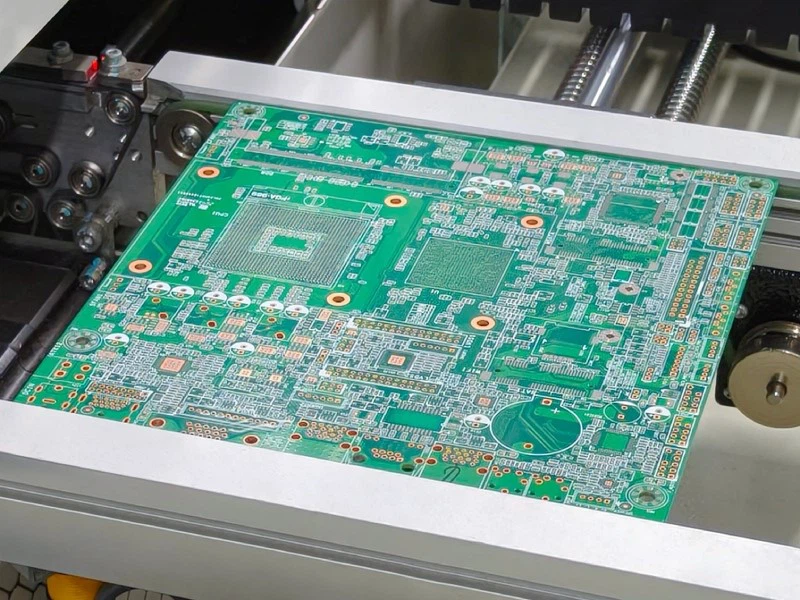
AOI, or Automated Optical Inspection, is usually one of the earliest inspection points after SMT placement and reflow.
Its delivery value is timing.
AOI can help identify visible assembly defects such as missing components, wrong orientation, polarity issues, placement offset, solder bridges, insufficient solder, tombstoning, and other surface-level issues.
If a placement or soldering issue is caught at AOI, the production team can review it while the board is still close to the source of the process problem.
If the same issue is only found during final testing, the situation becomes less clean. Someone has to diagnose whether the failure came from placement, soldering, a component, firmware, a fixture, or the test procedure itself.
When that happens, FCT stops being a final confirmation step and turns into a troubleshooting station.
AOI does not prove that the board works. It does not verify firmware, communication, load behavior, or system-level function.
But it helps keep visible assembly defects from quietly consuming downstream test and rework capacity.
That is why AOI supports stable PCBA delivery: it catches certain problems early enough for the process to stay under control.
ICT Helps Reduce Electrical Surprises Before Final Test
ICT, or In-Circuit Testing, checks the assembled circuit in a different way.
Where AOI focuses on visible assembly conditions, ICT can help identify electrical issues such as shorts, opens, missing components, wrong component values, and certain component-level or connectivity problems.
Some defects are not obvious from the surface.
A resistor may be present but wrong.
A solder joint may look acceptable but not connect properly.
A short may not be visible under normal inspection.
A missing connection may only show up electrically.
From a delivery perspective, ICT can reduce the number of boards that reach final functional testing with basic circuit-level faults still present.
That matters because FCT failures can take longer to diagnose. If a board fails functional testing, the root cause may be firmware, a component issue, a solder joint, a connector, a test cable, a fixture condition, or even the test procedure itself.
ICT narrows the search before the board reaches final test.
However, ICT is not something buyers can always add casually at the end. It depends on test access, fixture planning, test-point design, project volume, cost, and whether the board layout supports it.
For prototype or low-volume builds, flying probe testing may be more practical than a dedicated ICT fixture. For repeat production or more stable designs, fixture-based ICT may become more attractive if the project volume and board design support it.
The decision should be made before production planning, not after the build is already delayed by avoidable debug work.
FCT Confirms Whether the Board Does Its Real Job
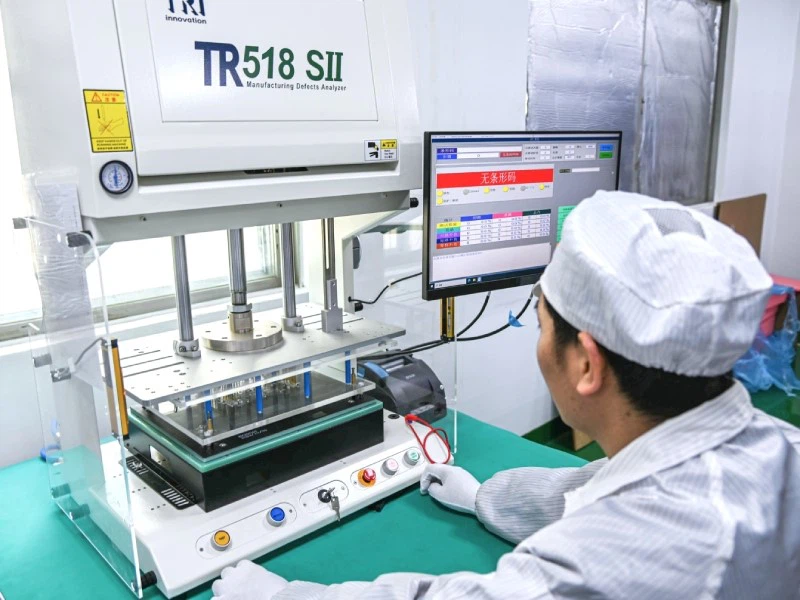
FCT is often where the buyer finally sees whether the board behaves like the product expects it to behave.
For a simple board, that may mean power-on and basic output confirmation. For a more complex PCBA, FCT may include firmware programming, relay switching, I/O response, communication checks, current draw, sensor simulation, LED behavior, motor-control signaling, or customer-defined operating conditions.
FCT supports stable delivery because it reduces ambiguity before shipment.
A board that has only passed visual inspection and basic electrical checks may still fail in the actual product. FCT helps confirm that the board performs its real job under a defined test condition.
But FCT must be repeatable.
A test that only the customer's engineer can run on a bench is useful during development, but it is not yet a production test.
For delivery stability, the EMS partner needs clear instructions, fixture or cable requirements, firmware files, pass/fail criteria, retest rules, and data-recording expectations where needed.
If those details are missing, FCT can become a bottleneck instead of a delivery safeguard.
a amet, dolorem laudantium possimus quae dolore! Atque iure expedita numquam assumenda dolorum
AOI, ICT, and FCT Do Not Replace Each Other
AOI, ICT, and FCT are not interchangeable.
AOI is good at keeping obvious assembly defects from moving forward. ICT helps narrow electrical faults before the board reaches final test. FCT then checks whether the board actually performs its job.
The problem starts when one method is expected to cover the blind spots of another.
AOI can catch visible assembly issues, but it cannot prove functional behavior.
ICT can help find circuit-level faults, but it may not prove that the board behaves correctly inside the final product.
FCT can confirm board-level function, but it may not quickly identify whether the root cause of a failure is a wrong component, a solder issue, a firmware issue, or a fixture setup problem.
Each method answers a different question:
|
Method |
Main Question It Helps Answer |
|
AOI |
Was the board assembled correctly at the visible surface level? |
|
ICT |
Does the circuit show shorts, opens, wrong values, or connectivity issues? |
|
FCT |
Does the PCBA perform the required function under defined conditions? |
A stable delivery plan does not treat these methods as a fixed menu.
It matches the method to the risk.
The Right Test Scope Depends on the Board
Not every board needs all three methods.
A simple, mature, low-risk board may only need AOI and a basic electrical check.
A dense SMT board with fine-pitch components may need stronger optical inspection and process monitoring.
A board with complex nets, many components, or repeat production may benefit from ICT if the layout supports test access.
An industrial control PCBA with firmware, relays, I/O, communication ports, or field wiring may need a defined FCT plan.
A board with hidden solder joints may also need X-ray inspection, but that is a separate decision based on package type and failure impact.
The point is simple:
The test scope should follow the board, not a generic checklist.
For buyers, useful questions include:
- What defects are most likely in this build?
- Which defects must be caught before shipment?
- Does the board require firmware programming?
- Is the test access already designed into the PCB?
- Does the board need a fixture or special cable?
- What result counts as pass or fail?
- Are failed boards reworked and retested?
- Are test records or serial-number traceability required?
- Is this an early prototype, pilot run, or repeat production batch?
The answers shape not only quality control, but also delivery planning.
Test Scope Should Be Defined Before RFQ
Testing affects quotation and lead time.
That is a practical issue, not just a quality issue.
AOI may be part of a standard SMT flow.
ICT may require test-point review, fixture planning, programming, and debugging.
FCT may require customer-provided firmware, test cables, fixtures, load boards, software tools, or a defined test procedure.
If the buyer asks for a basic PCB Assembly quote first and adds ICT or FCT later, the original quote may no longer describe the real project.
This is where many delivery surprises begin.
The supplier may have quoted assembly only.
The buyer may have assumed functional testing was included.
The test fixture may not exist yet.
The firmware may not be released.
The pass/fail criteria may be unclear.
The reporting requirement may not have been priced or scheduled.
None of that means the supplier cannot support the project.
It means the project scope was not fully defined early enough.
For stable PCBA delivery, buyers should disclose inspection and testing expectations during RFQ, not after the first production batch is already moving.
Test Access Can Decide Whether ICT Is Practical
ICT depends heavily on access.
If the board does not have enough test points, spacing, or fixture access, full ICT may be difficult, expensive, or unrealistic. Flying probe may be an alternative for some projects, especially lower-volume builds, but it still depends on what needs to be checked and how the board is designed.
This is why DFT, or design for testability, matters.
A buyer cannot always decide after PCB fabrication that a complete ICT strategy is required. By then, the layout may already limit what can be tested efficiently.
This is not only an engineering detail.
It affects delivery.
If test access is poor, the production team may need extra manual checks, fixture workarounds, longer debug time, or a reduced test scope. That can make the build less predictable.
The earlier test access is reviewed, the easier it is to keep delivery planning realistic.
FCT Can Become a Bottleneck If It Is Not Production-Ready
Functional testing often sounds simple from the buyer's side.
"Just test whether the board works."
But production teams need more than that.
They need to know which firmware to load, which cable to connect, what load or signal to simulate, what software to open, what result is acceptable, what to do with a failed board, and whether to save test data.
If the FCT procedure depends on one engineer's memory, it will not support stable delivery.
A production-ready FCT plan should define:
- firmware version
- fixture or cable setup
- test sequence
- pass/fail limits
- retest rules after rework
- data-recording requirements
- label or serial-number linkage if required
The goal is not to make every FCT complicated.
The goal is to make it repeatable.
A simple test can be a good test if it is clear, controlled, and aligned with the board's actual function.

Rework and Retest Rules Protect the Delivery Flow
Even with good AOI, ICT, and FCT, some boards may need rework.
That is normal in PCBA manufacturing.
The important question is what happens next.
If a board fails ICT, is it repaired and retested?
If a board fails FCT, does it return to the same functional test after rework?
If a connector is touched up, does it need visual inspection again?
If a hidden-joint issue is repaired, does it need deeper review?
Without clear rework and retest rules, failed boards can create confusion inside the delivery flow.
A repaired board should not move to finished goods simply because the visible issue was corrected. The inspection and retest method should match the original failure risk.
This is especially important for low-volume builds, industrial electronics, automation equipment, and other projects where each board may have higher value or tighter delivery expectations.
Test Results Help Stabilize Repeat Builds
AOI, ICT, and FCT are not only useful for sorting one batch.
They can also help improve the next batch.
If AOI repeatedly flags the same placement offset, the team may need to review placement setup, feeder condition, component packaging, stencil design, or pad layout.
If ICT failures cluster around one circuit, the team may need to review component sourcing, soldering, test access, or design assumptions.
If FCT failures repeat around one interface, the issue may involve firmware, cable setup, connector handling, or test procedure clarity.
This feedback helps the EMS partner and buyer move from "find and fix" to "stabilize and prevent."
That is one of the quieter ways testing supports delivery stability.
It makes repeat builds less dependent on troubleshooting.
A Practical Buyer Checklist for Matching Test Scope to Delivery Risk
The test plan should not be heavier than the project needs.
It should be clear enough to protect delivery.
|
Delivery Risk |
Helpful Control |
|
Visible SMT defects |
AOI and visual inspection |
|
Wrong values, shorts, opens |
ICT or flying probe where practical |
|
Firmware or board behavior risk |
FCT with clear pass/fail criteria |
|
Poor test access |
DFT review before PCB fabrication |
|
Rework uncertainty |
Defined re-inspection and retest rules |
|
Repeat-build variation |
Test records and traceability |
|
Customer acceptance risk |
Agreed inspection and test scope before RFQ |
This is not a fixed recipe.
It is a way to think through the project before problems appear.
Industry Signal: Buyers Want Fewer Delivery Surprises
More OEM buyers are asking about inspection scope, test records, fixture readiness, firmware control, and traceability earlier in the project.
That is not surprising.
Electronics programs are becoming more configurable, more software-dependent, and more supply-chain sensitive. For many buyers, stable PCBA delivery now depends on knowing not only when the boards will be built, but how they will be checked before shipment.
This does not mean every project needs a heavy test package.
It means AOI, ICT, and FCT should be discussed as part of delivery planning, not as afterthoughts.
Where STHL Fits in This Discussion
For OEM buyers preparing PCB Assembly projects, Shenzhen STHL Technology Co., Ltd. can review inspection and test requirements alongside the assembly scope.
Depending on the project, this may involve AOI Inspection, ICT discussion, FCT planning, firmware programming inputs, fixture or cable requirements, rework-and-retest expectations, and traceability needs.
The goal is not to add unnecessary testing.
The goal is to match Testing and Inspection to the board's actual risk so the project can move through assembly, inspection, testing, approval, and shipment with fewer surprises.
Conclusion
AOI, ICT, and FCT support stable PCBA delivery because they reduce different risks at different stages.
AOI helps catch visible assembly issues early. ICT can identify circuit-level problems before final function testing. FCT confirms whether the board performs its intended function under defined conditions.
None of these methods works best as an afterthought.
For OEM buyers, the practical lesson is clear: define the test scope before production planning. A stable PCBA delivery plan needs more than production capacity. It needs clear inspection, testing, rework, retest, and acceptance rules.
Need support defining the right test scope for your PCB Assembly project? Submit your files through Request a Quote or contact STHL directly at info@pcba-china.com.


