


High-mix PCBA production is not difficult only because there are many different boards.
It is difficult because every board may carry a different revision, material kit, setup condition, firmware version, test method, and release rule.
In a high-volume program, the same PCBA may run through the line for a long period under a stable setup. In high-mix production, the EMS team may switch between industrial control boards, communication modules, sensor boards, power boards, display boards, gateway PCBAs, prototype builds, and small repeat orders within a much shorter planning window.
That creates a different type of manufacturing risk.
The biggest problem is not always whether the factory can place components or solder the board. It is whether the team is building the right revision, using the right setup, running the right test, and recording the right result for that specific order.
High-mix PCBA production should manage revisions, setups, and test records as one synchronized control loop. If one part of that loop is vague, the build may still move, but the batch becomes harder to trust.
High-Mix Production Fails When Synchronization Fails
High-mix PCBA production is often described as a scheduling challenge.
That is true, but incomplete.
Frequent changeovers, smaller batch sizes, different component packages, and different inspection requirements all make planning harder. But the deeper challenge is synchronization. Every product switch creates a moment where the wrong file, wrong feeder setup, wrong material kit, wrong firmware, wrong test program, or wrong label rule can enter the process.
A high-mix line does not fail only when equipment stops.
It can fail quietly when two builds look similar but should not be treated the same.
For example:
- two PCB revisions may share the same outline but use different component values;
- two BOM versions may use the same reference designators but different approved alternates;
- two firmware versions may pass different functional tests;
- two customer orders may use the same PCBA but different label or packaging rules;
- two boards may require different inspection steps because one includes BGA, QFN, fine-pitch, or mixed-technology assembly.
The operators may be doing their jobs correctly.
The problem is that the production system is not keeping the build condition synchronized.
That is why high-mix PCBA production needs more than flexible capacity. It needs disciplined revision control, setup verification, and test-record management working together.
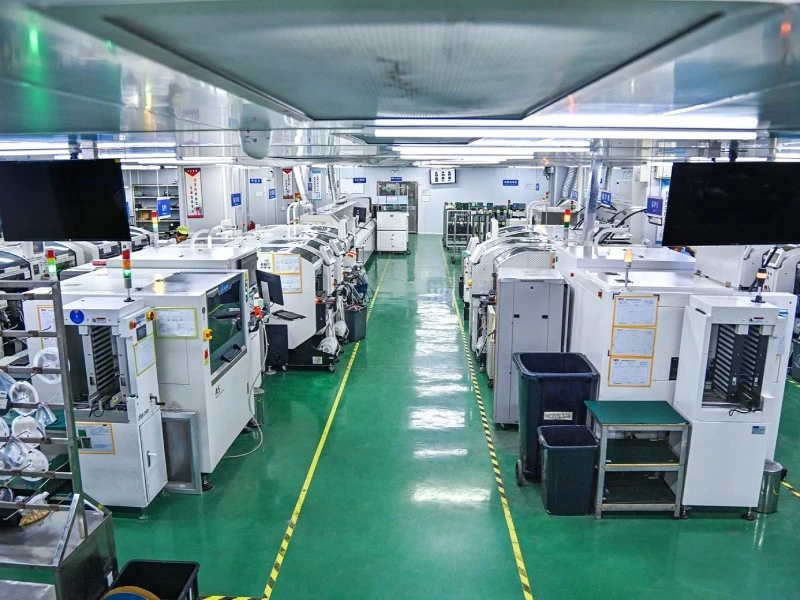
Start with the Active Revision, Not the Latest File
In high-mix production, "latest file" is a risky phrase.
The latest file in an email thread may not be the approved build file. The latest BOM sent by engineering may not match the purchase order. A drawing update may not have reached production planning. A firmware filename may look newer but may not be released for the current order.
The production team should not build from memory, inbox history, or informal file names.
It should build from the active released package.
A controlled release package should make these items visible:
|
Controlled Item |
Why It Matters |
|
PCB revision |
Confirms which Gerber, ODB++, or fabrication data should be built |
|
BOM revision |
Confirms which component list is approved |
|
CPL / pick-and-place revision |
Confirms placement data matches the board and BOM |
|
Assembly drawing |
Confirms polarity, orientation, side, and special notes |
|
Approved alternates |
Confirms which substitutions are allowed |
|
Firmware version |
Confirms what should be programmed and tested |
|
Test procedure revision |
Confirms the correct pass/fail method |
|
Label or serial rule |
Confirms how units are identified after build |
|
Packaging instruction |
Confirms how finished units should be packed or grouped |
The key question is not "Do we have the file?"
The better question is: which file is active for this order?
In high-mix PCBA production, that question should be answered before kitting, before SMT setup, and before the first board is released to the line.
Firmware Should Be Treated Like a Manufacturing Part
Firmware is one of the easiest items to lose in revision control.
Software teams often think of firmware as a file that keeps improving. Manufacturing should treat it more like a component: a controlled input with a part number, revision, release status, and verification method.
If the firmware binary lives only in a shared folder, the production floor may not know which version belongs to which PCBA revision. If the test program does not check the firmware version, a board may pass functionally while still carrying the wrong software release.
In high-mix production, firmware should be linked to:
- product number;
- PCB revision;
- BOM revision;
- programming method;
- programming fixture or cable;
- firmware filename and checksum where applicable;
- functional test procedure;
- release approval;
- serial number or batch record where required.
This does not mean every product needs a complex software control system.
It means firmware should not be treated as an afterthought.
A PCBA with the wrong firmware may be physically assembled correctly and still be the wrong product.
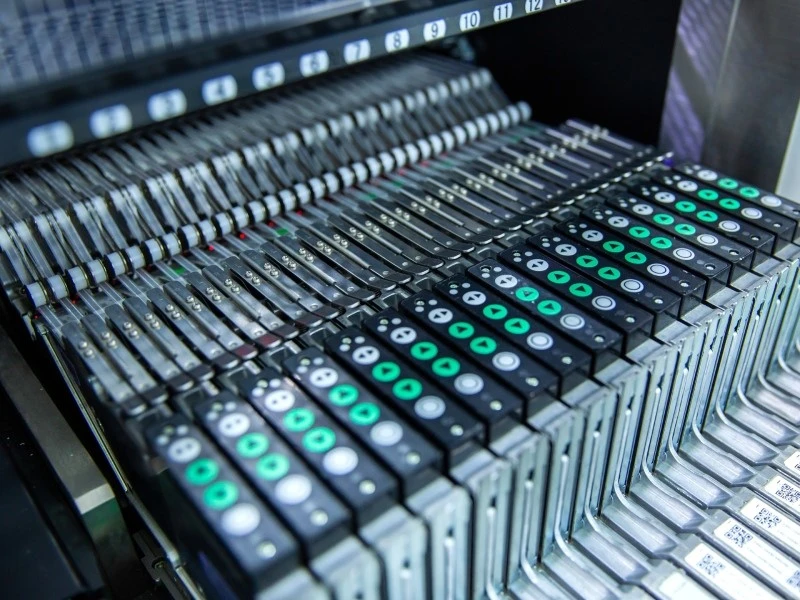
Revision Changes Need an Effectivity Rule
Not every revision change affects the shop floor in the same way.
Some changes are documentation-only. Others affect components, placement, test limits, firmware, inspection, coating, labels, or packaging. A high-mix EMS team needs to know the difference.
A revision change should answer:
- What changed?
- Which orders are affected?
- Which work-in-progress units are affected?
- Which materials are still usable?
- Does the SMT program need to change?
- Does the AOI program need to change?
- Does the test procedure need to change?
- Does the firmware or programming method need to change?
- Does the label, serial number, or traceability rule need to change?
- Can old and new revisions be mixed in the same shipment?
The most important detail is effectivity.
"Effective immediately" is often too vague for production. A clearer rule may define whether the change applies to the next purchase order, the next kit release, the next SMT setup, after existing WIP is completed, or only after a customer-approved cutover.
Without that decision, a revision change becomes a risk transfer to production.
A small change in engineering can become a large interruption on the line if it arrives after materials are kitted, feeders are loaded, or test records are prepared.
The practical rule is simple: if a revision change affects how the board is built, inspected, tested, or released, production needs to know before the setup starts.
Setups Need More Than Machine Programs
In a mixed-product environment, setup control is not only about loading the SMT program.
The setup is the full production condition for that build.
It may include:
- SMT program;
- feeder list;
- component reel or tray verification;
- stencil;
- solder paste type;
- reflow profile;
- panel orientation;
- tooling or fixture;
- AOI program;
- X-ray requirement;
- through-hole or selective soldering route;
- programming method;
- functional test setup;
- label and packing rule.
A machine program can be correct while the build setup is still incomplete.
For example, the SMT placement file may be right, but the wrong stencil may be staged. The feeder setup may match an old BOM revision. The first board may pass AOI, but the functional test program may belong to the previous firmware release.
These are high-mix production problems.
They happen when setup is treated as a machine task instead of a build-control task.
Setup Readiness Starts Before the Previous Job Ends
Every high-mix factory wants shorter changeover time.
That is reasonable. Frequent changeovers can reduce line flexibility if the next job is not prepared early.
But setup reduction should not mean skipping verification.
The goal is to remove wasted waiting, not to remove control.
A practical high-mix setup process may include:
- pre-kitting materials before the current build ends;
- preparing feeders offline where possible;
- staging the correct stencil, tooling, fixture, and work instructions;
- verifying customer-supplied material status;
- confirming shortage or approved alternate status;
- loading the correct SMT, AOI, programming, and test files;
- checking the setup against the active released package;
- recording the setup approval before first article review.
The point is not to make setup complicated.
The point is to make the next build ready before the line is waiting.
A fast setup that loads the wrong revision is not efficient. It is just a faster way to create rework.
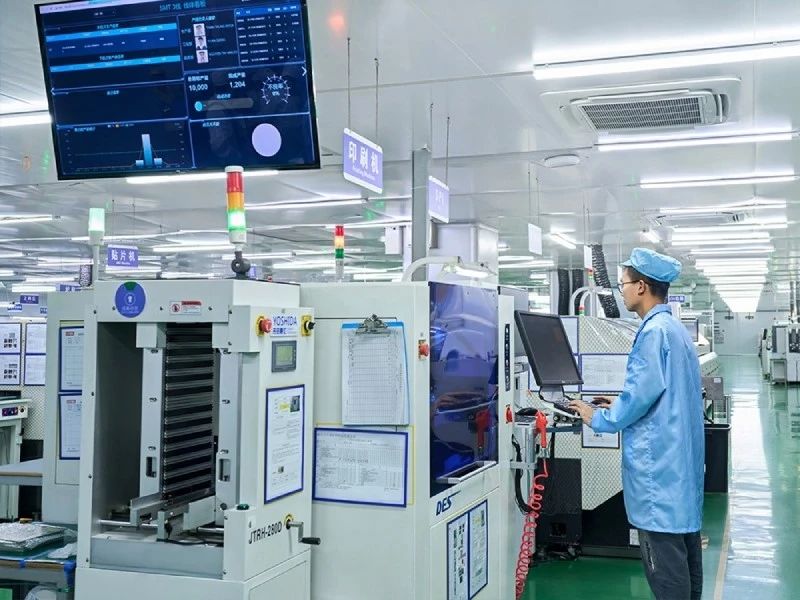
Changeover Should Be Verified Before the First Board Runs
Frequent changeover is normal in high-mix PCBA.
That does not mean changeover should become casual.
Before the first board of a new product or revision runs, the EMS team should verify that the setup matches the released package.
A practical changeover check may include:
|
Changeover Check |
What It Confirms |
|
Job order |
Correct customer, product, quantity, and revision |
|
PCB lot |
Correct bare board revision and quantity |
|
Material kit |
Correct BOM revision, alternates, and customer-supplied parts |
|
SMT program |
Correct placement file and board orientation |
|
Feeder setup |
Correct MPN, value, package, and reference designator link |
|
Stencil |
Correct stencil version and condition |
|
Reflow profile |
Correct process profile for the board and solder paste |
|
Inspection program |
Correct AOI or X-ray scope |
|
Test setup |
Correct fixture, firmware, limits, and procedure |
|
Label rule |
Correct serial, batch, or customer label format |
This does not need to become heavy paperwork for every simple board.
But it must be controlled enough to catch the mistake high-mix production makes easy: using yesterday's setup for today's revision.
First Article Review Is the Setup Gate, Not the Finish Line
In high-mix production, first article review is useful because it checks whether the setup is right before the rest of the batch continues.
It should not be treated as a late paperwork step after most boards are already built.
A practical first article review may confirm:
- correct PCB revision;
- correct BOM revision;
- correct component value, package, polarity, and orientation;
- approved alternate use;
- solder joint quality;
- connector alignment;
- AOI findings;
- X-ray result where hidden joints are involved;
- firmware programming result;
- functional test result;
- label and traceability format;
- packaging or handling notes.
The point is not to create documentation for its own sake.
The point is to answer one production question:
Can the rest of this batch continue under the same setup?
If that answer is unclear, continuing the batch only makes the problem larger.
Test Records Should Answer More Than Pass or Fail
Testing is not only about finding failures.
In high-mix PCBA production, testing also creates the record that proves which board was tested under which condition.
That matters because high-mix builds often involve different firmware versions, customer configurations, test fixtures, test limits, serial numbers, and release rules.
A useful test record may include:
|
Test Record Field |
Why It Matters |
|
Product or part number |
Confirms which PCBA was tested |
|
PCB and BOM revision |
Links result to the correct build package |
|
Serial number or batch number |
Supports traceability |
|
Firmware version |
Confirms the tested software state |
|
Test procedure revision |
Confirms which method was used |
|
Fixture or equipment ID |
Helps investigate test variation |
|
Measured values where needed |
Supports debug beyond pass/fail |
|
Pass/fail result |
Defines release status |
|
Failure code or symptom |
Supports debug and trend review |
|
Rework and retest result |
Confirms whether failed units were closed properly |
|
Operator or station record |
Supports process accountability where required |
A pass result without context is weak.
If a field issue appears later, the buyer and EMS partner need to know more than "the board passed." They need to know which revision passed, with which firmware, under which test method, and whether any rework occurred before release.
That does not mean every product needs unit-level traceability or a complex data system.
It means the record should match the risk of the product.
Rework and Retest Rules Matter More in High-Mix Builds
High-mix production often has less repeated volume per product, so every failed unit can carry useful process information.
If rework is handled informally, the team may lose that information.
A high-mix PCBA process should define:
- what types of defects can be reworked by standard process;
- which defects require engineering review;
- whether reworked boards require full retest or focused retest;
- whether firmware should be reloaded after rework;
- how rework history is recorded;
- how repeated failures are escalated;
- whether reworked units can ship with the same release status.
A reworked board should not pass because the symptom disappeared.
It should pass because the agreed retest path confirms the issue is closed.
In high-mix production, this discipline matters because the next order may come weeks or months later. If the team does not record what happened, the same issue may return as a "new" problem.
Material Kits Should Be Controlled by Job, Not Just by Part Number
High-mix PCBA production depends heavily on kitting discipline.
The same component may be used across multiple products. The same reference designator may exist on different boards. The same board may use different approved alternates depending on revision or customer instruction.
That is why material control should follow the job, not only the part number.
A useful kit should connect:
- job order;
- product number;
- PCB revision;
- BOM revision;
- approved alternates;
- customer-supplied parts;
- moisture-sensitive parts;
- special handling notes;
- shortage or substitute status;
- leftover material rule.
A reel on the shelf is not enough information.
The production team needs to know whether that reel is approved for this job, this revision, and this customer requirement.
This is especially important when high-mix production shares common passives, connectors, IC packages, or customer-supplied components across many builds.
What OEM Buyers Should Clarify Before High-Mix Production Starts
OEM buyers can help the EMS partner manage high-mix production by making the release package and change rules clear.
Before production starts, buyers should clarify:
|
Buyer Input |
Why It Helps |
|
Active PCB revision |
Prevents obsolete board data from being used |
|
Active BOM revision |
Prevents wrong component values or alternates |
|
Approved alternate rules |
Supports controlled sourcing decisions |
|
Customer-supplied material status |
Prevents kit shortages and ownership gaps |
|
Firmware version |
Supports programming and test consistency |
|
Test procedure and limits |
Prevents unclear pass/fail decisions |
|
Serial number rule |
Supports traceability |
|
Label and packaging rule |
Prevents shipment-level mismatch |
|
Change approval path |
Prevents informal revision changes |
|
Rework and retest expectation |
Supports consistent release decisions |
The EMS partner controls the production line.
The buyer controls many of the inputs that make production repeatable.
High-mix PCBA production works best when both sides treat documentation as part of the build, not as an afterthought.
Before the Next High-Mix Build Starts
For OEM buyers, high-mix PCBA production is most stable when revision control, setup control, material kitting, inspection, test records, and release rules are treated as one manufacturing system.
STHL supports OEM projects through PCB Assembly, Testing and Inspection, component sourcing coordination, production preparation, and repeat-build support. In high-mix projects, the practical work often involves confirming active revisions, checking material readiness, preparing SMT and mixed-technology assembly setups, aligning inspection scope, and keeping test or traceability expectations visible before production begins.
The goal is not to bury every project in paperwork.
The goal is to make each build clear enough that the right board is built, tested, and released against the right conditions.
Preparing a high-mix PCBA project with revision, setup, or test-record requirements? Submit your files through Request a Quote or email info@pcba-china.com.
Conclusion
High-mix PCBA production is not only a matter of flexible scheduling.
It is a matter of controlled execution.
When many products, revisions, setups, materials, firmware versions, and test methods move through the same production environment, the EMS team must know exactly which build condition applies to each job.
The right revision must drive the setup.
The right setup must drive the first article review.
The right test method must create the right record.
In high-mix work, the dangerous mistake is not always a bad solder joint. Sometimes it is a good build made from the wrong condition.
For OEM buyers, the practical lesson is simple: high-mix production becomes stable when revision control, setup verification, and test records move together.
If they are managed separately, the build may still run, but the history behind it becomes harder to trust.


