


What: The "Structural Imbalance" Driven by the AI Compute Siphon
As of early 2026, the global electronics manufacturing industry is facing a supply chain upheaval triggered by soaring demand for AI compute. Leading original component manufacturers (OCMs) such as Samsung, SK Hynix, and Micron have pivoted over 70% of their advanced wafer capacity toward high-margin HBM (High Bandwidth Memory) and server-grade DDR5. This shift has severely constricted the production of consumer and industrial-grade DRAM and NAND.
This "Siphon Effect" has extended standard lead times from 12–16 weeks to a staggering 48–60 weeks, with high-scarcity SKUs stretching as far as 60–72 weeks. For small-to-medium EMS providers, the spot market acquisition cycle now frequently exceeds six months. It is critical to note that recent minor price dips in sub-prime DDR5 do not signal a market cool-down; mainstream high-frequency DDR5 capacity remains under 20%, leaving a persistent supply-demand gap. In this environment, memory has transitioned from a standard industrial input to a highly volatile "Position Asset", with pricing now driven as much by financial market sentiment as by capacity, granting OCMs absolute pricing power.
Why: How Memory Volatility Infiltrates the Entire PCBA Value Chain
For integrated EMS providers such as STHL, memory fluctuations present systemic challenges across cost structures, manufacturing efficiency, and delivery credibility:
Cost Structure Disruption & Capital Constraints: The BOM (Bill of Materials) weight of memory varies significantly by product category. In industrial and server-grade PCBA, memory costs have surged from 15%–25% to 40%–50% of total value. Beyond eroding OEM margins, spot market premiums of 80%–150% have significantly increased WACC (Weighted Average Cost of Capital), locking substantial cash flow into high-value inventory.
"Kitting" Bottlenecks & OEE Degradation: Shortages of critical memory components lead to "starving" production lines. While small-to-medium EMS firms typically see OEE (Overall Equipment Effectiveness) drops of 10%–15% due to supply chain fragility, STHL's production data indicates that every 5% drop in OEE correlates to a 2.8%–4.5% increase in unit conversion costs, making capacity utilization a central pain point for cost control.
Fabrication & Engineering Complexity: PCB fabrication complexity has escalated to accommodate new memory architectures. AI server projects supported by STHL have already transitioned to 44-layer Midplanes + 78-layer Orthogonal Backplanes, with High-Density Interconnects (HDI) advancing to 6+N+6 structures. Advanced packaging like CoWoS/CoWoP requires PCBs with ultra-thin dielectrics (≤20μm), high thermal stability, and ultra-low roughness. Furthermore, HDI trace/space requirements of ≤30/30μm and micro-via diameters of ≤75μm push the limits of fabrication yields. At the PCBA stage, high-end BGA memory requires high-precision placement (±1.5μm), laser positioning, and 3D Solder Paste Inspection (SPI) to prevent costly material loss.

How: The Full-Link Risk Mitigation Framework for EMS Providers
In a market of daily price fluctuations, EMS providers with engineering depth must build a proactive defense system covering procurement, engineering, and manufacturing:

1. Strategic Procurement & Alternative Sourcing
Long-Term Agreements (LTAs) for Tier-1 Players: Top-tier EMS providers (with annual spend ≥$50M) are securing capacity through 18–24 month LTAs with OCMs, often requiring 30%–50% down payments. STHL utilizes its global sourcing network to assist clients in navigating these allocation-based environments and mitigating the risk of single-channel disruptions.
Strategic Substitution (CXMT/YMTC): Local memory leaders now hold 15%–20% market share in industrial DRAM/NAND. This is a strategic move to enhance supply chain security. While server-grade local memory remains in the validation phase, STHL works to optimize PCB compatibility and SMT profiles to adapt to these specific package characteristics.

2. Engineering-Led Resilience (DfX)
Alternative Component Databases: STHL's DFM team incorporates multi-vendor footprints (Pin-to-Pin compatibility) during early design. This established database ensures rapid switching during sudden outages without the need for PCB re-spins, shortening emergency response times.
Configuration Tiering: We assist clients in balancing cost and performance by suggesting system-level optimizations or tier-based component selection, such as utilizing mature DDR4 for non-mission-critical applications.
3. Precision Manufacturing & Quality Assurance
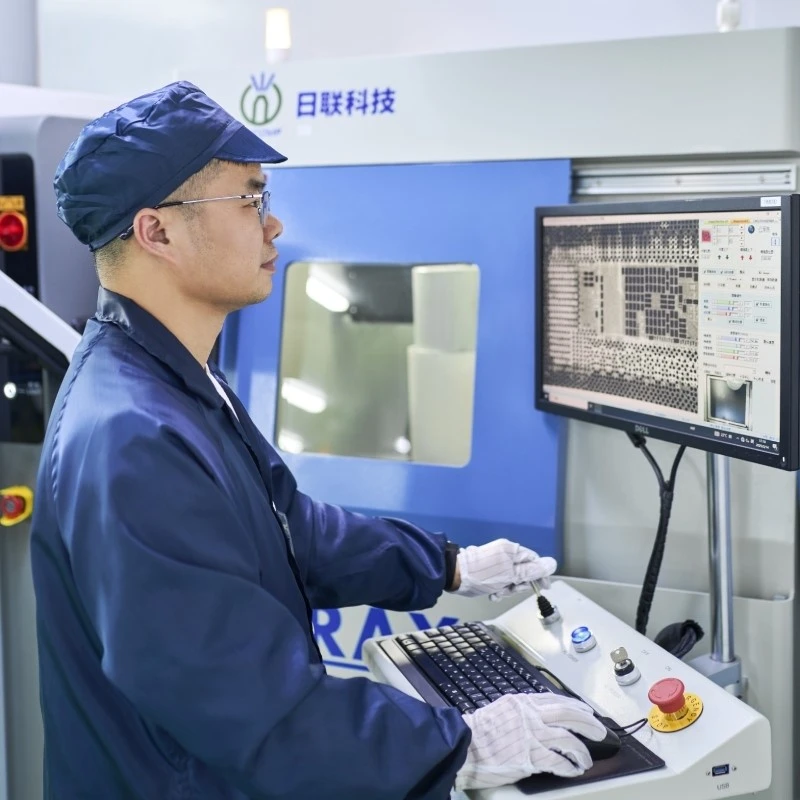
High-Yield SMT & Testing: By optimizing BGA placement and utilizing 3D X-Ray (AXI) to monitor voiding rates (<1%) in real-time, we maintain placement yields above 99.5%, minimizing the waste of high-value components.
Transparent Risk Sharing: We provide "Cost + Lead Time" dual-dimension quoting and establish price-linkage clauses to transform supply chain pressure into E2E (End-to-End) collaboration, enabling shared risks and benefits.
Industry Signal: From "JIT" to "Resilience Premium"
The current memory surge signals a fundamental paradigm shift: competitive advantage in electronics manufacturing has moved from simple "labor cost" to "Full-Link Certainty.".
The industry is moving away from Just-in-Time (JIT) toward Safety Buffer strategies. For OEMs, cost optimization now means building design elasticity through early DfX intervention. Furthermore, as memory evolves from standardized commodities to customized ASIC components (like HBM), EMS providers must engage during the R&D phase because package design is now tightly coupled with PCB thermal management and signal integrity.
In 2026, the providers who thrive will be those offering a comprehensive "Manufacturing + Supply Chain Strategy + Engineering Design" solution, providing long-term certainty in an uncertain market.


