


Power and energy control equipment should not enter PCBA production just because the BOM, Gerber files, and pick-and-place data look complete.
These products often control, monitor, switch, convert, protect, or communicate around electrical energy. That makes the build package more sensitive to power path layout, isolation boundaries, thermal behavior, PCB fabrication quality, connector stress, sensing accuracy, firmware settings, functional testing, environmental protection, and final integration conditions.
A control board for a power supply, energy storage unit, inverter interface, charging equipment, industrial power controller, battery management system, or cabinet-mounted energy device may pass basic assembly inspection and still create problems later if high-current areas, isolation spacing, heat paths, protective components, connector direction, or test limits were not clearly reviewed before production.
For OEM buyers, the useful question is not only "Can the EMS partner assemble this PCBA?"
The better question is: has the build package made the electrical, thermal, mechanical, sourcing, firmware, and test assumptions clear enough for the first build?
These Boards Carry Different Risks
These boards are not just "stronger" versions of standard control boards.
They can fail in different ways.
A digital control board may fail because of a placement defect, solder issue, missing component, firmware mismatch, or connector problem. Those risks still exist in power-related electronics, but they are joined by electrical stress, heat, current density, insulation condition, protection response, and long-term degradation.
Common risk areas may include:
- insulation breakdown where spacing, contamination, or material condition is not controlled;
- overheating around high-current paths or power components;
- current overload through undersized traces, terminals, or solder joints;
- capacitor stress caused by heat, ripple, or poor placement;
- solder joint fatigue caused by thermal cycling or mechanical load;
- EMI / EMC sensitivity or noise generation;
- coating, potting, or contamination issues around isolation areas;
- field wiring stress at high-current connectors.
Not every board faces all of these risks.
That is the point.
Before the build starts, the OEM and EMS partner should define which risks are actually present in the product, and which checks are needed to control them.
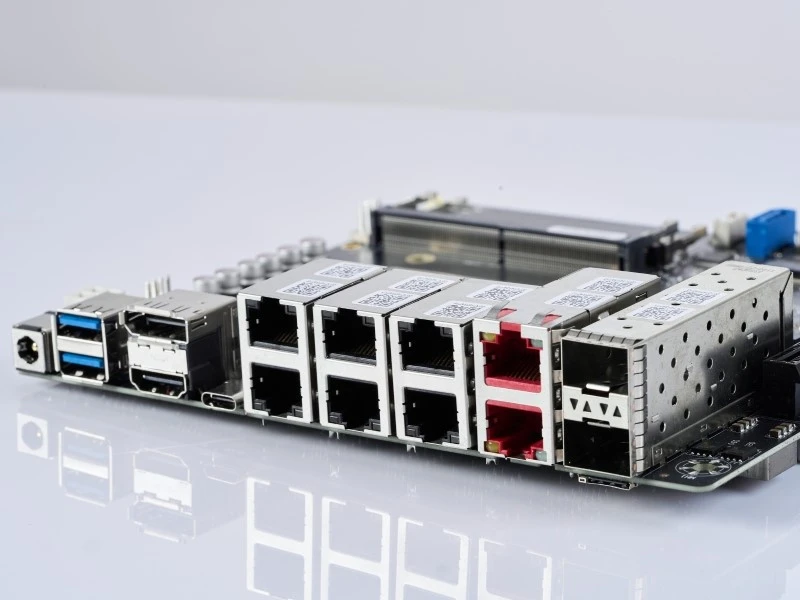
Start by Defining the Power Path and the Control Path
Power and energy control equipment often combines two different worlds on the same PCBA: the power path and the control path.
The power path may include terminals, relays, MOSFETs, IGBTs, fuses, current shunts, transformers, inductors, capacitors, contactors, busbar interfaces, or high-current connectors.
The control path may include MCUs, communication ICs, optocouplers, sensors, ADC circuits, gate drivers, LEDs, HMI interfaces, or firmware-controlled logic.
Both paths matter, but they do not create the same manufacturing questions.
Before PCBA production starts, the EMS team should understand:
- which areas are power input and output;
- which areas are low-voltage control or communication;
- where isolation boundaries are located;
- which components are safety-critical or function-critical;
- which components require polarity, orientation, or spacing attention;
- which solder joints are high-current or mechanically stressed;
- which signals must be tested during functional verification.
A BOM does not always show this clearly.
The board drawing, schematic notes, assembly drawing, and test procedure may be needed to understand how the PCBA is supposed to behave.
A power controller is not just a populated PCB.
It is a controlled energy path with a decision-making circuit attached to it.
Isolation and Spacing Should Be Reviewed Before Assembly
Isolation is one of the most important checks for power and energy control equipment.
This is not only a PCB design topic. It also affects assembly, cleaning, coating, inspection, and rework.
Before the first build, the team should confirm:
- where high-voltage and low-voltage areas are separated;
- whether creepage and clearance requirements are defined by the product design;
- whether slots, cutouts, barriers, or keep-out areas are part of the design;
- whether component placement preserves the intended isolation area;
- whether routed isolation slots create panelization or depaneling concerns;
- whether flux residue, solder balls, loose wire strands, or contamination could create risk;
- whether conformal coating, potting, or masking is required;
- whether rework near isolation areas needs special approval;
- whether labels or warnings are needed at final assembly.
The EMS partner should not decide isolation requirements by guesswork.
The buyer should define the expected product environment and the applicable design or safety requirements. The EMS team can then help make sure the production route does not undermine those assumptions.
A board can look clean at the bench and still be wrong if the isolation boundary is not respected during assembly.
PCB Fabrication Quality Is Part of Power Reliability
For power and energy control equipment, the bare PCB is not just a carrier for components.
It may also be part of the current path, insulation system, heat path, and mechanical structure.
Before assembly starts, the PCB fabrication package should be reviewed for issues that may not matter much on a light-duty digital board but can become serious on a power-related board.
Useful checks include:
- copper weight and copper balance for high-current areas;
- trace width and copper pour design for expected current paths;
- plated through-hole quality for terminals, relays, connectors, and transformers;
- slot, cutout, and isolation feature quality;
- solder mask clearance around high-voltage or high-current areas;
- board thickness and stack-up where press-fit, heavy connectors, or thermal paths are involved;
- laminate material selection where temperature, insulation, or environmental exposure matters;
- cleanliness expectations for areas that affect insulation or coating.
This does not mean every power-related PCBA needs exotic materials or heavy copper.
Some energy control boards are mostly low-voltage sensing and communication boards.
The point is to confirm that the PCB specification matches the actual electrical, thermal, and mechanical role of the board.
Heavy Copper and Thermal Mass Change the Assembly Process
Power-related PCBAs often include heavier copper, large pads, wide pours, and high-mass components.
These features can change how heat moves during soldering.
A large copper area can pull heat away from a joint. A terminal block or relay pin can require more heat than nearby small components. A power component with a large exposed pad may need solder paste control and inspection beyond a simple top-side visual check.
Before production, the assembly review should consider:
- whether the reflow profile fits both small signal components and high-mass areas;
- whether through-hole power parts need wave, selective, pin-in-paste, or hand soldering;
- whether large pads need stencil aperture adjustment;
- whether thermal relief patterns affect solderability or current path needs;
- whether heavy components need additional support during handling or vibration;
- whether X-ray inspection is needed for hidden thermal pads or covered joints;
- whether rework around high-mass parts is practical and controlled.
The risk is not only a missing solder joint.
The risk is an acceptable-looking joint that does not perform well under current, heat, or mechanical stress.
That is why power-related assembly planning should not use a generic reflow mindset for every area of the board.
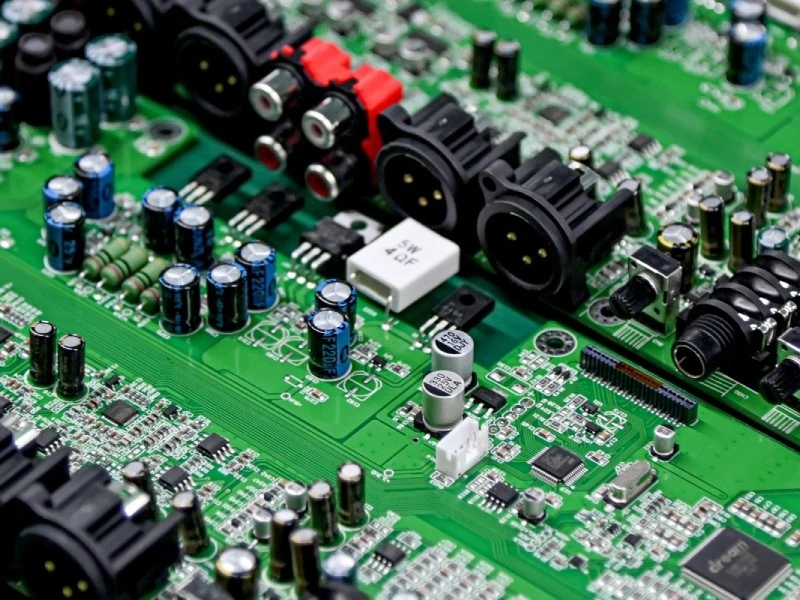
Thermal Reality Should Be Checked Before the First Build
Power and energy control PCBAs often have parts that generate heat or depend on a planned thermal path.
That may include power semiconductors, regulators, relays, transformers, shunts, inductors, resistors, charging circuits, high-current terminals, or power connectors.
The review should not stop at "the component rating is acceptable."
Production needs to know how heat is managed in the real build.
Useful checks include:
- which parts are expected to run warm;
- whether heat sinks, thermal pads, metal brackets, or enclosure contact are required;
- whether component height affects thermal contact;
- whether solder joints are part of the current or heat path;
- whether thermal materials must be placed in a specific location;
- whether screw sequence or torque matters where thermal contact is used;
- whether cables or harnesses block airflow;
- whether final assembly changes the thermal condition compared with board-level testing.
This does not mean every product needs advanced thermal simulation.
But if the final product depends on enclosure contact, airflow, thermal pads, or metal mounting, those details should be included in the build package before production starts.
A board that passes a short functional test may still need thermal review for real operating conditions.

High-Current Connections Need More Than a Visual Check
Power and energy control equipment often uses connectors, terminals, screw blocks, busbar interfaces, blade connectors, relay outputs, or cable harnesses that carry current or connect to field wiring.
These areas deserve special attention.
The build review should check:
- connector orientation;
- terminal access;
- soldering method;
- hole fill and wetting where through-hole parts are used;
- mechanical support;
- strain relief;
- cable exit direction;
- torque or fastening requirement where applicable;
- inspection before enclosure closure;
- labeling for field wiring;
- service access after installation.
A high-current connector can be electrically continuous and still be a production risk if it is tilted, poorly supported, hard to access, or stressed by the cable.
The practical question is not only "Does it conduct?"
The better question is: will the connection remain repeatable after assembly, testing, shipping, installation, and service?
Protective Components Should Be Treated as Critical Parts
Power and energy control boards often include components that protect the product or the equipment around it.
These may include fuses, MOVs, TVS diodes, NTC thermistors, current shunts, isolation devices, relays, optocouplers, surge-related components, or temperature sensors.
These parts should not be treated like ordinary BOM lines.
Before the build, the team should clarify:
- which components are protection-related;
- whether approved alternates are allowed;
- whether package, rating, tolerance, or response behavior matters;
- whether orientation is critical;
- whether substitutions require customer approval;
- whether inspection or functional test must confirm the protection path;
- whether the part affects regulatory or product-level validation.
This is especially important during repeat production.
A substitute part may fit the pads and still change product behavior. For protection-related circuits, "same footprint" is not enough.
The build package should make the no-substitute and controlled-substitute rules clear.
Component Sourcing Should Be Reviewed Before Quoting Feels Final
Power semiconductors, high-voltage capacitors, magnetics, relays, connectors, sensors, and protection components can create sourcing risk.
Some parts may have long lead times. Some may have strict approved-source requirements. Some may have electrical, thermal, or safety-related characteristics that make casual substitution risky.
Before the first build, the sourcing review should confirm:
- which components are critical;
- which components have long or unstable lead times;
- which parts must come from authorized or approved sources;
- whether approved alternates exist;
- whether alternates affect thermal behavior, protection behavior, or test limits;
- whether date code, lot, or supplier traceability is required;
- whether customer-supplied material needs incoming inspection rules.
The goal is not to make the BOM rigid.
The goal is to prevent sourcing flexibility from becoming uncontrolled substitution.
For power and energy control equipment, a wrong alternate can be more serious than a purchasing inconvenience.
It can change how the product behaves.
Sensing and Feedback Circuits Need Testable Conditions
Many energy control products depend on sensing and feedback.
The PCBA may measure voltage, current, temperature, battery status, load condition, relay state, or communication status. If these circuits are not tested under meaningful conditions, the board may pass a simple power-on check but fail in the real product.
Before production, the test plan should define:
- which sensing channels must be verified;
- whether calibration is required;
- whether measured values need limits or only pass/fail status;
- whether current, voltage, or temperature simulation is needed;
- whether relay or output switching must be exercised;
- whether communication data should be checked;
- whether firmware version affects measurement behavior;
- whether test records should store measured values.
A sensing circuit is easy to overlook because it may not be visible like a connector or heat sink.
But in power and energy control equipment, sensing is often what allows the product to make the right decision.
If the feedback path is wrong, the control logic may be wrong even when the PCBA is assembled correctly.
Firmware and Configuration Should Be Controlled Before Testing
Firmware is a production input, not a late detail.
For power and energy control equipment, firmware may control switching behavior, communication protocol, protection thresholds, relay timing, charging logic, fault reporting, calibration values, display data, or test mode.
Before functional testing starts, the EMS team and buyer should confirm:
|
Firmware / Configuration Item |
Why It Matters |
|
Firmware version |
Confirms the correct release is programmed |
|
Configuration file |
Defines product variant or customer setting |
|
Calibration data |
Supports measurement accuracy where required |
|
Serial number or address |
Supports traceability and communication setup |
|
Bootloader or programming method |
Affects programming route |
|
Test mode |
Supports production verification |
|
Change control rule |
Prevents old and new versions from being mixed |
A board with the correct hardware and wrong firmware may still be the wrong product.
The same applies to configuration.
If the board has different power settings, communication addresses, current limits, or customer-specific parameters, those details should be controlled before the first test record is created.
Inspection Should Match the Risk Area
Inspection for power and energy control PCBAs should not be treated as one final visual pass.
Different areas require different checks.
A practical inspection plan may include:
|
Area |
Possible Inspection Focus |
|
SMT components |
Polarity, placement, solder joints, fine-pitch parts |
|
Through-hole power parts |
Hole fill, wetting, lead protrusion, thermal mass effects |
|
High-current connectors |
Seating, solder quality, mechanical support |
|
Isolation areas |
Cleanliness, spacing, coating, no unwanted residue or debris |
|
Heat-related parts |
Thermal pad, heat sink, mounting, contact surface |
|
Protective components |
Correct part, orientation, approved substitution status |
|
Labels and warnings |
Correct placement and readability |
|
Reworked areas |
Inspection and retest after repair |
Not every board needs every inspection method.
AOI, X-ray, visual inspection, ICT, FCT, final inspection, and customer-specific checks should be selected based on the board's actual risk profile.
The key is timing.
Some issues must be inspected before coating, potting, enclosure closure, heat sink installation, or cable routing makes them harder to see.
Test Fixtures Should Protect the Board as Well as Measure It
Power and energy control PCBAs may be heavier, thicker, taller, or mechanically less flexible than standard logic boards.
They may also include large capacitors, relays, terminal blocks, transformers, shunts, heat sinks, or high-current connectors that make test access more complicated.
A test fixture should not create a new risk while trying to verify the board.
Before production, the team should consider:
- whether the fixture supports the board under high-force contact areas;
- whether pogo pins or mating connectors can reach the correct points;
- whether tall parts are protected from fixture pressure;
- whether high-voltage or high-current test areas are guarded;
- whether operator access is safe and repeatable;
- whether fixture contact could bend the PCB or stress solder joints;
- whether test cables are strain-relieved;
- whether failed units can be removed safely for debug.
A test fixture is part of the manufacturing process.
If the fixture bends the board, overloads a connector, or makes operator handling inconsistent, the test result may be clean while the process is not.

Functional Testing Should Reflect Product Behavior
A power and energy control PCBA should not be released only because it turns on.
The test should reflect the product's real function as much as practical for the production stage.
Depending on the project, functional testing may include:
- power input check;
- output control check;
- relay or switching response;
- voltage or current sensing;
- communication interface;
- fault signal or alarm output;
- LED or display indication;
- firmware version confirmation;
- calibration or parameter verification;
- load simulation where required;
- connector and terminal continuity;
- final visual and label inspection.
The test does not need to recreate every field condition unless the customer requires it.
But it should cover the product behaviors that matter for release.
A power controller that passes a static check may still fail if the switching output, sensing input, communication interface, or fault indication is never exercised.
The test plan should make those boundaries clear.
Coating, Potting, and Cleaning Should Be Decided Before Production
Some power and energy control PCBAs may require conformal coating, potting, selective coating, masking, or special cleaning.
These processes should not be added casually after assembly.
They can affect connectors, test points, heat dissipation, rework access, labels, and future service.
Before production, the team should define:
- whether coating or potting is required;
- which areas must be coated;
- which areas must be masked;
- whether test points must remain accessible;
- whether connectors, switches, relays, or displays need protection;
- whether coating keep-out zones are required around adjustable parts, vents, or contacts;
- when functional testing should happen;
- whether rework is allowed after coating or potting;
- how the coated or potted area should be inspected.
If coating is added after the test plan is written, the team may discover too late that test points are covered or a connector is contaminated.
Protection processes need to be part of the build plan, not a last-minute add-on.
Traceability Should Cover the Items That Matter Later
Traceability is useful only if it helps answer real questions after production.
For power and energy control equipment, traceability may need to connect:
- PCB revision;
- BOM revision;
- approved alternates;
- critical component lots where required;
- firmware version;
- calibration data where required;
- test result;
- rework history;
- label or serial number;
- shipment record.
The required depth depends on product risk.
A simple control module may need batch-level traceability. A field-installed energy controller, charging interface, battery-related board, or configured power device may need stronger links between unit identity, firmware, test results, and shipment records.
The goal is not to create paperwork for its own sake.
The goal is to make sure the record can answer the right question when a repeat order, field issue, or customer investigation appears.
What OEM Buyers Should Clarify Before the First Build
OEM buyers can help the EMS partner prepare power and energy control PCBA production by defining key build assumptions early.
Useful inputs include:
|
Buyer Input |
Why It Helps |
|
Product function description |
Explains what the board controls, monitors, or protects |
|
Active PCB and BOM revisions |
Prevents build package mismatch |
|
Schematic or critical circuit notes |
Helps identify power, sensing, isolation, and protection areas |
|
Power path and isolation notes |
Makes safety-related assumptions visible |
|
Approved alternates and no-substitute parts |
Controls sourcing risk |
|
Mechanical or enclosure information |
Supports thermal, connector, and clearance review |
|
Firmware and configuration rules |
Supports programming and functional testing |
|
Test procedure and acceptance limits |
Defines release criteria |
|
Calibration requirement where applicable |
Supports measurement-related boards |
|
Coating, potting, or cleaning requirements |
Prevents process conflicts |
|
Labeling and traceability rules |
Supports repeat production and field support |
If these inputs are vague, the EMS partner may still be able to assemble the PCBA.
But the first build may create avoidable questions that should have been answered before production started.
Before Building Power and Energy Control PCBA
For OEM buyers, the safest time to clarify power-related build risks is before the first PCBA order enters production.
For OEM projects, STHL's PCB Assembly and Testing and Inspection discussions can help clarify practical build items such as component sourcing status, power-path awareness, connector handling, firmware version, inspection scope, functional testing, labeling, and repeat-build traceability.
The goal is not to make the project more complicated than necessary.
The goal is to make sure the build package reflects how the board will actually control, monitor, or protect energy in the finished equipment.
Preparing a power or energy control PCBA project for build review? Submit your files through Request a Quote or email info@pcba-china.com.
Conclusion
Power and energy control equipment should not move into PCBA production on file completeness alone.
A complete BOM and Gerber package may still leave important questions unanswered.
Before the first build, OEM buyers and EMS partners should confirm the power path, isolation boundaries, PCB fabrication requirements, thermal assumptions, high-current connectors, protective components, sourcing rules, sensing circuits, firmware, inspection scope, test method, coating or potting requirements, and traceability rules.
The practical lesson is simple:
Do not wait for the first build to reveal the assumptions.
Make the assumptions visible before the PCBA is built.


