


Partial turnkey PCB Assembly can be a smart sourcing model when the material split is intentional.
It can also become one of the most coordination-heavy assembly models when the split is vague.
In a full turnkey build, the EMS partner usually manages PCB fabrication, component sourcing, assembly, and testing. In a consigned build, the buyer supplies most or all materials, and the EMS partner focuses mainly on assembly execution. Partial turnkey sits between those two models: the buyer supplies selected components, while the EMS partner sources the remaining parts and manages the build.
That middle ground can work well.
But once customer-supplied components enter the build, they become part of the EMS execution flow. They affect receiving, incoming inspection, storage, kitting, feeder setup, SMT placement, manual assembly, traceability, testing, rework, and delivery.
Customer-supplied components make sense when the buyer has a clear reason to control selected parts and the EMS partner has enough information to use those parts correctly.
The real question is not whether partial turnkey is better than full turnkey.
The better question is: which components should the customer supply, and under what conditions does that choice support the build instead of slowing it down?
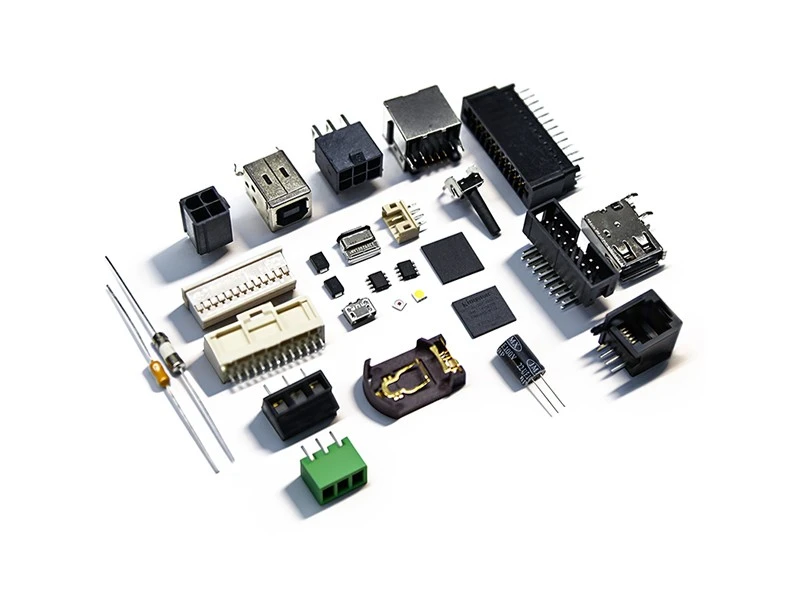
Partial Turnkey Is a Responsibility Split, Not Just a Buying Split
Many partial turnkey problems start with a simple misunderstanding.
The buyer sees two material lists: parts the customer will supply and parts the EMS partner will source.
Production sees something more complicated.
The EMS team has to build one complete PCBA from two supply streams. Customer-supplied and EMS-sourced parts must arrive, be verified, be kitted, and be ready for the same build window.
If one customer-supplied component is late, short, damaged, mislabelled, or not matched to the released BOM, the whole PCB Assembly schedule can be affected. It does not matter that the EMS-sourced components are ready. The board still cannot be built as planned.
That is why partial turnkey should be treated as a responsibility split, not just a purchasing split.
A practical partial turnkey BOM should identify:
|
BOM Control Area |
Why It Matters |
|
Customer-supplied or EMS-sourced |
Clarifies who is responsible for procurement |
|
Approved MPN and manufacturer |
Prevents sourcing, placement, and inspection ambiguity |
|
Reference designators |
Links the supplied part to the exact board locations |
|
Quantity per board |
Supports kitting, setup allowance, and shortage checks |
|
Package type |
Affects feeder setup, tray handling, cut tape use, or hand placement |
|
DNP / DNI status |
Prevents unnecessary sourcing or placement |
|
Moisture sensitivity |
Affects storage, baking, and floor-life control |
|
Traceability requirement |
Defines lot, batch, or serial-level records |
|
Substitution rule |
Clarifies whether EMS can source replacements |
|
Test or programming impact |
Shows whether the component affects final verification |
Without this detail, "customer-supplied" becomes a vague label.
A supplied component still needs to be usable, traceable, and ready for manufacturing.
Customer-Supplied Components Make Sense When the Buyer Has a Real Advantage
Customer supply should be a deliberate choice, not a habit.
It makes sense when the buyer has a stronger reason to control a specific part than the EMS partner does to source it.
Proprietary or controlled components
Some parts are tied to the buyer's intellectual property, firmware, configuration, calibration, encryption, or customer-specific qualification.
Examples may include:
pre-programmed MCUs;
custom ASICs or FPGAs;
secure authentication devices;
wireless modules with customer-specific settings;
calibrated sensors;
proprietary interface modules;
customer-qualified connectors or restricted parts.
In these cases, the buyer may be the only realistic source. The EMS partner may not have access to the part through normal distribution channels, or the buyer may need to control revision, programming, or security handling.
Customer supply is logical here.
But the EMS partner still needs the correct MPN, package condition, handling notes, placement requirements, and verification method.
01
Existing buyer-owned inventory
Customer-supplied components also make sense when the buyer already owns qualified stock.
This may happen after a previous production run, a last-time buy, a corporate purchasing agreement, or a transfer from another manufacturer.
Using that stock can avoid duplicate purchasing.
But owned stock is not automatically build-ready.
Before it enters production, the EMS team still needs to confirm whether the material matches the released BOM revision, whether the packaging is intact, whether the lot or date code is acceptable, and whether the parts can be used by the intended assembly process.
02
Long-lead or allocation-sensitive parts
If the buyer has direct allocation, reserved stock, or stronger access to a constrained component, supplying that component can reduce sourcing risk.
That advantage is real only if timing is controlled.
A long-lead part supplied late by the buyer still becomes the schedule driver for the entire build.
Partial turnkey does not remove lead-time risk. It moves part of that risk to the buyer's side of the supply chain.
03
Compliance-sensitive or customer-qualified parts
Some products use components tied to certification, qualification, or customer approval.
For medical, industrial, telecom, automotive, safety-related, or regulated applications, changing a component may not be a simple sourcing decision. It may require engineering review, customer approval, functional testing, or requalification.
In those cases, the buyer may choose to supply the controlled parts while the EMS partner sources standard passives, hardware, connectors, or other approved items.
This works best when the BOM clearly separates fixed parts from flexible sourcing lines.
04
When Customer Supply Creates More Handling Than Value
Customer-supplied components are not automatically cheaper.
They can look cheaper on the purchasing line and still add cost elsewhere.
If the EMS partner can source the same standard component at comparable cost, customer supply may add work without adding value. The buyer now has to purchase, pack, label, ship, track, and reconcile the component. The EMS partner still has to receive, count, inspect, store, kit, and manage it.
That is a lot of handling for a part that could have been sourced inside the normal EMS procurement flow.
Customer supply often creates more risk than value when:
- the component is a common resistor, capacitor, diode, or standard connector;
- the buyer supplies small quantities of low-cost commodity parts;
- the material arrives in mixed bags, loose cut tape, or unlabelled packaging;
- the buyer's internal part numbers do not match the BOM;
- the EMS partner can source the part through approved channels with similar terms;
- the buyer cannot confirm storage condition, shelf life, or packaging integrity;
- the part requires special handling that was not communicated before shipment.
The issue is not that the customer should never supply standard parts.
The issue is whether the savings are large enough to justify the extra coordination.
The problem is shipping low-value parts through a high-touch process.
For many routine components, the better choice is to let the EMS partner source them as part of the turnkey portion of the build.
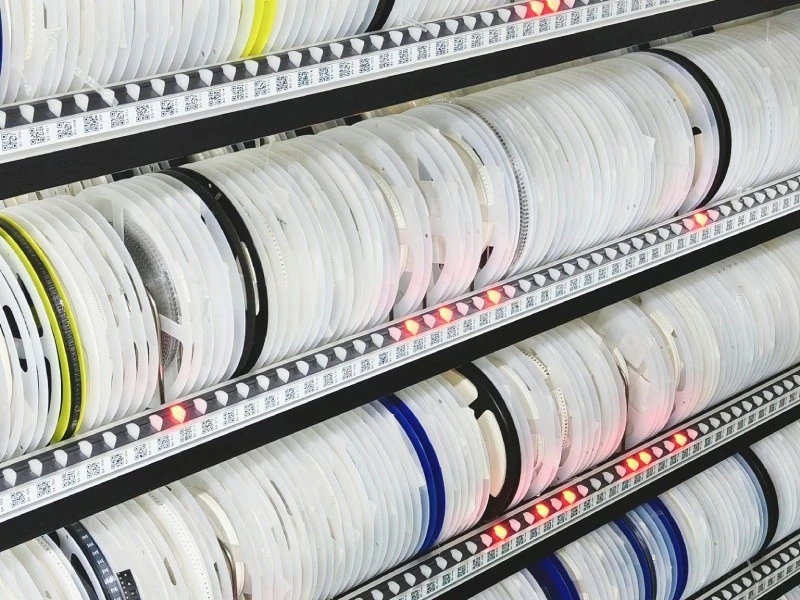
Assembly-Ready Is Different from Buyer-Owned
A box of customer-owned components is not the same as an assembly-ready material package.
That distinction matters.
SMT production needs components in a format the line can use. Full reels, labelled reels, sealed trays, tubes, and properly packed moisture-sensitive parts are easier to manage than loose parts or partial packaging.
Cut tape can sometimes be used, but it may require enough carrier tape for feeder loading, manual handling, or alternative placement planning. Open trays may require verification. Moisture-sensitive devices may need moisture sensitivity level (MSL) records, humidity indicators, or baking decisions. High-value ICs may need traceability and controlled handling.
Before customer-supplied components are released to the line, the EMS team may need to check:
- manufacturer part number;
- quantity;
- reference designator match;
- package type;
- reel, tray, tube, or cut-tape condition;
- label consistency;
- lot code and date code;
- moisture sensitivity level (MSL);
- ESD-safe packaging;
- oxidation or lead condition;
- shelf life;
- certificate or traceability documents when required.
This is why the material handoff should happen before the build window, not at the last minute.
A part can be electrically correct and still not be ready for automated assembly.
The Buyer and EMS Partner Should Agree on Inspection Responsibility
Customer-supplied does not mean inspection-free.
The EMS partner and buyer should agree in advance how supplied parts will be checked after arrival.
A practical incoming check may include part number, quantity, packaging condition, label accuracy, visible damage, moisture-sensitive packaging, lot or date code, and BOM match.
For critical parts, the inspection scope may need to be more specific.
But the inspection rule should be agreed before the parts arrive.
If the buyer wants sealed manufacturer packaging to remain unopened, that preference should be documented. If the EMS partner finds a mismatch during receiving, both sides should know whether the build waits, whether the buyer sends replacements, or whether the EMS partner is allowed to source an approved replacement.
The uncomfortable questions should be answered early:
- Who owns the risk if the supplied component is defective?
- Who pays for rework if the defect appears after assembly?
- Who approves replacement sourcing?
- Can the EMS partner continue the build if only part of the customer-supplied kit is ready?
- What happens if incoming inspection finds a wrong part, short quantity, damaged reel, or moisture exposure?
Partial turnkey works better when these answers are clear before the first box arrives.
Quantity Margin Should Be Discussed Before Material Ships
Supplying the exact theoretical quantity is risky.
PCB Assembly may need extra material for feeder loading, setup, attrition, inspection, rework, or replacement after test failure. The required margin depends on package type, process route, placement method, order quantity, component value, and whether the part is machine-placed or manually assembled.
There is no universal percentage that fits every project.
A small passive on tape and reel does not behave like a high-value IC in a tray. A prototype build does not behave like a repeat production run. A cut-tape component does not behave like a full reel. A programmed MCU does not behave like a standard resistor.
The buyer and EMS partner should agree on overage before shipment.
If the supplied quantity is too tight, a shortage of only a few pieces can hold the entire order.
That is not a theoretical problem. It is the kind of issue that appears after production planning has already been done.
Labeling and Documentation Are Part of the Build
Good documentation is not paperwork for its own sake.
It is how the EMS team connects the physical material to the build package.
Each customer-supplied line item should arrive with a packing list that matches the BOM. The label should make it easy to connect the component to the correct manufacturer part number, quantity, project, and reference designators.
Useful information may include:
|
Handoff Item |
What It Should Clarify |
|
Packing list |
What was shipped and in what quantity |
|
Manufacturer part number |
Exact part linked to the BOM |
|
OEM internal part number, if used |
Cross-reference to the manufacturing BOM |
|
Reference designators |
Where the component is used on the PCBA |
|
Lot code or date code |
Traceability and shelf-life review |
|
Packaging type |
Reel, tray, tube, cut tape, or MSL bag |
|
Storage condition |
Whether special handling is needed |
|
Certificate or CoC, if required |
Compliance or customer documentation |
|
Substitution rule |
Whether replacement sourcing is allowed |
|
Leftover material instruction |
Return, store, or apply to future orders |
Loose parts in unmarked bags are a predictable source of delay.
They force the factory to pause receiving, ask questions, count parts manually, and confirm what should have been clear before shipment.
A good handoff reduces emails.
A poor handoff creates them.
Partial Turnkey Has Two Supply Chains, but One Build Schedule
From the EMS side, partial turnkey is more coordination-heavy than it may appear.
The factory must track two supply chains. One is managed by the EMS partner. The other is managed by the buyer. Both must converge before the build can proceed.
The EMS planning team cares about three practical questions:
Timing certainty
Will the customer-supplied parts arrive when promised, in the quantity promised, and before the scheduled build window?
Quality certainty
Are the parts genuine, undamaged, correctly labelled, properly packed, and matched to the released BOM?
Responsibility clarity
If a supplied part is wrong, short, damaged, obsolete, moisture-exposed, or defective, who owns the resolution and who owns the schedule impact?
When these answers are clear, partial turnkey can be planned with confidence.
When the buyer treats partial turnkey as "we'll send some parts and you handle the rest," the model becomes fragile.
The parts may still arrive.
The build may still wait.
Where Partial Turnkey Works Best
This mixed-sourcing model works best when the buyer supplies the parts that genuinely need buyer control, while the EMS partner sources the parts that can be handled more efficiently through manufacturing procurement.
A practical split may look like this:
|
Buyer May Supply |
EMS May Source |
|
Proprietary ICs or modules |
Standard passives |
|
Pre-programmed components |
Common connectors and hardware |
|
Customer-qualified parts |
Approved commodity components |
|
Allocated or reserved stock |
Standard semiconductors with approved alternates |
|
Last-time-buy material |
PCB fabrication and standard assembly materials |
|
Compliance-sensitive parts |
Packaging, labels, and production consumables where applicable |
This split should not be based only on convenience.
It should be based on sourcing advantage, engineering control, traceability needs, and production efficiency.
If the buyer supplies too many routine parts, the EMS partner may lose the ability to manage kitting efficiently. If the buyer supplies too few controlled parts, the EMS partner may be forced to source components that should remain under buyer approval.
The right partial turnkey model is not half turnkey and half consigned.
It is a planned split of material responsibility.
Define the Shortage, Rejection, and Leftover Rules Early
Partial turnkey builds often run into trouble when something does not arrive as expected.
The issue may be simple:
- the buyer ships fewer parts than required;
- a reel label does not match the BOM;
- cut tape is too short for machine setup;
- moisture-sensitive packaging has been opened;
- parts show oxidation risk;
- a supplied part fails incoming inspection;
- extra material remains after the build;
- the EMS partner needs to know whether it can source replacements.
These are normal material-management questions.
The problem is waiting until the build is already scheduled to answer them.
Before PCB Assembly starts, the buyer and EMS partner should define:
- who approves EMS-sourced replacements for customer-supplied parts;
- whether the build can proceed with a partial shortage;
- whether rejected supplied material is returned, held, or scrapped;
- how leftover customer-owned material is stored or returned;
- whether unused material can be applied to future orders;
- whether lot or date-code mixing is allowed;
- how material discrepancies are reported.
The build does not need perfect conditions.
It needs clear rules.
How Customer-Supplied Parts Affect Quotation and Scheduling
Customer-supplied components may reduce the EMS partner's sourcing workload for selected parts.
They do not remove the work required to manage those parts.
A partial turnkey quote may need to account for:
- material receiving;
- counting and verification;
- incoming inspection;
- inventory control;
- component baking or special handling;
- kitting labor;
- shortage reporting;
- traceability records;
- customer-owned inventory management;
- leftover material return or storage.
That is why a partial turnkey quotation should separate sourcing responsibility from production responsibility.
Even if the EMS partner does not purchase a customer-supplied component, it may still need to receive, verify, store, prepare, place, inspect, trace, and manage that component before, during, and after assembly.
The buyer supplies the part.
The build still has to absorb it.
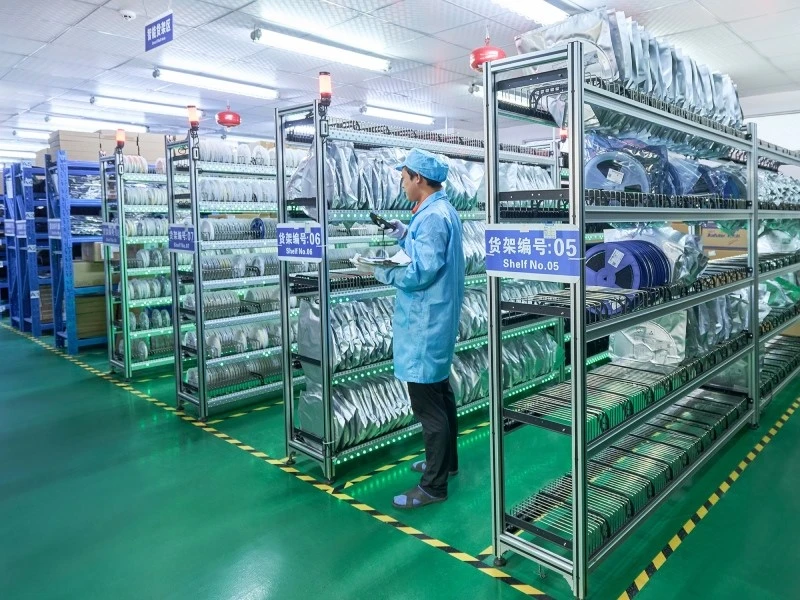
How This Connects to PCB Assembly and Components Sourcing
For OEM buyers, partial turnkey PCB Assembly works best when customer-supplied components and EMS-sourced components are planned as one complete build package.
STHL supports OEM projects through PCB Assembly and Components Sourcing, including BOM review, component kitting, production preparation, and sourcing coordination. In partial turnkey discussions, the practical work often involves identifying which parts the customer should supply, which parts STHL should source, how supplied material should be received, and how shortages, substitutions, traceability, and testing expectations should be handled.
The goal is not to force every project into a full turnkey model.
The goal is to make the material split clear enough for the build to move without avoidable confusion.
Preparing a partial turnkey PCB Assembly project with customer-supplied components? Submit your project through Request a Quote or email info@pcba-china.com.
Conclusion
Customer-supplied components make sense in partial turnkey PCB Assembly when the buyer has a clear reason to control selected parts and the EMS partner has enough information to use those parts correctly.
They are useful for proprietary, pre-programmed, allocated, compliance-sensitive, customer-qualified, or already-owned components.
They become risky when they arrive late, short, unlabelled, poorly packaged, moisture-exposed, unsupported by traceability, or disconnected from the released BOM.
Partial turnkey is not just a sourcing arrangement.
It is a responsibility split.
When the material split is clear before PCB Assembly starts, the build is less likely to stop over questions that should have been settled before the parts arrived.


