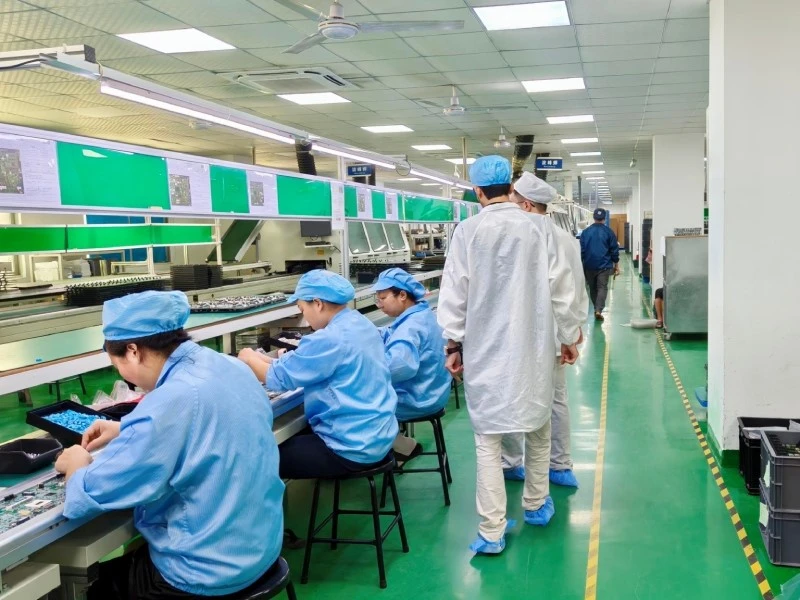
On August 10, 2026, a visitor from Pakistan met with the engineering and sourcing teams at Shenzhen STHL Technology Co., Ltd. (STHL) to discuss an energy electronics development project before reviewing material preparation and PCBA manufacturing on the factory floor.
Rather than beginning with an equipment tour, the visit started with the project itself. The discussion focused on preliminary manufacturing considerations, electronic component supply, and several points that may require further clarification as the project moves toward quotation and production planning.
For STHL, the meeting provided an opportunity to bring engineering, sourcing, material readiness, and manufacturing considerations into the same project discussion at an early stage.
Project Discussion Before the Factory Tour
During the office meeting, STHL's engineering team reviewed the available project information from a manufacturing perspective and shared preliminary observations based on the visitor's current requirements.
The sourcing team joined the discussion from a supply-chain perspective, focusing on BOM-related component availability, sourcing feasibility, and material preparation.
The discussion gave the visitor an initial view of how engineering support and Components Sourcing can work together within the same PCBA project before manufacturing planning moves forward.
From Project Discussion to the Factory Floor
After the meeting, the visit continued through STHL's production and material areas.
On the SMT floor, the visitor reviewed solder paste printing, high-speed component placement equipment, and several production and inspection areas. The route also included the incoming quality control (IQC) area and the THT/DIP assembly section.
The visitor showed particular interest in solder paste printing, automated SMT placement, and first article inspection while discussing how these manufacturing activities relate to the project reviewed earlier in the office.
The factory visit provided a practical connection between the project discussion and the actual PCB Assembly environment in which the project may later be executed.

Material Readiness and Production Visibility
Material preparation was another focus of the visit.
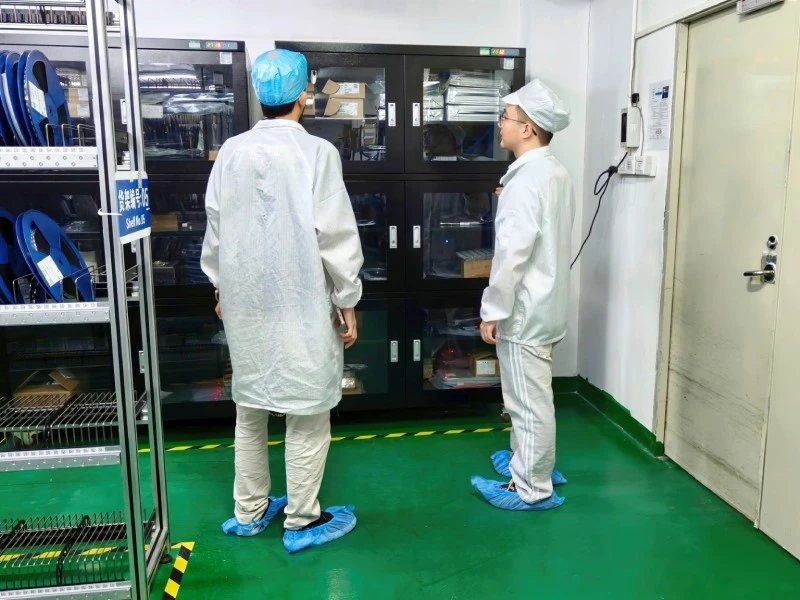
In the component storage and material-handling areas, the STHL team showed how project materials are organized and how digital status information helps production and sourcing teams monitor material readiness. The visitor also reviewed component reels, staging areas, and electronic component storage.
Color-coded status indicators help teams distinguish different material conditions at a glance, including items that are ready and those that still require follow-up.
For applicable material flows, FIFO principles are used as part of warehouse and production-material control. Relevant material and production records can also be linked through STHL's MES to support production traceability and project coordination.
For customers, this visibility helps make material status and potential gaps easier to identify before they affect production planning.
A Visit Built Around Project Readiness
The value of the visit was not tied to any single machine or process. It came from connecting the project discussion in the office with what the visitor later saw across the production and material areas.
Engineering focused on manufacturing considerations. Sourcing focused on component availability and material readiness. The factory visit then provided a direct view of SMT production, THT/DIP assembly, incoming inspection, material handling, and the teams involved in supporting production.
For overseas OEM and project teams evaluating a PCBA or EMS partner, this type of direct visibility helps show whether engineering, sourcing, material planning, and manufacturing are working from the same set of project requirements before production starts.
STHL appreciates the visitor's trip to Shenzhen and the open, practical discussion with our engineering, sourcing, and production teams.
Each in-person project discussion also gives us a better understanding of what customers want to verify before moving forward, from technical questions and component availability to manufacturing preparation and delivery expectations.
We look forward to continuing the project discussion and, where the requirements and cooperation model are a good fit for both sides, gradually building a stable and long-term working relationship.
Teams preparing a PCBA or EMS project can share their BOM, Gerber files, assembly drawings, quantities, and relevant project requirements through Request a Quote or contact STHL at info@pcba-china.com.