


Hey there! As a supplier in the Fine Pitch SMT (Surface Mount Technology) game, I've seen firsthand how the solder alloy composition can make or break the performance of our products. In this blog, I'm gonna dive into how different solder alloy compositions affect Fine Pitch SMT performance.
First off, let's talk about what Fine Pitch SMT is. It's a process used in PCB (Printed Circuit Board) assembly where components are mounted directly onto the surface of the board. This technology allows for higher component density and better electrical performance, which is crucial in today's high - tech devices.
Now, the solder alloy composition plays a huge role in Fine Pitch SMT. The most common solder alloys used in SMT are tin - lead (Sn - Pb) and lead - free alloys like tin - silver - copper (Sn - Ag - Cu).
Let's start with the traditional tin - lead solder. Back in the day, Sn - Pb solder was the go - to for SMT because it had some great properties. It has a relatively low melting point, which means it can be easily reflowed during the assembly process. This low melting point also reduces the thermal stress on the components and the PCB.
When it comes to Fine Pitch SMT, the low melting point of Sn - Pb solder allows for better wetting. Wetting is when the solder spreads out evenly over the pads and the component leads. Good wetting is essential for creating strong and reliable solder joints. With fine pitch components, where the spacing between leads is very small, proper wetting becomes even more critical. If the solder doesn't wet well, it can lead to issues like bridging, where the solder connects two adjacent leads that shouldn't be connected.
However, due to environmental concerns, the use of lead - containing solders has been restricted in many industries. This has led to the widespread adoption of lead - free solder alloys, such as Sn - Ag - Cu.
The Sn - Ag - Cu solder alloy has a higher melting point compared to Sn - Pb solder. This higher melting point can be a double - edged sword. On one hand, it can provide better mechanical strength to the solder joints. The silver in the alloy helps in enhancing the hardness and the shear strength of the solder, which is important for withstanding mechanical stress during the operation of the device.
But on the other hand, the higher melting point also means that more heat is required during the reflow process. This can cause thermal stress on the components and the PCB, especially for fine pitch components. The components may be more prone to damage due to the increased heat. Also, the higher melting point can sometimes lead to poor wetting. The solder may not spread as easily as Sn - Pb solder, which can result in voids or incomplete solder joints.
Another factor to consider is the surface tension of the solder alloy. Different solder alloys have different surface tensions, and this can affect how the solder behaves during the reflow process. For example, a solder alloy with high surface tension may tend to ball up instead of spreading evenly over the pads. In Fine Pitch SMT, where the pads are very small, this can be a big problem. A solder ball that doesn't spread properly can lead to an open circuit, which means the component won't work as intended.
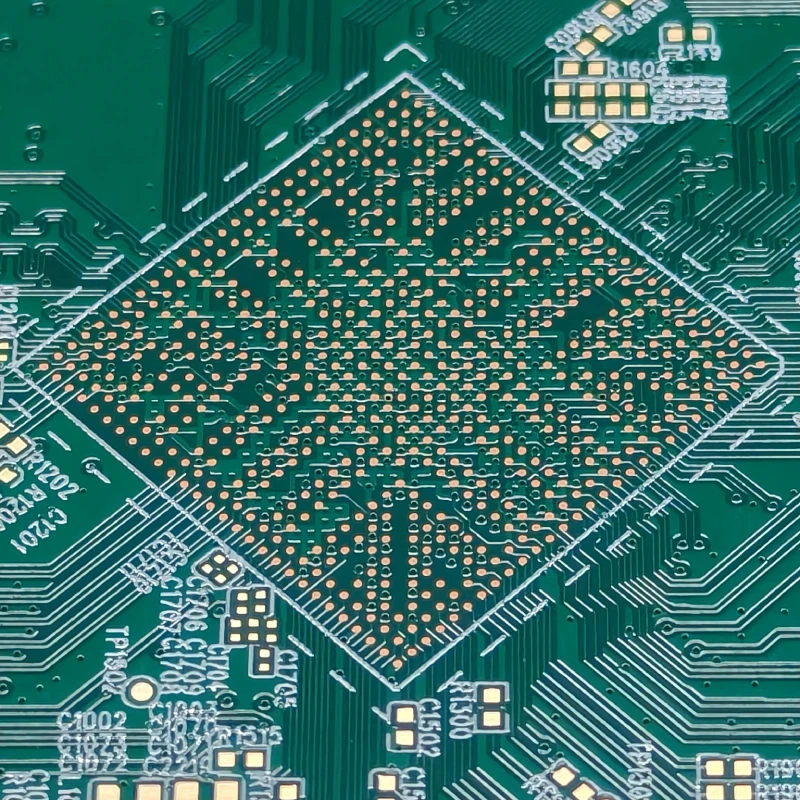

The composition of the solder alloy can also affect the formation of intermetallic compounds (IMCs). IMCs are formed at the interface between the solder and the metal pads on the PCB. They play an important role in the reliability of the solder joints. For example, in Sn - Ag - Cu solder, the formation of Cu6Sn5 and Ag3Sn IMCs can provide good mechanical strength to the joints. However, if the IMC layer grows too thick over time, it can become brittle and lead to joint failure.
Now, let's talk about how these factors translate into real - world performance in Fine Pitch SMT. When we're dealing with high - volume production, as in High Volume PCB Assembly, the choice of solder alloy becomes even more critical. A wrong choice can lead to a high rate of defective products, which can be costly in terms of time and money.
For SMT BGA (Ball Grid Array) assembly, as described in SMT BGA Assembly, the solder alloy composition is crucial. BGA components have a large number of small solder balls, and the performance of these balls depends on the solder alloy. If the alloy doesn't wet well or has poor mechanical properties, it can lead to issues like ball collapse or open joints.
The SMT stencil design, as discussed in SMT Stencil Design, also interacts with the solder alloy composition. The stencil is used to deposit the solder paste onto the PCB pads. The design of the stencil, such as the aperture size and shape, needs to be optimized for the specific solder alloy being used. For example, a solder alloy with high surface tension may require larger apertures in the stencil to ensure proper deposition.
In conclusion, the solder alloy composition has a profound impact on Fine Pitch SMT performance. Whether it's the melting point, wetting properties, surface tension, or the formation of intermetallic compounds, each aspect of the solder alloy can affect the quality and reliability of the solder joints.
If you're in the market for Fine Pitch SMT services, and you're looking for a reliable supplier, don't hesitate to reach out. We've got the expertise and experience to help you choose the right solder alloy for your specific application and ensure top - notch performance. Let's have a chat about your requirements and see how we can work together to achieve the best results.
References
- "Surface Mount Technology: Principles and Practice" by C. P. Wong
- "Soldering in Electronics" by E. J. W. Verhoeven


