


As a provider of AOI (Automated Optical Inspection) solutions, I've witnessed firsthand the crucial role AOI inspection plays in modern manufacturing. AOI technology has revolutionized the quality control process, enabling manufacturers to detect defects quickly and accurately. However, the inspection accuracy of AOI can vary significantly depending on the type of defect. In this blog, we'll explore the inspection accuracy of AOI for different defect types and how it impacts the manufacturing process.
Understanding AOI Inspection
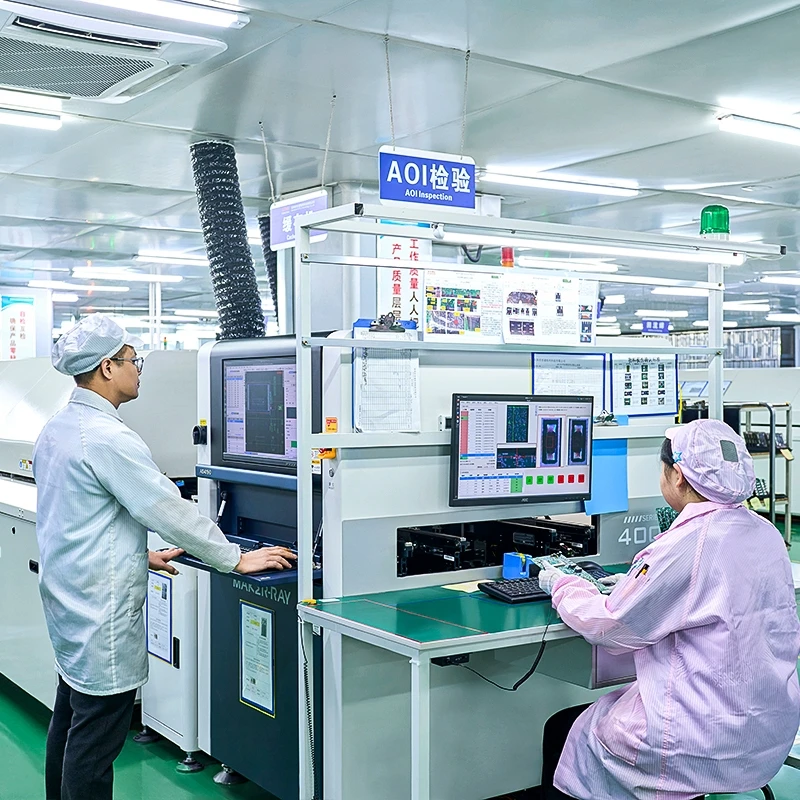
AOI inspection is a non - contact, high - speed method of inspecting printed circuit boards (PCBs) and other electronic components. It uses high - resolution cameras and advanced image processing algorithms to detect a wide range of defects. The technology has become an essential part of the electronics manufacturing industry, as it helps to ensure product quality, reduce production costs, and increase productivity.
The basic principle of AOI inspection involves capturing images of the target object and comparing them with a pre - defined reference image. Any discrepancies between the two images are flagged as potential defects. However, the accuracy of this process can be influenced by several factors, including the type of defect, the complexity of the component, and the quality of the imaging system.
Inspection Accuracy for Different Defect Types
Solder Defects
Solder defects are one of the most common types of defects in PCB manufacturing. They can include issues such as solder bridges, insufficient solder, and solder balls. AOI inspection is generally quite effective at detecting solder defects.
Solder bridges, where two adjacent solder joints are connected by an unwanted bridge of solder, are relatively easy to detect. The AOI system can identify the abnormal connection between the pads by analyzing the shape and size of the solder joints. The accuracy of detecting solder bridges can be as high as 95% or more, especially when using high - resolution cameras and advanced algorithms.
Insufficient solder, on the other hand, can be a bit more challenging to detect. The AOI system needs to accurately measure the volume and height of the solder. In some cases, the variation in the solder shape and size due to the manufacturing process can make it difficult to distinguish between normal and insufficient solder. However, with proper calibration and advanced image processing techniques, the inspection accuracy for insufficient solder can reach around 90%.

Solder balls are small spheres of solder that can cause short - circuits. AOI can detect solder balls by looking for small, round objects in the vicinity of the solder joints. The accuracy of detecting solder balls is also relatively high, typically around 92%. You can learn more about solder - related inspection at Solder Paste Inspection.
Component Placement Defects
Component placement defects include issues such as misaligned components, missing components, and wrong components. AOI inspection is highly effective in detecting these types of defects.
Misaligned components are easy to detect as the AOI system can compare the actual position of the component with the expected position. The accuracy of detecting misaligned components can be close to 100% if the component has distinct features and the imaging system has sufficient resolution.
Missing components are also straightforward to detect. The AOI system simply looks for the absence of a component in the expected location. The detection accuracy for missing components is usually very high, often exceeding 99%.
Wrong components are more difficult to detect. The AOI system needs to compare the appearance of the component with a database of known components. This requires accurate imaging and a comprehensive component library. With proper setup, the accuracy of detecting wrong components can be around 95%. You can find more information about general AOI inspection at AOI Inspection.
Electrical Defects
Electrical defects, such as open circuits and short - circuits, are more challenging to detect using AOI alone. AOI can only detect physical signs that may indicate an electrical defect, such as broken traces or solder bridges.
Open circuits, where the electrical path is interrupted, are difficult to detect because the break may be microscopic or hidden under a component. AOI can sometimes detect visible breaks in the traces, but the accuracy is relatively low, typically around 70%.
Short - circuits, where there is an unwanted connection between two electrical paths, can be detected if there is a visible solder bridge or other physical connection. However, if the short - circuit is caused by a hidden defect, such as a conductive particle inside the PCB, AOI may not be able to detect it. The accuracy of detecting short - circuits using AOI is around 80%. For more comprehensive electrical testing, other methods like Burn - In Testing may be required.
Factors Affecting AOI Inspection Accuracy
Several factors can affect the inspection accuracy of AOI for different defect types.
Imaging System Quality
The quality of the imaging system, including the camera resolution, lighting conditions, and lens quality, has a significant impact on the inspection accuracy. High - resolution cameras can capture more detailed images, making it easier to detect small defects. Proper lighting is also crucial, as it can enhance the contrast and visibility of the components and solder joints.
Algorithm Complexity
The advanced image processing algorithms used in AOI systems play a vital role in defect detection. More complex algorithms can handle a wider range of defect types and improve the accuracy of the inspection. These algorithms need to be continuously updated to adapt to new manufacturing processes and defect patterns.
Component Complexity
The complexity of the component being inspected can also affect the inspection accuracy. Components with small features, high - density layouts, or complex shapes are more difficult to inspect. In these cases, the AOI system may need to use multiple imaging angles or advanced scanning techniques to ensure accurate defect detection.
Impact on Manufacturing
The inspection accuracy of AOI for different defect types has a significant impact on the manufacturing process. High - accuracy AOI inspection can help to reduce the number of defective products, improve product quality, and increase customer satisfaction.
By detecting defects early in the manufacturing process, AOI can prevent further processing of defective components, which can save time and cost. For example, if a missing component is detected before the PCB is assembled, it can be easily replaced, avoiding the need to disassemble the entire product later.
However, low - accuracy inspection can lead to false positives and false negatives. False positives can result in unnecessary rework, while false negatives can allow defective products to pass through the quality control process, leading to potential customer complaints and returns.
Conclusion
AOI inspection is a powerful tool for detecting a wide range of defects in the electronics manufacturing industry. However, the inspection accuracy varies depending on the type of defect. Solder defects, component placement defects, and electrical defects each have different levels of detectability using AOI.
To ensure the highest possible inspection accuracy, it's essential to consider factors such as the quality of the imaging system, the complexity of the algorithms, and the nature of the components being inspected. By understanding the strengths and limitations of AOI inspection for different defect types, manufacturers can make informed decisions about their quality control processes.
If you're interested in improving your quality control with high - accuracy AOI inspection, we'd love to discuss your specific needs. Contact us to start a conversation about how our AOI solutions can benefit your manufacturing process.
References
- Smith, J. (2020). Automated Optical Inspection in Electronics Manufacturing. Journal of Manufacturing Technology, 15(2), 89 - 102.
- Brown, A. (2021). Defect Detection in PCB Manufacturing using AOI. International Journal of Electronics and Electrical Engineering, 9(3), 210 - 221.
- Green, C. (2019). Advancements in AOI Technology for Quality Control. Proceedings of the 5th International Conference on Manufacturing and Quality Assurance, 345 - 356.


