


In the dynamic world of Point of Sale (POS) systems, the demand for high - performance, reliable, and cost - effective solutions is ever - increasing. Mixed technology PCB assembly has emerged as a game - changer in this domain, offering a multitude of benefits that can significantly enhance the functionality and efficiency of POS systems. As a mixed technology PCB assembly supplier, I am well - versed in the advantages that this approach brings to the table.
1. Enhanced Component Density
One of the primary benefits of using mixed technology PCB assembly in POS systems is the ability to achieve a higher component density. POS systems often require a wide range of components, including microcontrollers, memory chips, power regulators, and communication modules. By combining surface - mount technology (SMT) and through - hole technology (THT) in a single PCB, we can place components more efficiently.
SMT components are smaller and can be placed closer together on the PCB surface. This allows for the integration of more components in a limited space. On the other hand, through - hole components, which are typically used for high - power or high - reliability applications, can be inserted into the PCB to provide mechanical stability and electrical conductivity. For example, in a POS terminal, SMT chips can be used for processing and memory functions, while through - hole connectors can be used for power supply and external device connections. This combination results in a more compact and powerful POS system.
2. Improved Electrical Performance
Mixed technology PCB assembly can also improve the electrical performance of POS systems. SMT components have shorter lead lengths, which reduces parasitic capacitance and inductance. This leads to faster signal propagation and lower electromagnetic interference (EMI). For high - speed data transfer in POS systems, such as in credit card processing or wireless communication, SMT components are ideal.
Through - hole components, however, are better suited for handling high - power signals. They can provide a more stable electrical connection, especially in applications where there is a significant amount of current flow. For instance, in a POS system with a large - screen display, through - hole power regulators can ensure a stable power supply to the display, preventing flickering or other electrical issues.
3. Higher Reliability
Reliability is a crucial factor in POS systems, as they are used in a variety of environments and are expected to operate continuously without failure. Mixed technology PCB assembly offers enhanced reliability compared to using a single technology.
Through - hole components are mechanically stronger and more resistant to vibrations and shocks. They are well - suited for applications where the POS system may be subject to rough handling, such as in a retail store or a restaurant. SMT components, on the other hand, are less prone to oxidation and corrosion due to their surface - mount design. By combining these two technologies, we can create a PCB that is more reliable in different operating conditions.
4. Cost - Effectiveness
Cost is always a consideration in the development of POS systems. Mixed technology PCB assembly can be a cost - effective solution. SMT components are generally less expensive to manufacture and assemble, as they can be placed using automated pick - and - place machines. This reduces labor costs and increases production efficiency.
However, for some applications, through - hole components are still necessary. Instead of using all through - hole components, which can be more expensive and time - consuming to assemble, we can use a combination of SMT and through - hole components. This allows us to take advantage of the cost - savings of SMT while still meeting the requirements of the POS system.
5. Flexibility in Design
Mixed technology PCB assembly provides greater flexibility in the design of POS systems. Designers can choose the most appropriate components for each function based on their requirements. For example, if a POS system requires a high - speed processor, an SMT microcontroller can be used. If a high - power output is needed, a through - hole power transistor can be incorporated.
This flexibility also allows for easier upgrades and modifications to the POS system. As technology advances, new components can be added or replaced without having to completely redesign the PCB. This is particularly important in the fast - paced world of POS technology, where new features and functions are constantly being introduced.
6. Selective Soldering and SMT BGA Assembly
In mixed technology PCB assembly, processes like Selective Soldering and SMT BGA Assembly play a crucial role. Selective soldering is a technique used to solder through - hole components on a PCB. It allows for precise soldering of individual components, reducing the risk of solder bridging and other soldering defects. This is especially important in POS systems, where high - quality soldering is essential for reliable operation.

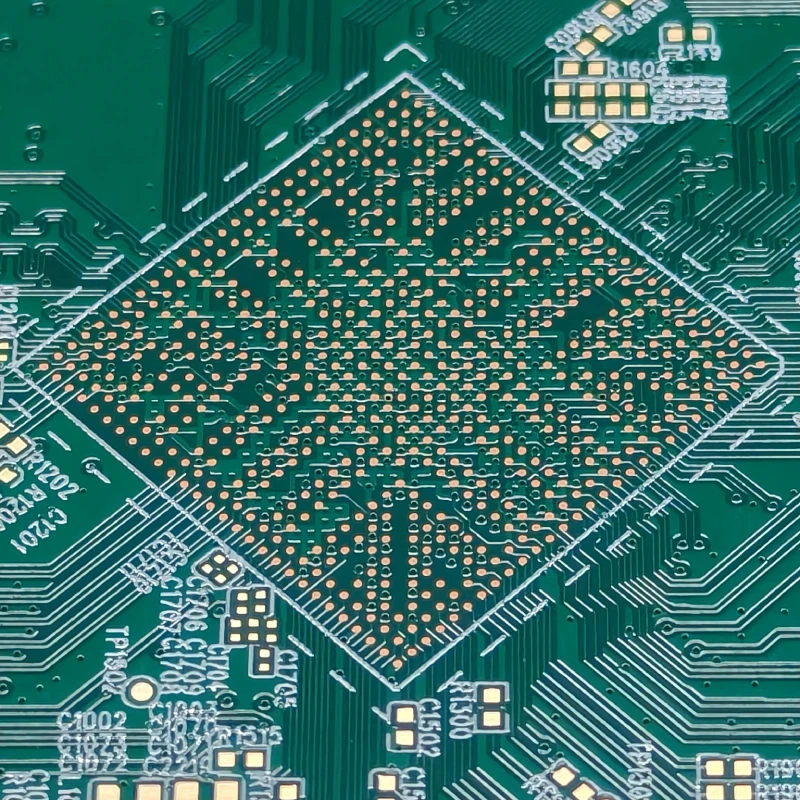
SMT BGA (Ball Grid Array) assembly is used for mounting high - density SMT components. BGA components have a large number of connections on the bottom of the package, which can provide a high - speed and high - performance solution for POS systems. The ability to assemble BGA components accurately and efficiently is a key advantage of mixed technology PCB assembly.
7. Manual Through Hole Assembly
In addition to automated processes, Manual Through Hole Assembly also has its place in mixed technology PCB assembly. There are some components that are difficult to automate, such as large - sized through - hole components or components that require special handling. Manual through - hole assembly allows for the precise placement and soldering of these components, ensuring the quality and reliability of the PCB.
Conclusion
In conclusion, the use of mixed technology PCB assembly in POS systems offers a wide range of benefits, including enhanced component density, improved electrical performance, higher reliability, cost - effectiveness, and design flexibility. As a mixed technology PCB assembly supplier, we are committed to providing high - quality solutions that meet the specific needs of POS system manufacturers.
If you are in the market for a reliable and efficient mixed technology PCB assembly solution for your POS system, we invite you to contact us for a detailed discussion. Our team of experts is ready to work with you to understand your requirements and provide the best possible solution.
References
- "Printed Circuit Board Assembly: Principles and Practices" by John Doe
- "POS System Technology and Design" by Jane Smith
- Industry whitepapers on mixed technology PCB assembly for POS systems.


