


Overview
A supplier can have an ISO 13485 certificate, an MES dashboard, inspection reports, and years of archived production data.
That still leaves one practical question:
Can you pick one shipped PCBA and reconstruct what actually happened to it?
Which released configuration was built? Which relevant material lots were actually used? What inspection and test evidence belongs to that board or batch? Did it leave the normal production flow for rework? Which configuration ultimately shipped?
That is a more useful test of medical electronics PCBA traceability than simply asking whether a supplier "has traceability."
A serial number helps. An MES helps. Quality reports help. None of them is the goal by itself.
Traceability is the ability to connect the right evidence to the right build - and retrieve that relationship when someone needs it later.
Start the Audit With One Real PCBA
Supplier audits can become abstract very quickly.
A quality team may show procedures, MES screens, Certificates of Conformity, AOI reports, calibration records, test logs, and controlled work instructions. Those are all useful.
Now choose one real production identifier.
It might be a shipped serial number, a production batch, or another identifier agreed for the project.
Then work backward.
|
Question |
What the Record Trail May Need to Establish |
|
What shipped? |
PCBA identity, batch or serial number, acceptance status, shipment linkage |
|
What did it pass? |
Applicable inspection, programming, test, and retest evidence |
|
Was it changed or repaired? |
Nonconformance, deviation, rework, replacement, reinspection, final disposition |
|
What material went into it? |
Relevant MPN, source, lot/date code, incoming records, approved alternate where required |
|
What was production authorized to build? |
PCB/BOM revision, assembly data, firmware/configuration, approved change and effectivity |
This is not a mandatory record package for every medical electronics PCBA.
The required depth depends on the product, customer quality system, manufacturing scope, risk, contractual requirements, and applicable regulatory requirements.
What matters is the linkage.
A supplier can have every report on the list and still have weak traceability if nobody can establish which records belong to the build under investigation.
First, Establish What Actually Shipped
A serial number is useful because it gives an investigation a stable starting point.
But serialization and traceability are not the same thing.
Depending on the project, an identifier may need to resolve to information such as:
- production order or lot;
- PCBA revision;
- firmware or configuration;
- inspection status;
- functional test result;
- rework or retest history;
- shipment record.
Which of those records needs individual-board linkage is a project decision.
For one product, batch-level records may be entirely appropriate. For another, unit-specific programming, calibration, test history, or field-service requirements may make individual serialization much more useful.
The practical audit question is not simply:
Do you serialize every PCBA?
It is:
What can you reliably reconstruct from the identifier you use?
A laser mark that only returns the product number is identification. Useful traceability begins behind the identifier.
Open the Test History, Not Just the Final PASS
Test records are easy to oversimplify.
A production database may contain one final result:
PASS.
For some agreed requirements, that may be enough.
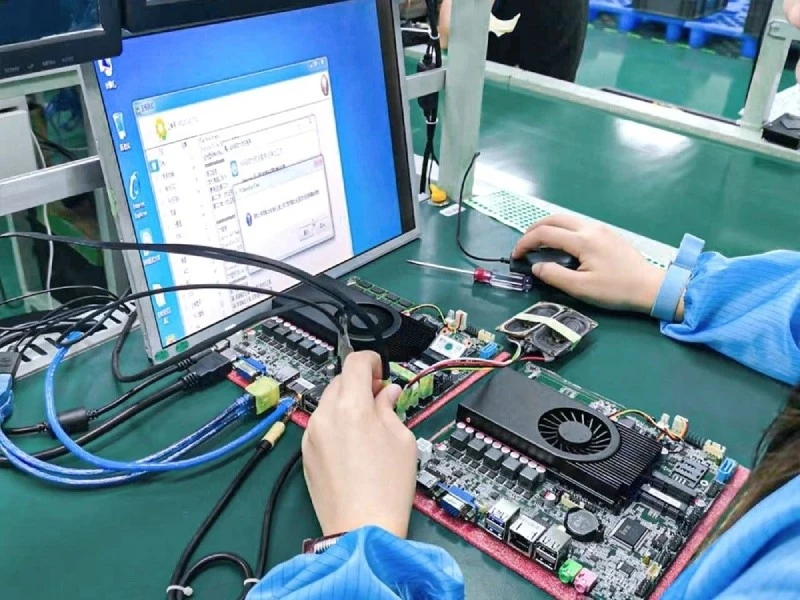
For other projects, an investigation months later may need to know:
- which test procedure applied;
- which firmware or product configuration was loaded;
- which fixture or test-program revision was in use;
- which station performed the test;
- whether measured results were retained;
- whether the unit failed earlier and later passed after rework.
There is no universal requirement that every medical PCBA retain every raw FCT measurement.
The evidence should match the test risk and the customer's requirements.
But a bare PASS result has an obvious limitation: its investigative value falls quickly if nobody can reconstruct the test definition that produced it.
That matters after a firmware change, fixture modification, test-program revision, or acceptance-limit update.
Two records can both say PASS and still represent different released test conditions.
Audit the Board That Left the Normal Flow
Straight-through production is usually the easiest genealogy to demonstrate.
The more revealing sample is often a PCBA that failed inspection, left the normal route, went through rework, and later returned to test.
That is where record systems tend to show their weak points.
Where the project requires it, the history may need to connect:
original unit -> nonconformance -> disposition -> rework -> replacement material -> reinspection -> retest -> final release
If a replaced component has a material-traceability requirement, its new lot information should remain part of the same history.
The board did not become a new product simply because it reached a repair bench.
Rework should extend the PCBA's history, not start a second undocumented one.
The same principle applies to firmware reprogramming, approved deviations, or other departures from the normal production route.
During supplier qualification, do not audit only the cleanest board in the system. Ask to see one that left the standard flow and came back.
Follow the Material Record Upstream
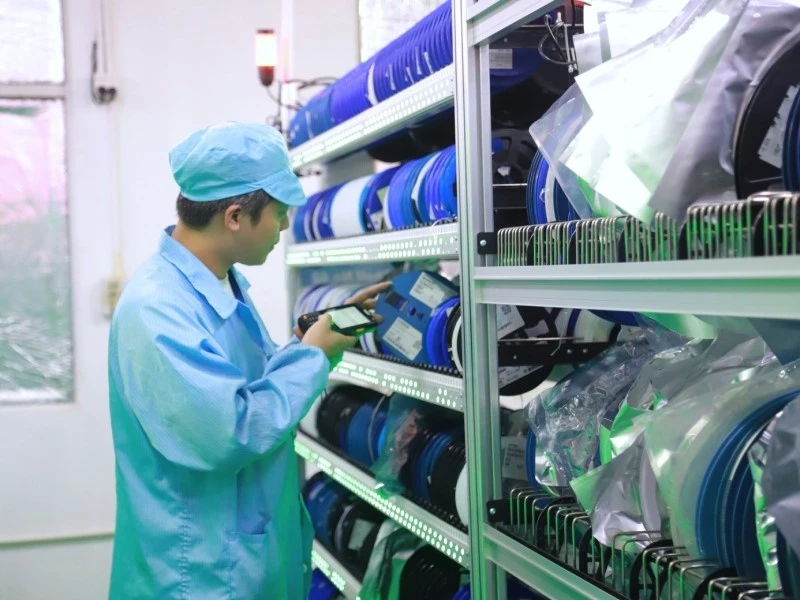
A medical electronics buyer may request Certificates of Conformity, date codes, incoming inspection records, approved-source information, or other component evidence.
Those documents can be useful. They still need to connect to the build.
A supplier certificate may establish information about a component lot. It does not automatically prove that the lot was actually used on the PCBA being investigated.
Where material genealogy matters, there needs to be an agreed relationship between the material record and the applicable:
- work order;
- production batch;
- serial range;
- or individual PCBA.
The appropriate level depends on the project.
Approval and Actual Usage Are Different Records
Approved alternates are a good example.
An engineering approval establishes that an alternate may be used.
The as-built record establishes where it was used.
If a particular alternate later becomes relevant to a field investigation, buyers may need to identify which units or batches actually received it.
That distinction matters more than having another copy of the approval email.
Customer-Supplied Material Creates a Traceability Boundary
Consigned and partial-turnkey projects introduce another handoff.
Suppose an OEM supplies a critical MCU, but the material arrives without the lot, date-code, or source information required by the project.
The EMS provider can record what it physically received.
It cannot recreate upstream genealogy that was never provided.
Traceability cannot be stronger than the information available at the handoff.
If upstream material information may matter later, ownership of that information should be agreed before customer-supplied parts enter production.
Not Every Component Needs the Same Traceability Depth
"Component-level traceability" is sometimes interpreted to mean that every resistor, capacitor, and IC must be mapped from one reel to one board serial number.
That is not a useful universal rule for medical electronics.
Traceability depth should follow the approved requirement.
For some materials, work-order or batch genealogy may be sufficient. Selected components may justify deeper linkage because of sourcing risk, functional significance, lifecycle concerns, customer requirements, or future failure-investigation needs.
Depending on the project, relevant information might include:
- manufacturer part number;
- approved source;
- lot or date code;
- approved-alternate status;
- incoming inspection evidence;
- moisture-sensitive-device handling information where applicable.
A better question is:
Which material relationships might we need to reconstruct later, and at what level?
That decision affects receiving, kitting, barcode rules, MES fields, customer-supplied material handling, and long-term record volume.
It belongs in RFQ and NPI discussions, not in a panic after a field issue.
Revision Approval Is Not Revision Effectivity
A traceability system also has to answer a deceptively simple question:
What version was this PCBA actually built to?
That may involve more than the PCB revision printed on the board.
Relevant configuration can include:
- PCB revision;
- BOM revision;
- assembly or placement data;
- approved manufacturer part numbers;
- approved alternates;
- DNP configuration;
- firmware or programming revision;
- test definition;
- approved deviations or engineering changes.
One of the easiest mistakes is to confuse change approval with change effectivity.
Approval tells you a change is allowed. Effectivity tells you where that change actually starts.
An ECO may be approved while old WIP, previously kitted materials, programmed units, or earlier PCB revisions are still physically in production.
Where the project requires that level of control, the traceability record should be able to establish which work order, batch, serial range, or unit first used the new configuration.
Without that link, a team may know that Rev B was approved but still be unable to identify which shipped units actually contain Rev B.
The released configuration, the physical build, and the traceability record need to move together.
Traceability Should Work Forward as Well as Backward
Most audits start with a finished PCBA and work backward through its manufacturing history.
A real containment exercise often runs the other way.
Suppose a component manufacturer later identifies one material lot as suspect.
Now the questions are:
Which units or batches used it?
Which shipments contained those PCBAs?
A useful traceability system should support both directions.
Backward Trace
shipped PCBA -> build -> material, process, and test history
Forward Trace
suspect material or process condition -> affected units or batches -> shipment
The required precision depends on the project.
If material was tracked only by batch, the containment population may naturally be the entire batch. If a relevant lot was linked to narrower serial ranges, containment may be narrower.
That is one practical reason to agree on traceability granularity before production.
Keep Useful Process Evidence, Not Every Value the Machine Can Export
Modern manufacturing equipment can generate enormous amounts of data.
That does not mean every machine value belongs in the permanent PCBA history.
Depending on the assembly and the agreed requirement, useful process evidence might include:
- solder-paste lot information;
- applicable reflow process verification;
- first-article records;
- SPI or AOI results;
- X-ray records where applicable;
- equipment or fixture identity;
- MSD handling records;
- process or environmental monitoring specifically required by the project.
The question is not how much data the equipment can produce.
It is what information could help establish whether a manufacturing condition affected the units under investigation.
Record what may need to be proven later. Do not turn traceability into an uncontrolled archive simply because the equipment can export more data.

MES Helps, but MES Is Not Traceability
A Manufacturing Execution System can make traceability much easier.
It can link barcodes, work orders, material lots, production events, inspection results, test records, and shipment information.
That is valuable.
But the software name is not proof that the relationships are correct.
Audit the record linkage, not the software logo.
A sophisticated MES can still produce ambiguous genealogy if master data, revisions, scan rules, or rework flows are poorly controlled.
Conversely, project evidence may legitimately span MES, equipment databases, controlled electronic files, and quality records.
The buyer should care that the required information is:
- controlled;
- attributable to the relevant build;
- linked to the applicable revision;
- protected from uncontrolled change;
- retrievable when needed.
A polished MES demo matters less than a successful record pull on a real build.
Decide Batch-Level and Unit-Level Linkage Before NPI Is Finished
Medical electronics does not automatically mean every record must sit at individual serial-number level.
Some information naturally belongs to a batch. Other records may need to follow one PCBA.
|
Record |
Batch-Level Linkage May Be Appropriate When |
Unit-Level Linkage May Matter More When |
|
Material traceability |
One controlled material population applies to the relevant build |
Selected material usage must be isolated to specific PCBAs |
|
Inspection |
Lot, panel, or batch evidence meets the agreed inspection plan |
Individual results or images are required for investigation |
|
Firmware |
One controlled configuration applies across the batch |
Configuration or unique data varies by unit |
|
Functional test |
Agreed batch reporting meets the quality requirement |
Individual test history supports complaint or service investigation |
|
Rework |
A controlled disposition applies equally to an affected batch |
One specific PCBA was repaired or had a component replaced |
|
Shipment |
Batch identity provides enough downstream control |
Individual PCBAs must be linked to individual finished devices |
This is a manufacturing decision framework, not a medical-device classification table.
Device class by itself should not be used to invent a universal EMS traceability architecture.
Prove the System Before Production Release
Traceability is difficult to retrofit.
Software cannot recover a material lot, test revision, or rework relationship that was never captured.
For projects with meaningful traceability requirements, a pilot or NPI build is a good time to test the system.
Pick one real PCBA and ask the supplier to reconstruct:
- its unit or batch identifier;
- its released configuration and effectivity;
- the required material traceability;
- its inspection and test evidence;
- any deviation, rework, or retest;
- its final release and shipment linkage.
Then choose one material lot or another relevant production condition and run the exercise forward.
Which units or batches used it?
If one record intentionally exists only at batch level, that is not automatically a failure. The supplier should be able to explain the agreed boundary.
This exercise reveals much more than asking whether a supplier provides "full traceability."
Five Questions Worth Asking During a Medical PCBA Supplier Audit
1. Pick a Shipped PCBA. Which Released Configuration Was It Built To?
The answer should not depend on finding an old email attachment called "final files."
2. Pick a Relevant Component Lot. Which PCBAs Used It?
This tests forward containment, not just backward record retrieval.
3. Show a Reworked PCBA
Can the failure, disposition, replacement, reinspection, retest, and release still be followed as one history?
4. Show What a PASS Result Meant for That Build
Can the supplier identify the applicable test definition when firmware, programs, fixtures, or acceptance criteria have changed?
5. Show How the Same Record Would Be Retrieved Later
Retention only matters when the required history remains accessible, connected, and understandable.
The quality of those demonstrations matters more than the number of screenshots in a supplier presentation.
PCBA Manufacturing Traceability Is Not the Same as Medical Device UDI
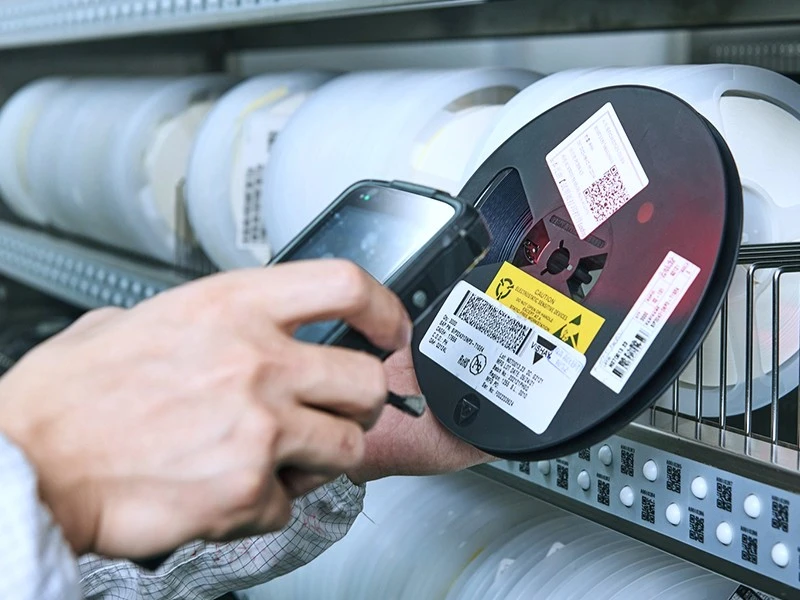
An EMS provider may assign a serial number, barcode, laser mark, or MES identifier to a PCBA for manufacturing control.
That identifier does not automatically become the regulatory Unique Device Identifier of the finished medical device.
Under current U.S. and EU medical-device frameworks, device-level identification and quality-system responsibilities remain with the applicable device manufacturer, labeler, or other responsible economic operator. Supplier-side PCBA serialization can support that system without replacing it. FDA's current QMSR incorporates ISO 13485:2016 into 21 CFR Part 820 and applies to finished-device manufacturers, while EU device registration requirements likewise operate at the medical-device level.
For example, an OEM may establish a relationship such as:
finished-device identity -> installed PCBA identity -> EMS production history
That can be extremely useful during investigation and containment.
But those identifiers perform different jobs and should not be treated as interchangeable.
Record Retention Needs a Definition Too
There is no useful universal EMS rule that every medical PCBA project should copy as:
"Keep everything for 10 years."
Retention depends on the applicable quality system, customer requirement, contract, product lifecycle, regulatory framework, and record type.
A buyer may need to define:
- which records are retained;
- whether they exist at batch or unit level;
- the retention period;
- record ownership;
- export format;
- access and confidentiality controls;
- retrieval expectations;
- what happens during a supplier transfer or information-system migration.
A record that exists but cannot be connected to the relevant build has limited value.
So does a perfectly linked record that disappears before the customer's quality system no longer needs it.
How STHL Supports Medical Electronics Traceability Review
Shenzhen STHL Technology Co., Ltd. (STHL) is certified to ISO 13485:2016 according to its published Medical page. STHL's Quality information also describes barcode and MES-supported batch traceability together with production and inspection records from processes such as SPI, AOI, X-ray, ICT, FCT, and OQC.
For medical electronics projects, the actual traceability scope still depends on the customer's product, quality system, manufacturing scope, and agreed documentation requirements.
Buyers evaluating this type of industry support can review STHL's Medical Electronics Solutions.
For additional evidence on production control and record handling, see Quality and Traceability.
One Published Medical Electronics Project
STHL's public Solutions page describes a project for a UK medical electronics manufacturer developing a portable diagnostic device.
The project required production and test records for each board to support the customer's internal traceability review. STHL set up serial-number traceability and archived AOI, ICT, FCT, and aging-test records by batch. The customer completed its internal review and continued with additional production orders.
The important point is not that every medical project should use that exact record package.
It is that the traceability structure followed an actual buyer requirement.
Conclusion
Useful medical electronics PCBA traceability survives a real investigation.
Do not start with the question, "Do you have MES?"
Start with a board.
- Can you establish what shipped?
- Can you reconstruct its test context?
- Can you follow a reworked unit through the abnormal route and back into release?
- Can you connect the relevant materials to the build?
- Can you identify where an engineering change actually became effective?
Then reverse the direction.
If one material lot becomes suspect, can you identify the affected units or batches and determine where they shipped?
That is what turns manufacturing records into useful traceability.
If the answers still depend on memory, disconnected spreadsheets, or assumptions about what happened, the record package is weaker than it appears.
For medical electronics projects with defined production, testing, or traceability requirements, include those expectations when you submit your project details.
For project-specific questions, contact STHL at info@pcba-china.com.
Frequently Asked Questions
Does Every Medical Electronics PCBA Need Individual Serial-Number Traceability?
No.
Some projects need unit-level linkage for selected records, while other information can appropriately remain at work-order, batch, lot, or serial-range level.
The depth should follow the product, customer quality system, manufacturing scope, risk, contractual requirements, and applicable regulations.
Does ISO 13485 Certification Prove That a Supplier's Traceability Is Sufficient?
No.
Certification provides evidence that a quality management system has been assessed against the applicable standard.
It does not determine the exact material traceability, serialization, test linkage, retention period, or reporting format required by a particular PCBA project.
Is MES Required for Medical PCBA Traceability?
Not as a universal rule.
MES can make material, production, inspection, test, rework, and shipment linkages easier to capture and retrieve.
The buyer should still evaluate the quality of the record linkage rather than assuming that the software platform proves traceability.
Should Traceability Work From a Component Lot Forward to Finished PCBAs?
Where that material relationship is part of the agreed traceability requirement, yes.
Forward traceability can help identify the units or batches affected by a suspect component lot, alternate part, or manufacturing condition.
The precision of that containment depends on whether the relevant data was linked at batch, serial-range, or individual-unit level.
Is a PCBA Serial Number the Same as a Medical Device UDI?
No.
A PCBA serial number supports supplier-side manufacturing identification and traceability.
A regulatory UDI applies to the relevant medical device under the applicable regulatory framework.
The OEM may connect the two identifiers within its broader device traceability system, but they perform different functions.


