


The Visit Began with the People Behind the Project
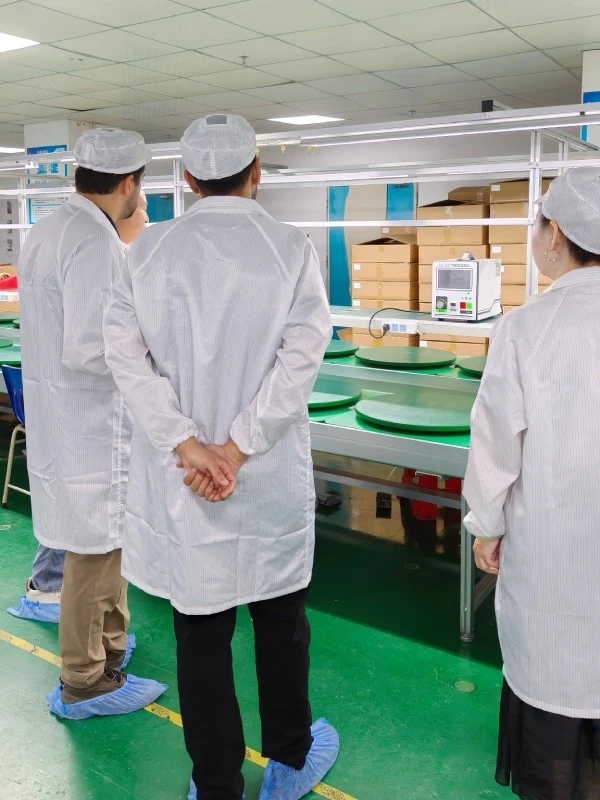
On July 24, 2026, two visitors from Saudi Arabia visited Shenzhen STHL Technology Co., Ltd. (STHL) for an on-site project discussion and a closer review of how different teams support a PCBA and EMS manufacturing project. The visit covered engineering and sourcing coordination, SMT production, first article inspection, PCB-level MES traceability, testing, outgoing quality control, and final assembly.
The visit began on the sixth floor rather than on the production line.
STHL's engineering and sourcing teams first reviewed the project from technical and material perspectives. The discussion covered project requirements, component considerations, manufacturing questions, and the information that still needed to be clarified before further decisions could be made.
This starting point reflected a practical reality: a PCBA project does not move through one department alone. Engineering decisions affect sourcing, material readiness affects production planning, and testing requirements can influence assembly, final integration, and shipment preparation.
The two visitors also toured STHL's cross-functional office area. They were introduced to colleagues involved in operations, sales, procurement, software and hardware engineering, order coordination, and finance.
For an overseas project team, this part of a visit provides visibility beyond production equipment. It shows where engineering questions are reviewed, who coordinates material information, how project progress is followed, and how different responsibilities remain connected after a project discussion moves forward.
How Project Information Moves into Production
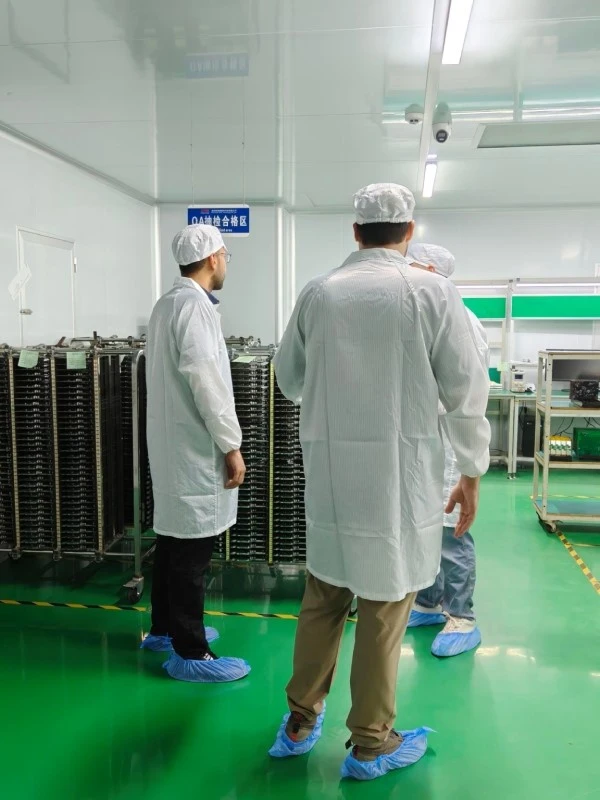
After the office discussion, the visit continued through the finished-goods and shipping area, material staging area, SMT workshop, incoming quality control area, THT/DIP production, testing resources, and final assembly workshop.
The purpose was not simply to introduce each area separately. The STHL team explained how project information, materials, production records, inspection findings, and testing requirements are handed from one stage to the next.
During the tour, the visitors could see how PCB Assembly is connected with material readiness, process release, traceability, inspection, testing, and later product integration.
Material Preparation and SMT Process Release
The visitors first reviewed the finished-goods and shipping area, followed by the material staging area used to support production preparation.
These areas represent two different points in the manufacturing cycle: preparing the correct materials before assembly and organizing completed products before shipment.
Both stages depend on accurate work-order information, correct project identification, controlled handover, and communication among sourcing, production, quality, and order-coordination personnel.
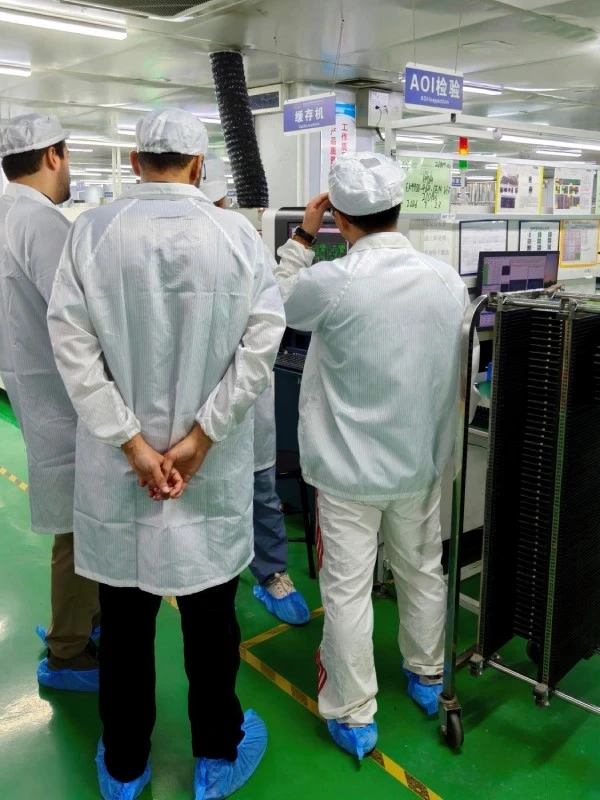
In the SMT workshop, the discussion covered solder paste printing equipment, SMT placement machines, the production lines, and the reflow oven used during the soldering process.
The visitors were also introduced to automated optical inspection (AOI), which supports programmed visual checks after component placement. AOI is one part of the wider inspection workflow and does not replace electrical, functional, or outgoing quality checks.
First Article Inspection and MES Traceability
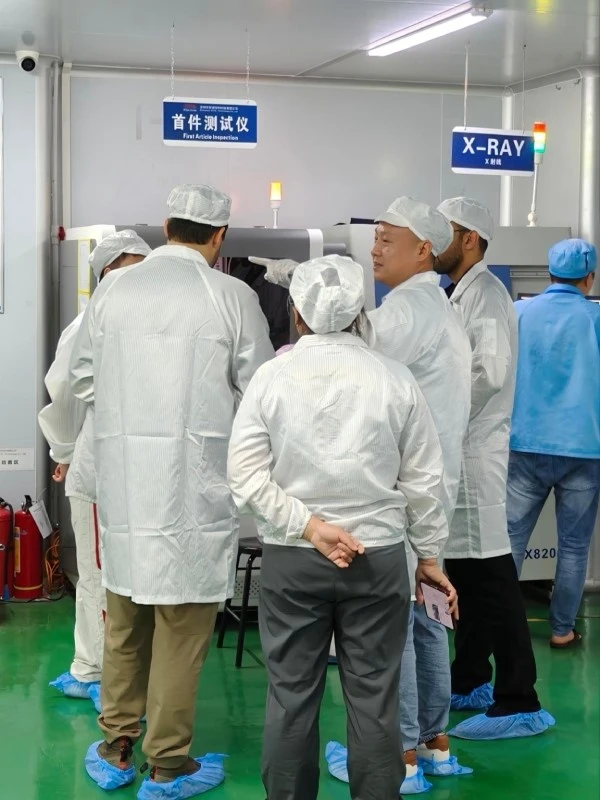
A key part of the SMT review was STHL's first article inspection process.
The first article inspection system is used to review the initial assembled board against released production information and applicable inspection criteria before the remaining build continues.
This creates an early control point for confirming that the production setup and first assembled board are consistent with the approved project requirements before additional boards move through the line.
The visitors were also shown the laser marking station used to apply a unique MES traceability QR code to the PCB.
The QR code serves as a board-level identifier within the manufacturing execution system (MES). It connects the PCB with production and inspection records generated as the board moves through the applicable manufacturing process.
For project follow-up, the MES traceability QR code provides a clearer basis for reviewing when and how a board passed through different production and inspection stages.
The traceability code does not replace inspection itself. Its role is to connect relevant process records under one board-level identifier, allowing production information to remain associated with the PCB throughout the manufacturing workflow.
Incoming Quality Control, THT/DIP, and Testing
The next part of the visit covered incoming quality control and the through-hole technology and DIP assembly area, followed by testing and other project-specific production processes.
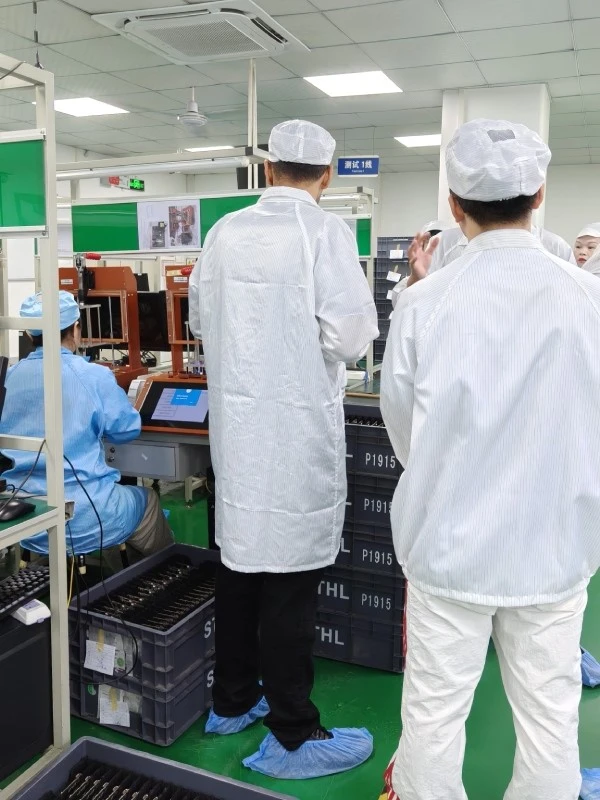
The visitors were introduced to in-circuit testing (ICT), functional testing (FCT), programming equipment, depaneling equipment, production ovens, and conformal coating processes.
These resources do not perform the same function.
Incoming quality control reviews the condition and conformity of materials before they enter production. ICT can support circuit-level electrical checks, while FCT verifies required product functions according to the applicable test method and project requirements.
Programming, depaneling, oven processes, and conformal coating are arranged according to the product design and manufacturing scope rather than applied as a fixed sequence to every PCBA project.
For example, conformal coating may be required when a finished product needs additional protection against moisture, dust, or environmental exposure. Programming requirements depend on the selected devices, released firmware, and agreed production process.
Explaining these distinctions kept the discussion focused on how each process may relate to the actual project instead of presenting every available capability as automatically necessary.
OQC Sampling and Final Assembly Verification
The visitors were also introduced to STHL's outgoing quality control (OQC) workstation.
A 3D microscope is used as a principal inspection tool at this workstation for pre-shipment sampling inspection. It provides a detailed visual review of selected finished PCBAs according to the applicable outgoing inspection plan.
This OQC sampling process is separate from in-process AOI. It does not mean that every PCBA is inspected under the 3D microscope, but it provides an additional outgoing quality checkpoint before the applicable batch is prepared for shipment.
The final part of the visit took place in STHL's assembly workshop.
The team introduced leak-testing equipment used for enclosure sealing checks and a spectrum analyzer used for project-specific RF or frequency-domain verification.
These methods are applied where required by the product design and agreed test plan.
Leak testing may be used when a finished enclosure, interface, or sealing structure needs to meet specified leakage or airtightness requirements. A spectrum analyzer may be used when a project requires frequency-domain or RF signal checks. It does not replace general functional testing or external regulatory certification.
This part of the visit showed why some EMS projects continue beyond board-level assembly.
Once a PCBA is installed into an enclosure and integrated with cables, interfaces, antennas, firmware, or other mechanical and electronic parts, the verification target may become the finished unit rather than the circuit board alone.
What Cross-Functional Visibility Means for the Project
The most useful part of the visit was not the number of departments, machines, or production areas covered. It was the visibility of the handoffs between them.
The visitors could see where engineering questions are reviewed, how sourcing information reaches production, how material and production status are communicated, and how inspection requirements continue into testing and final assembly.
For an overseas project team, this makes responsibilities easier to understand.
It also gives both sides a clearer basis for identifying which BOM details, Gerber files, assembly drawings, firmware information, testing requirements, material conditions, or final assembly requirements still need to be confirmed before the next project stage.
Cross-functional coordination does not mean that every project follows exactly the same manufacturing route. The required process depends on the BOM, PCB data, assembly drawings, build quantity, component availability, testing scope, product application, and final delivery requirements.
What coordination can provide is a shared project context.
When engineering, sourcing, production, quality, testing, and order-coordination teams work from the same released requirements, project questions can be reviewed with clearer ownership and less fragmented communication.
The visit was also an opportunity for STHL to listen.
The questions raised by the two visitors helped the team better understand which technical, sourcing, traceability, testing, and final integration details mattered most to their project.
That shared understanding provides a more practical starting point for the next discussion than a general presentation of factory capabilities alone.
Thank You for Making the Journey to Shenzhen
STHL sincerely appreciates the time and effort involved in travelling from Saudi Arabia to Shenzhen.
The visit allowed both sides to discuss the project with the relevant teams and review how information may move from early engineering and sourcing discussions into material preparation, PCBA manufacturing, MES traceability, testing, outgoing inspection, and final assembly.
We hope the visit provided a clearer view of the people responsible for each stage, the manufacturing resources available, and the questions that still need to be resolved before the project moves forward.
The STHL team wishes the visitors' project steady progress and a successful next stage.
For teams reviewing PCBA manufacturing and project-specific Testing and Inspection requirements, project information can be submitted through Request a Quote. You may also contact the STHL team directly at info@pcba-china.com.


